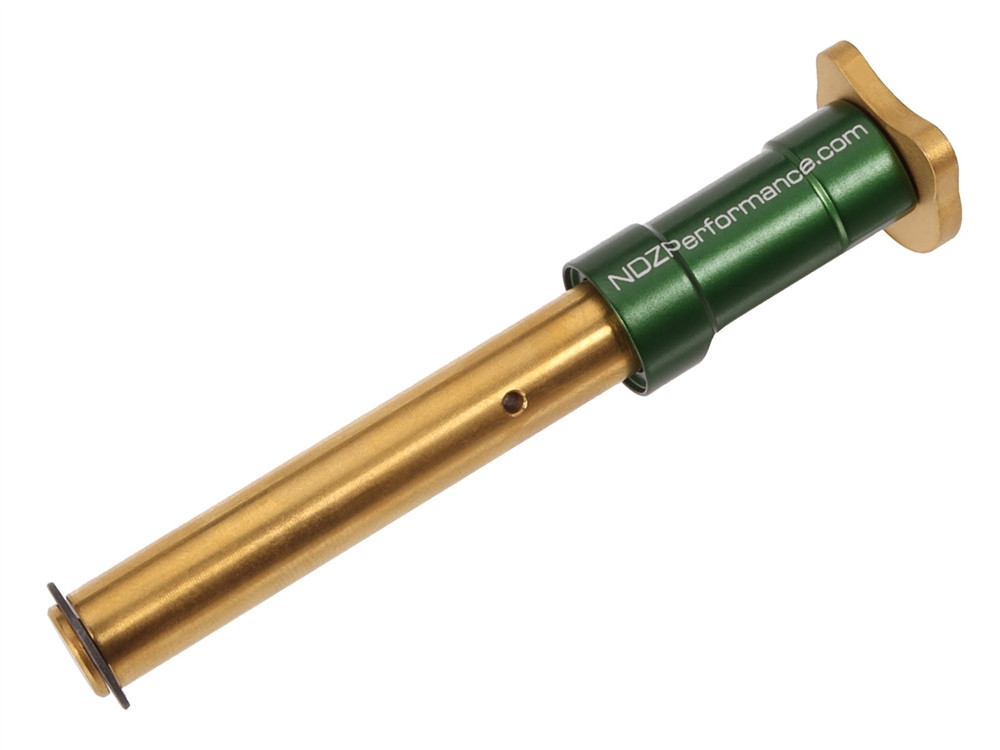
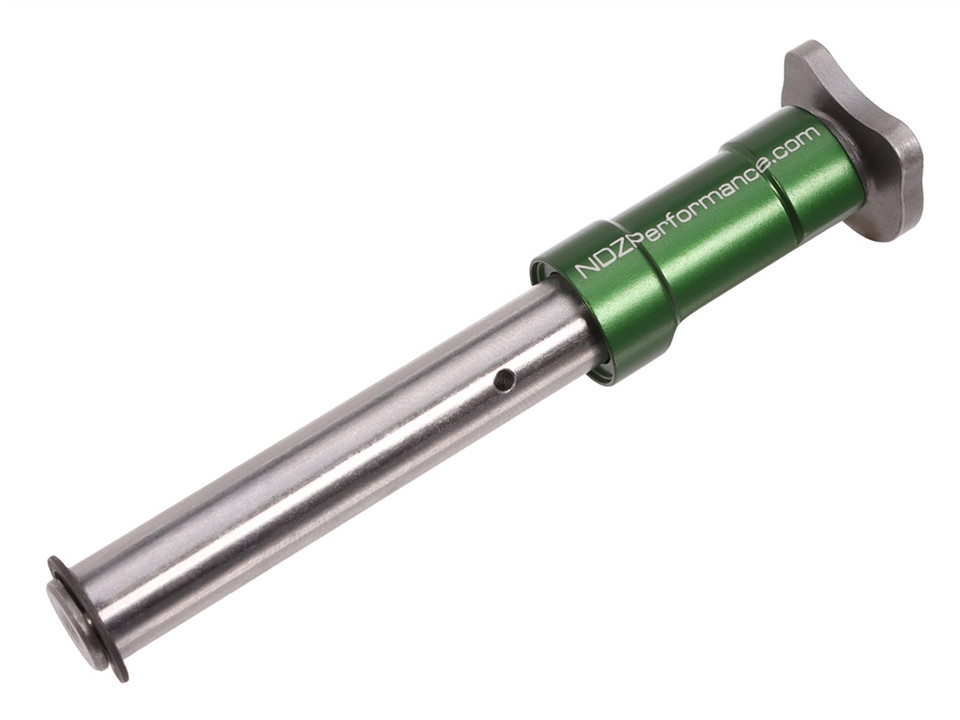
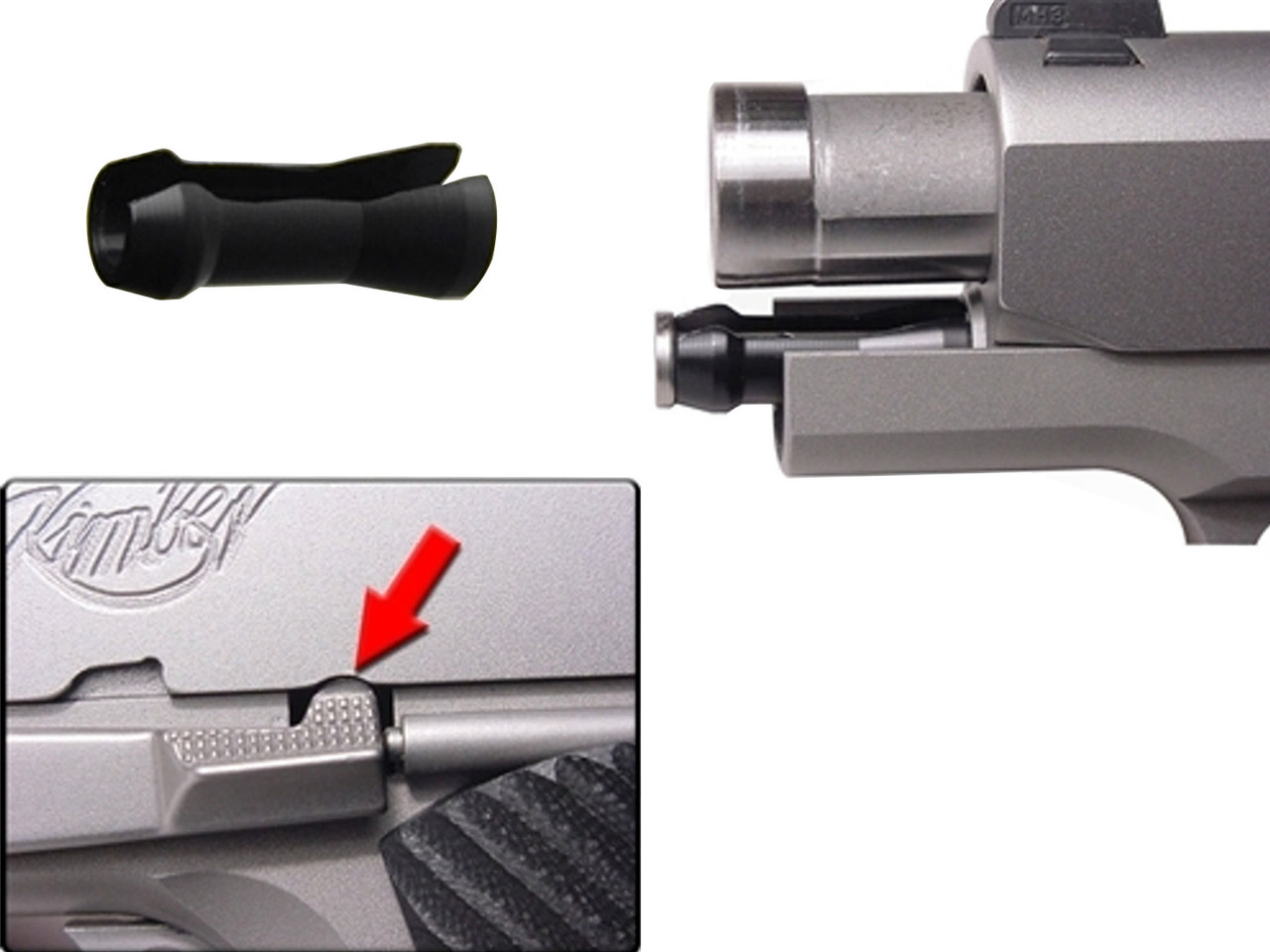
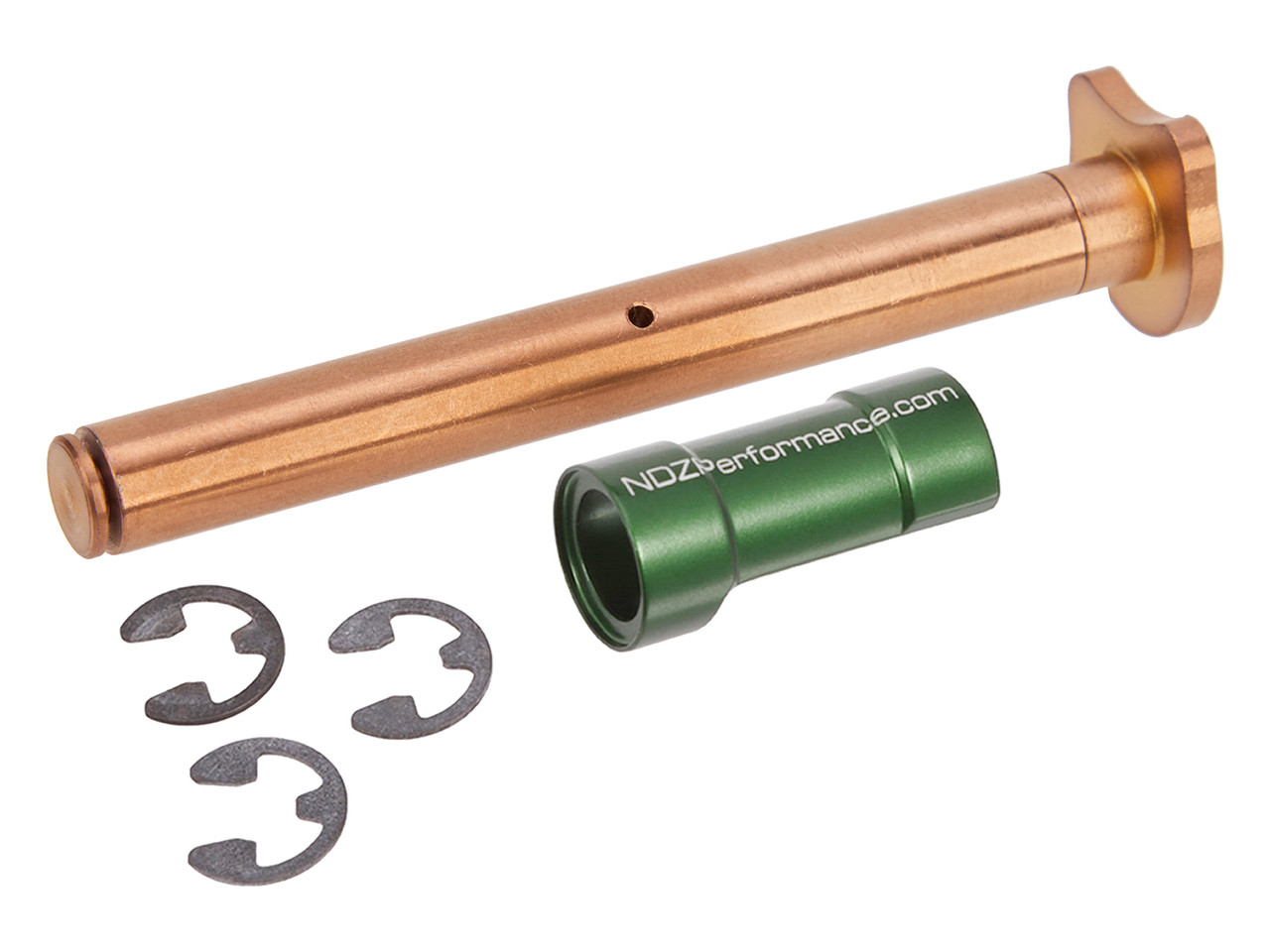
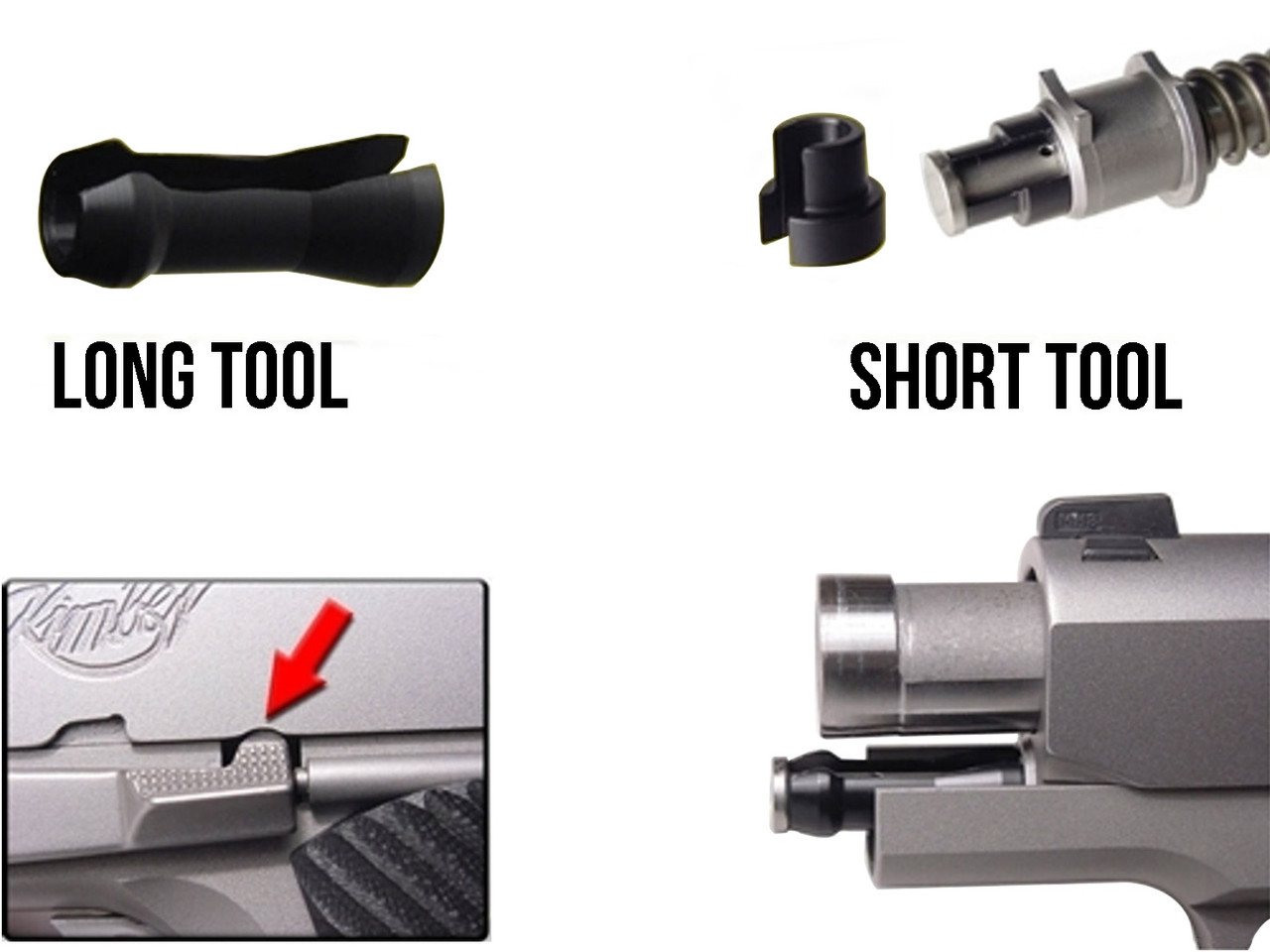
A Kimber takedown tool is a small maintenance aid used with certain Kimber 1911 pistols to help manage parts of the recoil spring and guide rod assembly during field stripping. The correct tool depends on the exact pistol model and its factory configuration.
Across the United States, Kimber owners may need a takedown tool when cleaning a pistol after range use or preparing it for routine care. Some compact 1911 pistols use a small tool to help retain or manage the recoil spring assembly. Other models use a different design, so one tool does not fit every Kimber pistol.
The first step is to identify the exact model, barrel length, and guide rod setup. A tool sold for a Kimber Pro Series pistol may not suit an Ultra Carry model. Product photos can help you recognize a tool, but the seller’s compatibility list and the firearm’s current manual are better guides. Before any maintenance, remove all ammunition from the work area, unload the pistol, and verify that the chamber is empty.
A Kimber takedown tool is a small accessory made to assist with a particular part of firearm maintenance. On some Kimber 1911 pistols, it helps manage the recoil spring and guide rod assembly during disassembly. This can make routine cleaning less awkward when the factory design calls for a separate aid.
The tool is usually small enough to keep with a cleaning kit. Depending on the product, it may be a simple retaining pin, a purpose-made guide rod tool, or part of a kit for a specific pistol family. The shape and intended use vary, so the product name alone does not prove compatibility.
The term can also cause confusion because sellers use phrases such as takedown tool, recoil spring tool, guide rod tool, and disassembly tool. These terms may describe related products, but they are not always interchangeable. Read the actual product details rather than relying on a broad search phrase.
Source: 1911ultratool.com
Takedown tool
A purpose-made aid for a particular disassembly or recoil spring assembly arrangement.
Guide rod
A component that helps guide the recoil spring as the pistol’s slide cycles.
Recoil spring
A spring that stores and releases energy during slide movement. Its tension can make some maintenance tasks awkward.
Field stripping
Routine disassembly into the parts permitted by the manufacturer’s instructions for cleaning and inspection.
Why the Tool Matters
A small retaining tool can help manage a spring assembly when the design calls for one. Without the correct aid, a user may find it harder to control a component or may be tempted to use an unsuitable object.
That does not mean every Kimber owner needs to buy one. Some configurations may not require the same accessory, and some pistols use different factory arrangements. Check the instructions for your exact model before deciding that a separate tool is necessary.
Better compatibility
A model-specific tool is intended for the assembly named by its manufacturer.
Less guesswork
A clear compatibility list helps avoid buying a tool that does not suit the pistol.
Controlled maintenance
The correct accessory may help with the task described in its instructions, but it does not replace safe handling or the factory manual.
Which Kimber Models May Need a Takedown Tool?
The correct choice depends on the exact Kimber model and the recoil spring assembly installed in it. Kimber’s 1911 family includes pistols with different barrel lengths and compact designs. A product made for one configuration should not be assumed to fit another.
Tools marketed for the Pro Series commonly refer to particular four-inch Kimber 1911 configurations. Products listed for Ultra models may be intended for shorter pistols with a different assembly. Compact models can have their own compatibility requirements, so the word compact alone is not enough to confirm a match.
These categories are a starting point, not a guarantee. A pistol may have a revised or aftermarket guide rod system. If the parts differ from the factory setup, the original model name may no longer tell you which tool will fit.
Source: ndzperformance.com
Kimber Pro Series
Check tools listed for the exact Pro model and its guide rod configuration. Do not assume every four-inch 1911 uses the same arrangement.
Kimber Ultra models
Look for a tool explicitly listed for the relevant Ultra model. A tool for a Pro pistol may not be suitable.
Kimber Compact models
Confirm the specific model and factory assembly before choosing a compact-platform tool.
Kimber full-size models
Check whether the pistol uses a different recoil spring and guide rod arrangement. A model-specific compact tool may be unnecessary or unsuitable.
How to Identify Your Exact Pistol
Start with the model name printed on the firearm or listed in its original paperwork. Check the owner’s manual for the exact variant and its approved field-stripping procedure. If you are unsure which revision you have, contact Kimber with the model information and serial number rather than guessing from a photo.
Next, compare the factory assembly with the tool manufacturer’s stated compatibility list. If the pistol has an aftermarket guide rod, replacement recoil spring assembly, or other changed parts, ask the maker of those parts which maintenance aid is appropriate. A similar appearance does not establish a safe fit.
Confirm the model
Use the factory markings and documentation rather than an online listing title alone.
Check the configuration
Verify whether the recoil spring and guide rod assembly remains in its factory form.
Read the product listing
Look for the exact model family, barrel configuration, and any stated exclusions.
How to Choose the Right Kimber Takedown Tool
Choose a takedown tool by verified compatibility first, then consider material, design, price, and seller support. A low price does not help if the tool is intended for a different assembly. A costly kit is not automatically better than a simple tool that matches the manufacturer’s instructions.
Read the complete listing before placing an order. Look for the exact pistol family, the intended component, and any notes about factory or aftermarket parts. If the listing only says that the tool fits Kimber 1911 pistols, ask the seller for clarification.
It also helps to check what comes in the package. Some listings show a single tool, while others offer a kit or multiple pieces. Compare the listed contents with what you actually need instead of paying for parts that do not apply to your pistol.
Source: ndzperformance.com
Exact compatibility
The listing should identify your model or provide a clear method to verify fit.
Clear intended use
The description should explain which part of the pistol the tool is designed to assist with.
Material and finish
Look for a product description that identifies its material and finish. Do not assume a colored coating proves better strength or performance.
Package contents
Confirm whether the price covers one tool, a kit, or several pieces.
Seller support
Prefer a seller that can answer model-specific compatibility questions and explain its return terms.
Factory Tool or Third-Party Tool?
A factory-specified accessory is a sensible place to start because it is tied to the manufacturer’s maintenance instructions. A third-party product can also be useful when its maker clearly identifies the supported models and intended task.
Do not treat an aftermarket tool as an approved replacement just because it is advertised for Kimber pistols. Check the relevant documentation, and ask the tool maker or Kimber if the compatibility statement is unclear. The deciding factor is a verified fit for your exact setup, not the brand printed on the package.
Factory-specified option
Useful when the manual names a particular tool or accessory.
Third-party option
Worth considering when the product maker gives specific compatibility details and support.
Unclear listing
Avoid purchasing until the seller confirms the intended model and assembly.
What About Titanium Nitride and Other Finishes?
Some aftermarket takedown tools are sold with decorative or protective coatings. Titanium nitride and other finish terms describe surface treatments or coatings, not universal proof that a tool will last longer in every use.
Fit, correct design, and sound construction matter more than appearance. A coated tool that does not match the assembly is still the wrong tool. Treat claims about wear resistance as product specifications unless independent testing supports a broader performance claim.
Finish
May affect surface properties and appearance, depending on the material and coating process.
Fit
Must match the specified firearm configuration regardless of color or coating.
Safety Checks Before Any Maintenance
Make the pistol safe before you handle a takedown tool. Remove all ammunition from the work area, point the firearm in a safe direction, and follow the unloading and chamber-check procedure in the owner’s manual. Do not rely on memory or assume the pistol is empty because the magazine has been removed.
Keep the muzzle pointed in a safe direction throughout the task. Use a stable, well-lit work surface and keep small parts away from the edge. If the pistol’s condition is uncertain, stop and ask a qualified professional for help.
A recoil spring can store energy. A part that slips or releases unexpectedly may cause injury or damage. Use only the method specified for your model, and do not force parts when the assembly behaves differently from the manual.
Source: ndzperformance.com
Remove ammunition
Take live ammunition out of the work area before maintenance begins.
Verify the chamber
Follow the manual’s unloading procedure and visually and physically check as directed by the manufacturer.
Use the correct instructions
Follow the manual for the exact pistol model and installed configuration.
Stop if anything feels wrong
Do not force, pry, or improvise if a part will not move as expected.
Why Improvised Tools Are a Poor Choice
A paper clip, random pin, screwdriver, or other household object may have the wrong diameter, shape, or strength for the intended task. It can slip, bend, scratch a component, or fail to control a spring as intended.
A tool that appears to fit is not necessarily safe to use. If the factory instructions call for a specific tool and you do not have it, obtain the correct accessory or ask a qualified gunsmith to perform the maintenance. Avoid modifying an improvised object to make it fit.
Wrong dimensions
An incorrect size may fail to engage the intended part or may damage it.
Uncertain strength
An ordinary object may bend or break under spring pressure.
No compatibility guarantee
A homemade substitute has not been established as suitable for your pistol.
Understanding the Maintenance Process
The safe way to use a takedown tool begins with the pistol’s manual, not with a generic online demonstration. Kimber models can differ in their disassembly requirements. A video showing one pistol may not show the correct process for another model or a firearm with altered parts.
Before starting, gather the manual, the confirmed compatible tool if one is required, and a suitable cleaning area. Make sure you understand which components the manual permits you to remove for routine cleaning. If any step is unclear, consult Kimber or a qualified gunsmith before proceeding.
Use the manufacturer’s stated sequence and avoid applying extra force. After the permitted cleaning and inspection, reassemble the pistol only as directed in the manual. Do not assume that parts are correctly seated merely because the slide moves or the exterior looks normal.
Source: ebay.com
Before You Begin
Check that the pistol is unloaded and that ammunition is separated from the work area. Confirm the model and the correct manual. Place the needed items on a clean surface so that small parts remain visible.
Inspect the tool for bending, cracks, sharp damage, or other defects. If the tool appears damaged or does not match the product description, do not use it. Replace it with a suitable product confirmed for your model.
Manual
Use the instructions for the exact model and revision where applicable.
Compatible accessory
Confirm that the tool is intended for the installed recoil spring and guide rod assembly.
Clean work area
Use good lighting and a stable surface that helps prevent the loss of small parts.
During and After Maintenance
Follow the manual’s stated disassembly and reassembly steps in order. Keep control of spring-loaded components, and stop if a part binds, slips, or looks different from the illustration. Do not keep trying with greater force.
Once reassembly is complete, perform only the checks specified in the factory manual, with the firearm unloaded and ammunition kept away. If the action does not behave as described, do not load or fire the pistol. Arrange an inspection by Kimber or a qualified gunsmith.
Follow the model-specific sequence
Do not transfer a procedure from a different Kimber variant without confirmation.
Watch for unusual resistance
Stop if components bind or the assembly differs from the manual.
Confirm proper function
Use the factory’s unloaded function-check procedure and seek professional help if it fails.
Common Kimber Takedown Tool Problems
Most tool-selection problems start with uncertain compatibility, an unclear listing, or a mismatch between the factory assembly and replacement parts. The safest first response is to stop and confirm the setup instead of trying another method at random.
A tool that will not fit may be intended for another model, or the pistol may have a different guide rod assembly. A tool that bends or slips may be damaged or unsuitable for the task. These signs do not establish the exact cause, so inspect the documentation and contact the manufacturer when needed.
Source: ebay.com
The tool does not appear to fit
Stop. Recheck the exact model, tool listing, and guide rod configuration. Do not force the tool into place.
The assembly differs from the manual
The pistol may have a different revision or aftermarket components. Ask Kimber or a qualified gunsmith to identify the setup.
The tool bends or slips
Stop using it. Replace it only after confirming the correct specification and intended use.
A component appears damaged
Do not continue disassembly or reassembly beyond what can be done safely under the manual. Seek qualified service.
The pistol does not pass its function check
Do not load or fire it. Follow the manual’s safety guidance and arrange a professional inspection.
When to Contact Kimber or a Gunsmith
Contact Kimber customer support when the model designation, factory parts, or approved maintenance procedure is unclear. Have the model name and relevant documentation ready. Provide the serial number only through an appropriate official support channel when requested.
A qualified gunsmith is the better next step when parts are damaged, the pistol has been modified, the spring assembly will not behave as described, or reassembly does not pass the factory function check. Professional inspection is safer than repeated attempts with an uncertain tool.
Unclear factory configuration
Ask the manufacturer to confirm the correct maintenance method and tool.
Visible damage
Arrange inspection instead of trying to repair a critical part with a hand tool.
Failed function check
Keep the firearm unloaded and seek qualified service before use.
Cleaning, Storage, and Tool Care
Store a takedown tool in a clean, dry place where it will not be bent or lost. A small labeled compartment in a firearm maintenance kit can help keep it separate from tools intended for other models. Store it according to the manufacturer’s instructions.
Wipe away dirt or residue after use when the product instructions permit it. Check for corrosion, deformation, rough edges, or other damage before the next maintenance session. Replace a tool that is visibly damaged or no longer matches the manufacturer’s stated requirements.
Keep the pistol and its accessories stored securely in line with applicable laws and the firearm manufacturer’s recommendations. A maintenance tool should not be left where a child or an unauthorized person can access it. Keep ammunition stored separately as appropriate for the household and local rules.
Source: ebay.com
Should You Keep a Spare Tool?
A spare may be useful if the tool is small and easy to misplace, but it is not essential for every owner. Buy a spare only after confirming the exact specification. Two incompatible tools do not offer more protection than one correct tool.
For a pistol with aftermarket components, record the guide rod or recoil spring assembly maker and its model information. This can help you confirm the correct accessory later without relying on memory or a seller’s broad product title.
Label the tool
Record the compatible pistol model or assembly when the maker provides that information.
Inspect before use
Look for damage and confirm that the tool remains suitable for its stated purpose.
Keep product records
Save the product description and instructions for later compatibility checks.
Price, Package Contents, and Buying Considerations
The cost of a Kimber takedown tool varies with the design, finish, seller, and package contents. A single small accessory may cost less than a multi-piece kit, but the cheapest listing is not necessarily the best value if compatibility is unclear or the return terms are poor.
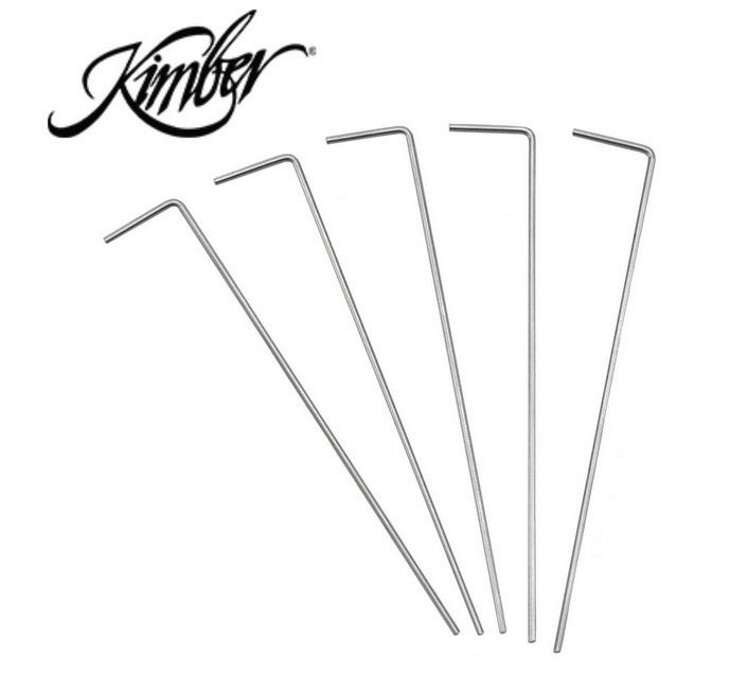
The supplied image list includes individual tools, Pro Series kits, and listings for multiple tools. Those pictures show examples of product types, not verified current prices, stock, or a guarantee that every item remains available. Check the live listing and seller terms before buying.
Compare like with like. A kit containing extra parts should not be compared directly with a single tool without considering what each package includes. Shipping, return costs, and the availability of support can also affect the total cost.
Source: ndzperformance.com
Single tool
May suit an owner who needs only the specific accessory required by the factory configuration.
Model-specific kit
May include related parts or accessories, but check the complete contents and stated fit.
Multi-pack
May make sense for a shop or multiple compatible pistols. A multi-pack is not automatically useful for one firearm.
Return policy
Review return conditions before ordering, especially when fit depends on an exact model or modified assembly.
Questions to Ask Before Ordering
A short message to the seller can prevent an unnecessary purchase. Ask whether the tool supports your exact model and factory guide rod arrangement. If the pistol has replacement parts, provide the part maker and model details without assuming the seller can identify them from a general photo.
Also ask what is included, whether the item is new or used, and what the return terms cover. A clear answer is more useful than a broad claim that a product works with all Kimber 1911 pistols.
Does it fit my exact model?
Request an explicit compatibility answer rather than a general statement about the Kimber brand.
Which assembly does it support?
Confirm the intended guide rod and recoil spring configuration.
What is included?
Check whether the listing is for one tool, a kit, or a multipack.
What if it is incompatible?
Read the seller’s return and exchange terms before purchase.
A Simple Compatibility Checklist
Use this checklist before you order or use a takedown tool. It focuses on the details that most directly affect compatibility and safe maintenance. If any answer is uncertain, pause and confirm it with the manufacturer or a qualified gunsmith.
Source: ndzperformance.com
Identify the pistol
Confirm the exact Kimber model and the information in its owner’s manual.
Identify the assembly
Check whether the recoil spring and guide rod parts are factory-installed or aftermarket.
Match the product
Find an explicit compatibility statement for the model and assembly.
Check the tool
Inspect it for bending, cracks, corrosion, or other visible defects.
Follow the manual
Use the factory instructions for safe unloading, permitted disassembly, reassembly, and the unloaded function check.
Stop when uncertain
Do not force parts or experiment with household substitutes. Seek reliable technical help.
The Most Useful Next Step
If you already own the tool, compare its product description with your pistol’s manual before using it. If you are still shopping, write down the full model name and verify the assembly first. That small check is more useful than choosing by price, finish, or product photo alone.
Already own a tool
Confirm compatibility and inspect its condition before maintenance.
Need to buy one
Ask the seller or manufacturer to confirm the exact model and assembly.
Unsure about the parts
Leave the assembly untouched and ask Kimber or a qualified gunsmith for help.
Frequently Asked Questions
Q
What does a Kimber takedown tool do?
A Kimber takedown tool is a maintenance accessory intended for certain recoil spring and guide rod assemblies. It can help manage a component during the factory-prescribed field-stripping process. The exact purpose depends on the tool design and the pistol it supports.
Q
Will one Kimber takedown tool fit every Kimber 1911?
No. Kimber 1911 pistols can use different recoil spring and guide rod arrangements. Confirm the exact model and assembly against the tool manufacturer’s compatibility list and the factory manual before use.
Q
Does a Kimber Ultra Carry need a different tool from a Pro model?
It may. Ultra and Pro models can have different configurations, and the correct tool depends on the specific pistol and installed parts. Choose a product explicitly listed for your model instead of relying on barrel length or family name alone.
Q
Can I use a paper clip or another household object instead?
Do not assume a household object is a safe substitute. It may have the wrong size or strength and could slip, bend, or damage a component. Use the accessory specified by the factory instructions or ask a qualified gunsmith to help.
Q
What should I do if the takedown tool will not fit?
Stop and do not force it. Check the exact model, the product’s compatibility details, and whether the pistol has aftermarket parts. Contact the tool maker, Kimber customer support, or a qualified gunsmith if the correct configuration remains unclear.
Q
Can I clean my Kimber without a takedown tool?
That depends on the model and its factory disassembly procedure. Some configurations may require a specific aid, while others may use a different arrangement. Follow the manual for the exact pistol and do not skip a required tool or improvise a substitute.
Q
How can I tell whether a Kimber takedown tool is damaged?
Look for bends, cracks, corrosion, rough damage, or changes that could affect its intended fit. Do not use a damaged tool. Replace it only after confirming the correct specification for your pistol.
✦ Wrapping Up
Conclusion
A Kimber takedown tool can help with routine maintenance on compatible 1911 pistols, but the right choice depends on the exact model and recoil spring assembly. Pro, Compact, and Ultra variants should not be treated as interchangeable just because they share the Kimber name.
Check the owner’s manual, verify the tool maker’s compatibility details, and inspect the accessory before use. Keep ammunition away from the work area and stop if a part binds, looks damaged, or differs from the factory instructions. When the correct setup is uncertain, Kimber customer support or a qualified gunsmith is the safer source of guidance.
💡 Key Takeaway
Before buying or using a Kimber takedown tool, confirm your exact pistol model and guide rod configuration, then match them to the manufacturer’s instructions. Never force a tool or use an unverified substitute.