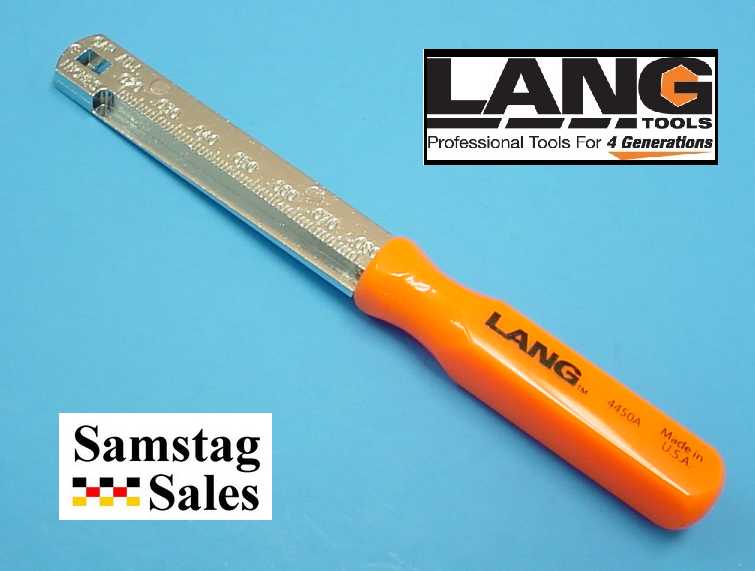
Kastar tools is a historic automotive hand tool brand whose products were brought under the Lang Tools name. Many older tools still carry the Kastar name, and buyers may find related products listed as Lang Tools or Lang Tools (Kastar).
For mechanics and car owners in the United States, Kastar tools can be a bit confusing at first. You may find an older wrench in a toolbox, see Kastar printed on a product catalog, or find a similar tool listed online under Lang Tools. These names are linked, so checking the brand history helps you understand what you are buying.
Kastar is best known in the automotive hand tool market. Its product range has included specialty pliers, thread repair tools, gauges, wrenches, and other tools used for vehicle service. The company behind these products consolidated its earlier brands under the Lang Tools name around 2011 and 2012. That change explains why older Kastar products and newer Lang-branded products can appear in the same listings.
This guide explains the link between Kastar and Lang Tools, the main product types, manufacturing claims, warranty questions, and ways to check a tool before buying it. It also explains why the country of origin and warranty should be checked for the exact item rather than assumed from the brand name alone.
Kastar tools refers to a line of hand tools associated with automotive service and repair. The name appears on older products, catalogs, and current retailer listings for tools now commonly associated with Lang Tools. The products are designed for specific repair tasks, not just for general home use.
A specialty tool solves a job that a basic wrench or pair of pliers may not handle well. For example, retaining ring pliers help fit or remove snap rings, while thread repair tools help clean or restore damaged threads. The right tool can reduce the chance of damage when a job calls for a precise fit.
The name alone does not tell you every detail about a tool. A Kastar-marked item could be an older product, a used tool, or a listing that uses a legacy brand name. Buyers should confirm the model number, intended use, condition, and available documentation.
Source: samstagsales.com
Automotive focus
Many products are made for vehicle service, including engine work, tire service, brake work, and other repair tasks.
Specialty designs
Several tools are built to reach tight spaces or handle parts that ordinary pliers and wrenches may not grip correctly.
Legacy branding
Older Kastar labels may appear beside Lang Tools listings because the brand names are linked.
Are Kastar and Lang Tools the Same Brand?
Kastar and Lang Tools are closely linked through the same tool business. In 2011, A&E Tools announced that products previously sold under Kastar, Star, and Hi-Tech names would be brought together under the Lang Tools brand. New Lang-branded products began shipping during the following transition period.
This means a buyer may see a familiar tool design or model number under the Lang Tools name instead of Kastar. It does not mean every old and new item is identical in every detail. Always compare the exact part number, specifications, included accessories, and revision when replacing an older tool.
Older tool
May carry the Kastar name and an older label or package.
Later listing
May use Lang Tools or Lang Tools (Kastar) as the displayed brand.
Who Makes Kastar Tools?
Kastar tools became part of the Lang Tools product family through the business associated with A&E Tools. The Lang family business dates to 1932, when Daniel M. Lang founded the company in Racine, Wisconsin. The business later expanded its product range through acquisitions, including Kastar.
The important point for buyers is that Kastar was not simply a separate modern brand with no connection to Lang Tools. The historical brand was absorbed into a broader tool business, and the later branding brought several product lines under one name.
Retailers may still use Kastar in product titles because customers search for older names and model numbers. A listing such as Lang Tools (Kastar) usually signals this brand connection. Still, a retailer’s label should not replace a check of the manufacturer’s product details.
Source: samstagsales.com
Original brand
Kastar was used on automotive hand tools before the shift to unified Lang Tools branding.
Related company
Lang Tools is the current brand name commonly associated with the former Kastar product line.
Product identity
The model number is often the most useful way to match an older tool with a current listing.
Why Did the Brand Name Change?
The company announced a plan to consolidate several existing brands under the Lang Tools name. This created a more consistent brand identity across products that had previously been sold under Kastar, Hi-Tech, and Star Products.
For a tool buyer, this change matters most when searching for a replacement or checking a catalog. Search both the old and new names when the first result does not match the tool you need. Keep the original model number in the search to reduce confusion between similar products.
Search both names
Try Kastar and Lang Tools with the same model number.
Check the item
Compare the shape, size, application, and parts shown in the listing.
What Types of Kastar Tools Are Available?
The Kastar and Lang Tools product family covers many specialty hand tools. Current and legacy catalogs show products for retaining rings, thread repair, measurement, air service, and vehicle maintenance. The exact selection varies by model and retailer.
Choose a tool based on the repair task, not just its name or appearance. A tool made for one fastener, engine, or component may not work correctly on another. If a repair manual lists a specific tool size or procedure, use that information to guide your purchase.
Source: samstagsales.com
Retaining ring pliers
Used to install or remove retaining rings, also called snap rings. The ring type and size determine which plier tips and design are suitable.
Thread repair tools
Thread chasers and rethreading sets can help clean or restore damaged threads when the damage and thread type are suitable for the tool.
Gauges
Feeler gauges and spark plug gap gauges help measure small clearances or gaps. The required value must come from the vehicle or component specification.
Service wrenches
Specialty wrenches can help reach parts that are awkward to access with standard tools. Confirm the required size and application before use.
Air chuck tools
Air chucks connect an air hose to a tire valve for inflation. Check the fitting, valve compatibility, and intended pressure range.
Brake and engine service tools
Certain models support specific brake, engine, or other repair tasks. Follow the service procedure for the exact vehicle.
Retaining Ring and Snap Ring Pliers
Retaining ring pliers are useful when a spring-like ring holds a bearing, shaft, or other component in place. Some rings fit inside a bore, while others sit around a shaft. The two types often require different plier action and tip arrangements.
Before buying a set, identify whether the job uses internal or external rings. Check the ring size, access space, and whether the pliers use fixed or interchangeable tips. A wrong tip can slip, bend the ring, or injure the user.
Internal rings
Usually fit inside a hole or bore and may need pliers that compress the ring for removal or installation.
External rings
Usually fit around a shaft and often require a different plier action.
Thread Chasers and Rethreading Sets
Thread chasers are intended to clean or reform existing threads that are dirty or slightly damaged. A rethreading tool is not a cure for every stripped, cracked, or badly deformed part. Severe damage may require a repair insert, a replacement part, or a qualified mechanic.
Check thread diameter, pitch, and thread standard before use. SAE and metric threads are not interchangeable simply because their sizes look close. Start carefully and avoid forcing a tool that does not engage smoothly.
Check the thread
Confirm diameter and pitch with the correct gauge or service information.
Use light force
Stop if the tool binds, cuts at an angle, or removes more material than expected.
Are Kastar Tools Made in the USA?
Some tools in the Kastar and Lang Tools family have been made in the United States, but buyers should not treat the brand name as proof that every item is American-made. Manufacturing origin can vary by product and component. The most reliable answer comes from the exact tool’s label, packaging, current manufacturer information, or a direct response from customer service.
Historical company statements have described Lang Tools as a U.S. manufacturer and noted that many products were made in the United States. However, that broad statement does not establish the origin of every gauge, accessory, or kit sold today. A tool can also contain parts made in different countries.
If U.S. origin is a key reason for buying, check the exact model before placing an order. Look for a clear country-of-origin statement and ask the seller or manufacturer if the listing is unclear. Do not rely on a red handle, orange handle, old catalog image, or a general brand description.
Source: samstagsales.com
Read the marking
Inspect the tool, package, and current product documentation for the stated country of origin.
Ask about the exact model
Give customer service the full model number and ask where the complete tool is made or assembled.
Separate parts from assembly
A kit may contain components with different origins, so ask for details when that distinction matters.
Does Made in USA Apply to Every Product?
No blanket conclusion is justified without product-level evidence. A company can make many products in one country while sourcing some parts or complete items elsewhere. Older and newer production may also differ.
When a listing makes a country-of-origin claim, check whether it refers to the exact model or to the brand in general. If the product is sold through a third-party retailer, ask for a photo of the current package or a written confirmation before purchase.
Best evidence
A current model-specific manufacturer statement or clear country-of-origin marking.
Weak evidence
A broad statement about the company, an old forum post, or a photo of a different model.
How to Find the Correct Kastar Tool Model
The safest way to identify a Kastar tool is to start with its model number and intended repair. A name alone can lead to the wrong item, especially when an older Kastar tool is now listed under Lang Tools. Model numbers also help when you need replacement tips, extra parts, or a matching set.
If you already own the tool, inspect the handle, body, box, and any stamped markings. Take a clear photo of the label and compare it with catalog pictures. For a used tool, do not assume that all original parts are present just because the model number matches.
Source: samstagsales.com
Step 1: Identify the task
Write down the part you need to service and the vehicle or equipment involved.
Step 2: Record the model number
Check the tool itself, its case, old receipt, manual, or packaging.
Step 3: Search both brand names
Use Kastar and Lang Tools in separate searches if the first search does not find a clear match.
Step 4: Compare specifications
Check sizes, tip type, included parts, application notes, and any compatibility limits.
Step 5: Confirm the seller’s terms
Read the return policy and ask about warranty handling before buying.
What If the Old Model Is No Longer Listed?
Start with a Lang Tools catalog or an established tool distributor that lists the legacy model. A distributor may have an archived entry or may be able to identify a replacement. Ask whether the replacement is a direct match or merely a similar tool.
If you cannot confirm a compatible replacement, do not buy based only on a similar photograph. A small difference in tip size, reach, or jaw movement can affect whether the tool fits the part.
Useful details to provide
Send the model number, a clear photo, dimensions, and the job the tool needs to perform.
Important question
Ask whether the proposed replacement has the same fit and function as the original model.
Kastar Tools Warranty: What Buyers Should Check
Warranty coverage depends on the exact tool and the terms that apply to it. Some retailer listings describe different warranty periods for different Lang Tools products. A legacy Kastar item may also have been sold under terms that differ from those shown for a new product.
Do not assume that every tool has a lifetime warranty. A retailer’s warranty field may be brief or may describe its own listing rather than every condition in the manufacturer’s policy. Confirm the current terms for the model you plan to buy.
Before requesting a warranty repair or replacement, keep the receipt, model number, and clear photos of the problem. Explain how the tool was used and whether any part is missing. The seller or manufacturer can then tell you whether the issue falls within the applicable warranty.
Source: samstagsales.com
Coverage period
Check whether the stated period is one year, lifetime, or another defined term.
Covered defects
Read the terms for defects in materials or workmanship and any stated exclusions.
Misuse and wear
Damage from misuse, overload, alteration, or normal wear may be excluded.
Proof of purchase
Keep the receipt and order details in case the seller or manufacturer needs them.
How to Make a Warranty Request
First, contact the retailer that sold the tool and ask whether it handles warranty claims directly. If the manufacturer must review the claim, request its current instructions and return address. Do not mail a tool to an address found in an old catalog without confirming that it is still valid.
Describe the fault in plain terms. Include the model number, purchase date, and proof of purchase if available. Do not alter the tool or attempt a repair that could affect the claim before receiving instructions.
Prepare
Gather the receipt, model number, photos, and a short description of the failure.
Confirm
Ask who handles the claim, what shipping costs apply, and whether proof of purchase is required.
How to Choose Between Kastar Tools and Other Brands
The right tool depends on the job, the needed fit, and the cost of getting it wrong. Kastar or Lang Tools may be worth considering when you need a specific automotive hand tool rather than a large general-purpose kit. For common jobs, compare the exact specifications with other established brands before making a choice.
Price alone is not enough to judge value. A cheaper tool may lack the right tip, reach, or included accessory. A more expensive set may contain parts you will never use. Focus on the task you need to complete and the cost of replacing an unsuitable tool.
Source: samstagsales.com
Match the application
Make sure the tool is designed for the part and procedure you plan to use.
Check fit and reach
Compare dimensions, jaw range, tip style, and access needs where those details apply.
Review parts and support
Check whether replacement tips, manuals, or individual components can be obtained.
Compare total cost
Include shipping, tax, required accessories, and possible return costs.
Read the actual warranty
Compare written coverage rather than relying on a retailer’s short summary.
New Kastar or Lang Tools vs. Used Kastar Tools
A new tool is often easier to assess because the seller can provide current specifications, a receipt, and warranty details. A used Kastar tool may still suit a repair job, especially if the model is no longer sold under its old name. However, wear and missing parts can change how well it works.
Inspect used pliers for loose joints, bent tips, cracks, corrosion, and signs of a previous repair. Check that any interchangeable tips or locking parts are present. Avoid a used tool if damage could make it slip under load or prevent controlled operation.
New tool
Usually offers clearer purchase records and a more direct route to current support.
Used tool
May be suitable if it is complete, correctly identified, and free from damage that affects safe use.
Safe Use and Care of Kastar Automotive Tools
Use each tool only for its intended task. A specialty hand tool can fail or slip if it is forced beyond its design, used on the wrong size, or modified. Read the supplied instructions and the service information for the vehicle before starting a repair.
Work on a stable surface and wear eye protection when a retaining ring, spring, or other part could release suddenly. Keep fingers clear of pinch points. For vehicle work, secure the vehicle with suitable supports and never rely on a jack alone when working underneath it.
Stop if the tool bends, slips, cracks, or fails to grip the part. Recheck the size and procedure before applying more force. If the job involves a high-pressure system, a safety-critical component, or a repair you cannot verify, use a qualified technician.
Source: samstagsales.com
Clean after use
Remove dirt, oil, and debris so markings and moving parts remain easy to inspect.
Store dry
Keep tools in a dry case or drawer to limit rust and corrosion.
Inspect before each job
Look for cracks, worn tips, loose joints, and damaged handles.
Avoid the wrong load
Do not extend a wrench with an improvised pipe or use pliers as a substitute for a tool designed for the job.
When a Tool Should Be Replaced
Replace or professionally assess a tool if its working parts are bent, cracked, badly worn, or unable to hold the component as intended. A damaged specialty tool may harm an expensive part or release suddenly during use.
Do not rely on paint, polish, or a new handle to judge whether an old tool is sound. Check the working surfaces and moving joints. If the tool’s history is unknown and the repair is safety-critical, choose a verified tool in sound condition.
Remove from service
Stop using tools with visible cracks, severe deformation, or unreliable gripping action.
Check repair options
Ask the manufacturer whether the model can be serviced and whether replacement parts are available.
Frequently Asked Questions
Q
Is Kastar still in business?
Kastar is a legacy brand associated with Lang Tools. The company consolidated its Kastar, Hi-Tech, and Star Products branding under Lang Tools around 2011 and 2012. Buyers looking for an old Kastar tool should search current Lang Tools listings and check the model number.
Q
Who owns Kastar tools?
Kastar became part of the Lang Tools product family through A&E Tools. Lang Tools is the name commonly used for products that were previously sold under Kastar and related legacy brands.
Q
Are all Kastar tools made in America?
No. The brand’s history includes U.S. manufacturing, but that does not prove that every product or component is made in the United States. Check the exact model’s country-of-origin marking or obtain current confirmation from the manufacturer.
Q
Does Kastar offer a lifetime warranty?
Warranty terms depend on the product and the applicable policy. Some listings show different coverage periods for different tools. Confirm the written warranty for the exact model and purchase source before relying on lifetime coverage.
Q
Where can I buy Kastar tools?
Look at established automotive tool distributors and retailers that list Lang Tools or Lang Tools (Kastar). Use the model number to check availability, product specifications, shipping, return terms, and warranty support. For older models, contact a distributor to ask whether a replacement is available.
Q
Are Lang Tools products the same as older Kastar tools?
The names are linked through the brand consolidation, and some legacy models remain identifiable by their model numbers. However, do not assume that every current item is an exact match for an older tool. Compare dimensions, intended use, included parts, and current documentation.
Q
How do I identify an old Kastar tool?
Check for a stamped or printed model number on the tool, handle, case, or package. Take clear photos and compare them with a catalog or a current Lang Tools listing. If no model number is visible, provide the dimensions and intended use to a tool distributor for help with identification.
✦ Wrapping Up
Conclusion
Kastar tools has a long connection to automotive hand tools and is now closely associated with Lang Tools. The change in branding explains why older Kastar items and newer Lang-branded products often appear together in retailer catalogs. Common product types include specialty pliers, gauges, thread repair tools, and tools for vehicle service.
Before buying, focus on the exact model, its intended job, and the parts included. Check the country of origin if U.S. manufacturing matters to you, and confirm the warranty rather than assuming all tools receive the same coverage. These simple checks can help you avoid a poor fit, a mistaken replacement, or an unexpected return.
💡 Key Takeaway
Find the model number first, search for both Kastar and Lang Tools, and verify the specifications, country of origin, warranty, and seller’s return policy before placing your order.