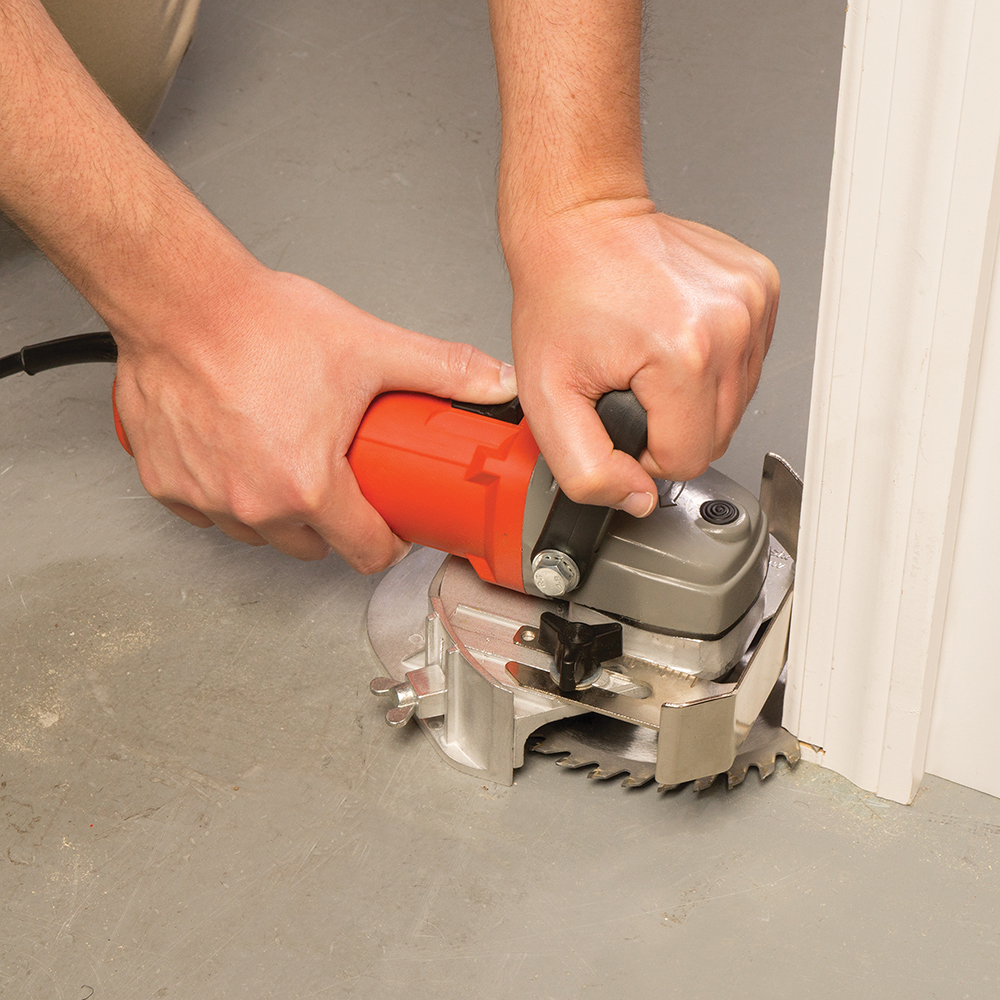
A door jamb cutting tool trims the bottom of a door frame or casing so new flooring can slide beneath it. A manual jamb saw works well for small jobs, while an oscillating multi-tool can help with larger projects and varied cuts.
In American homes, new flooring often meets a door frame in a tight spot. This can happen when you install laminate, luxury vinyl plank, hardwood, or tile. The floor may fit everywhere else, yet the wood trim around the doorway blocks the last plank or tile.
A door jamb cutting tool solves this problem by trimming the lower edge of the frame or casing. The goal is to leave enough room for the new floor to pass underneath without forcing it into place. The right tool depends on the flooring type, the material being cut, the doorway shape, and the amount of work involved.
For a small DIY flooring job, a manual jamb saw may be all you need. An oscillating multi-tool with a suitable flush-cut blade offers more control for many modern flooring projects. A dedicated powered jamb saw can also help on larger jobs, but it may cost more than a homeowner needs to spend.
A door jamb cutting tool trims the bottom of a door jamb or casing. A jamb is the upright part of a door frame. Casing is the decorative trim that covers the joint between the frame and the wall. Both can block new flooring when the floor height changes.
The tool makes a low, controlled cut close to the floor. This lets a plank, board, or tile extend under the trim instead of stopping against it. The finished edge looks cleaner because the flooring does not need an awkward notch around every corner of the frame.
The term covers several tools. Some are hand saws made for cutting close to a flat surface. Others are powered saws designed for undercutting door frames. An oscillating multi-tool can also do the job when fitted with a suitable blade.
Source: smart-toolgroup.com
Door jamb
The vertical frame members on either side of a door opening. The bottom may need trimming when a new floor is thicker than the old one.
Door casing
The decorative trim around the doorway. It may need a small cut so flooring can pass beneath it.
Undercut
A horizontal cut near the bottom of the jamb or casing that creates clearance for flooring.
Flush-cut blade
A blade designed to cut close to a nearby surface. The exact cutting ability depends on the blade shape and the tool.
Why Do You Need to Cut a Door Jamb?
Flooring often looks best when it continues beneath the door trim. Without an undercut, the installer may need to shape each plank around the frame. That can leave small gaps, uneven corners, or visible cuts.
A properly sized undercut allows the flooring to slide under the trim while leaving the required room for movement. It also helps the edge look neat without relying on a wide bead of caulk or an oversized trim piece.
New laminate or vinyl
The added floor height may prevent the first plank from sliding beneath the existing trim.
Hardwood installation
An undercut can create a cleaner edge where wood flooring meets the doorway.
Tile installation
A suitable method may be needed to clear the tile and setting materials, but tile requires a different cutting approach from wood.
Types of Door Jamb Cutting Tools
The best door jamb cutting tool depends on the job, not just the price. A hand saw is simple and needs no power. A powered tool may save effort across several doorways, but it also needs more care and setup.
Before buying anything, check how many doorways need work, what the jamb is made of, and what flooring will go beneath it. Also consider the cut height and the amount of space available around the frame.
Source: m.media-amazon.com
Manual door jamb saw
A hand-powered saw with a low profile that can cut close to the floor. It suits small projects and occasional use, although cutting takes more time and effort.
Oscillating multi-tool
A powered tool that moves its blade through a short oscillating motion. With a suitable flush-cut blade, it can trim wood casing and many wood jambs in confined areas.
Dedicated powered jamb saw
A tool built for undercutting door frames. It may be useful for repeated flooring work, though availability, setup, and rental costs vary.
Hand pull saw
Some fine-tooth pull saws can make controlled cuts near a floor. Check the blade design and clearance before using one as a substitute for a jamb saw.
Manual Door Jamb Saw
A manual jamb saw is a practical option when you have only a few doorways to trim. It does not need a battery, cord, or motor. It can also be easier to control for a small cut when you have room to work.
The main drawback is effort. A dull blade, hard wood, or a long cut can make the job slow. The blade may also wander if you rush or fail to hold it flat against the height guide.
Best fit
Small flooring projects, occasional repairs, and users who prefer a simple hand tool.
Main limit
Cutting speed and ease depend on the blade, wood, access, and the user’s control.
Oscillating Multi-Tool
An oscillating multi-tool is often a flexible choice for a home flooring project. Its compact head can fit into narrow areas, and different blades support different tasks. A wood-cutting blade is suitable for many wood jambs and casings, provided the blade fits the tool and the material.
Use a blade made for the material. A blade that hits a hidden nail may become damaged or kick unexpectedly. Keep the shoe or flat side of the blade stable against the height guide, and do not force the tool through the cut.
Best fit
Several doorways, tight corners, and jobs where one tool may serve other repair needs.
Main limit
Noise, dust, vibration, blade wear, and the risk of damaging nearby surfaces require care.
Dedicated Door Jamb Saw
A dedicated jamb saw is designed to make a low horizontal cut. Some models provide a base or guide that helps set the cut height. This can be useful for flooring installers who need to undercut many doorways.
For one small room, renting may make more sense than buying. Check the rental shop’s instructions, blade condition, cut-depth range, and suitability for the frame material before starting.
Best fit
Repeated undercuts on a larger flooring job.
Main limit
Cost, storage, setup, and the need to match the tool to the job.
How to Choose the Right Tool
Choose a door jamb cutting tool by matching it to the frame material, floor thickness, cut shape, and number of doorways. A low price matters, but a blade that cannot make the needed cut will waste both time and money.
Do not assume every jamb is solid wood. Some frames use engineered wood, composite material, or a thin finish over a different core. If the material is unclear, inspect an exposed edge or ask the flooring or door manufacturer before cutting.
Source: i.ytimg.com
For one or two wood doorways
A manual jamb saw may be enough if you have time and a steady hand.
For many doorways
Consider an oscillating multi-tool or a dedicated powered jamb saw, based on the job size and your comfort with power tools.
For metal frames
Do not use a standard wood blade. Identify the frame material and use a tool and blade approved for that material, or seek professional help.
For tile
Confirm whether the trim is wood or another material and use a suitable method. Never assume a wood-cutting blade can cut tile.
For a very tight doorway
Check the tool’s body size, blade reach, and room to hold it level before choosing it.
Compare the Main Options
This table gives a practical starting point. Actual performance depends on the tool model, blade, frame material, access, and user skill.
Manual jamb saw
Power source: hand. Useful for: small jobs. Trade-off: more time and effort.
Oscillating multi-tool
Power source: cord or battery. Useful for: flexible cutting in tight spots. Trade-off: noise, dust, and blade wear.
Dedicated powered jamb saw
Power source: depends on model. Useful for: repeated undercuts. Trade-off: extra cost and storage.
General hand saw
Power source: hand. Useful for: certain fine cuts if the blade and clearance suit the task. Trade-off: it may be harder to keep the cut level close to the floor.
Check Blade Size and Cutting Depth
The blade must reach far enough into the trim to complete the cut, but it should not extend into hidden areas without a clear reason. Follow the tool maker’s instructions for blade fit, cutting depth, and permitted materials.
A longer blade does not automatically make a better cut. Extra reach can make the blade harder to control. Choose enough reach to finish the cut while keeping the tool stable and away from hidden hazards.
Blade material
Match the blade to wood, metal, or another specified material.
Blade condition
Replace damaged or worn blades according to the manufacturer’s instructions.
Tool compatibility
Confirm that the blade mount fits the tool and is approved for use with it.
Tools and Materials to Prepare
Gather the tool, a piece of the actual flooring, a pencil, and suitable safety gear before cutting. A scrap piece of flooring is the key height guide because it reflects the real floor thickness better than a guess.
If the new floor has an underlay, use the correct layer stack when setting the cut height. For tile, account for the planned tile and setting system. Do not add an arbitrary amount of clearance that could leave an unsightly gap.
Source: gappower.com
Door jamb saw or suitable alternative
Choose a tool and blade that match the frame material and the size of the cut.
Flooring offcut
Use the actual plank, board, or tile as a height guide. Include any underlay or other layer that affects the finished height.
Pencil and ruler
Mark the work area and check the clearance before cutting.
Safety glasses and hearing protection
Wear protection suited to the tool and its noise and debris.
Dust control
Use suitable extraction when permitted by the tool instructions. Keep dust away from people, pets, and sensitive equipment.
Work light
Make the cutting line and surrounding area easy to see.
Inspect the Doorway First
Look at both sides of the frame and the wall near the floor. Check for visible fasteners, metal parts, damaged trim, and signs of pipes or wiring. If you suspect a hidden service or cannot tell what lies behind the surface, stop and get the area checked before cutting.
Check whether the frame is part of a rated fire door, an exterior door assembly, or another system with special requirements. Altering these parts may affect their fit or rating. Ask a qualified door or building professional if you are unsure.
Stop if the material is unknown
Do not guess whether a frame is wood, metal, or composite.
Check for fasteners
A blade striking a nail or screw can damage the blade and cause sudden movement.
Protect nearby surfaces
Move loose items and protect the finished floor and wall from scratches and debris.
How to Cut a Door Jamb for New Flooring
The safest way to set the cut height is to use the new flooring as a guide. Work slowly and check the fit before removing more material. These steps apply mainly to wood jambs and casings; other materials may require a different method.
Source: i.ytimg.com
Step 1: Prepare the work area
Remove loose rugs, tools, and debris. Make sure the floor is stable and the doorway is clear. Follow the tool manual before fitting or changing a blade.
Step 2: Set the height
Place a piece of the new flooring, with the required underlay if applicable, flat beside the jamb. Rest the saw or blade guide on the sample as directed by the tool maker.
Step 3: Mark and check
Confirm that the intended cut leaves enough room for the floor and any required movement gap. Check both sides of the casing, since the trim may not be the same thickness throughout.
Step 4: Make a controlled cut
Hold the tool steady and keep the blade aligned with the guide. Let the blade do the work. Do not twist the blade or force it into the trim.
Step 5: Remove the waste
Turn off and disconnect the tool before clearing loose pieces or adjusting the blade. Remove the cut section with a suitable hand tool if needed, without prying against the finished floor.
Step 6: Test the fit
Slide the flooring sample under the cut. It should pass beneath the trim without force, while the floor still has the clearance required by its installation instructions.
Step 7: Repeat carefully
Use the same height guide at the remaining jambs and casings. Check each doorway separately because floor levels and trim shapes can vary.
How Much Should You Cut Off?
There is no single cut height for every doorway. The needed clearance depends on the actual flooring thickness, any underlay or setting layer, the tool’s guide, and the flooring maker’s instructions.
Use a sample of the complete floor build-up as your reference. Do not cut extra material just to make the plank slide in more easily. A large gap above the flooring may remain visible and can weaken the neat appearance of the finish.
For floating laminate or vinyl
Leave the movement clearance required by the flooring maker. Do not wedge the floor tightly beneath the frame.
For nail-down or glue-down wood
Follow the flooring system’s installation instructions and allow for the specified materials and movement.
For tile
Use the planned tile and setting materials to establish the height. Check the trim material and use an appropriate cutting method.
What a Good Cut Looks Like
A good undercut is level, clean, and wide enough for the flooring to pass below the trim. The cut should not split the casing, loosen the jamb, or leave a large visible gap above the finished floor.
The flooring should sit flat and remain free to move as its installation system requires. If the plank catches, check the cut height and shape before forcing it into place.
Clean edge
The cut does not have large splinters or broken pieces.
Correct clearance
The flooring sample fits under the trim without pressure or an oversized gap.
Stable frame
The jamb and casing remain firmly attached and show no signs of damage.
Door Jamb Cutting for Different Floor Types
Floor type changes the height, clearance, and tool choice. The same method will not suit every floor, especially when the material beneath the door trim is not wood.
Use the floor manufacturer’s installation guide as the final reference. It sets the required expansion gaps, underlay rules, and limits that a general guide cannot establish for every product.
Source: m.media-amazon.com
Laminate flooring
Account for the plank and underlay, if used. Keep the required expansion gap and avoid pinning a floating floor beneath the frame.
Luxury vinyl plank
Check the thickness and installation type. Some products float, while others use adhesive or have different movement requirements.
Solid or engineered hardwood
Follow the product’s fastening or adhesive method and the specified clearance. Check the frame and trim before cutting.
Ceramic or porcelain tile
A wood blade is not intended to cut tile. If the trim is wood, plan the undercut around the tile and setting-layer height; if the frame is metal or masonry, use a suitable method or get professional help.
Carpet
A jamb undercut may not be needed in every carpet installation. The carpet and any transition system determine how the edge should finish.
Do You Need to Cut the Door Too?
Sometimes. A new floor may raise the surface enough that the door slab rubs or will not close. Trimming the jamb creates room for the floor beneath the frame, but it does not change the clearance beneath the moving door itself.
Test the door after accounting for the finished floor height. If the door needs trimming, check its construction first. Some doors are hollow-core, fire-rated, exterior, or covered by a warranty that limits how much material may be removed.
Check the swing
Open and close the door slowly to find any contact with the floor.
Check the door type
Look up the maker’s limits before cutting a hollow-core, fire-rated, or exterior door.
Avoid excessive removal
If the needed cut exceeds the permitted amount or the door’s construction is unclear, contact a qualified door professional.
Common Door Jamb Cutting Problems and Fixes
Most problems come from a wrong cut height, a poor blade choice, or rushing the tool. Check the cause before removing more wood. Extra cutting cannot fix every fit problem and may leave the frame damaged.
Source: practicalprods.com
The flooring will not slide under the jamb
The cut may be too low, uneven, or blocked by a nail or loose debris. Stop and inspect the opening. Check the flooring sample and trim shape before making a small, controlled correction.
The gap above the floor is too large
The cut may have been set too high or the frame may have an uneven profile. Do not fill a large gap with an improvised repair without checking the intended finish and frame requirements.
The cut is crooked
The guide may have moved, or the tool may not have rested flat on the flooring sample. Recheck the cut line and use a stable guide before continuing.
The wood splinters
A worn or unsuitable blade, poor support, or aggressive cutting may be the cause. Stop the tool, inspect the blade, and follow the maker’s instructions for a clean cut.
The blade stops or binds
The cut may be pinching the blade or the tool may be meeting a hidden fastener. Turn off the tool and disconnect its power source before inspecting the cause.
The door frame moves
The cut may have reached a fastener or removed too much material. Stop work. Do not keep cutting until the frame’s stability and construction have been checked.
When Should You Stop and Call a Professional?
Stop if you find a metal frame, hidden wiring, plumbing, suspected hazardous material, or a damaged frame. Also stop if the doorway is part of a fire-rated assembly or another system with special installation rules that you cannot verify.
A flooring installer or qualified carpenter can assess the frame and the needed cut. If there is a chance of hidden electrical or plumbing services, have the relevant qualified trade check the area before work continues.
Unknown frame construction
Do not cut until the material and the correct method are known.
Possible hidden services
Do not rely on guesswork when wiring or plumbing may be near the cut.
Structural or rated door concerns
Ask a qualified professional before changing a frame or door with special performance requirements.
Safety Tips for Using a Door Jamb Saw
A low cut can place your hands close to the blade and floor. Read the tool manual, use the correct blade, and keep your body out of the blade’s path. Never change a blade or clear a jam while the tool can start.
Wear eye protection and hearing protection suited to the tool. Use dust control that is approved for the equipment and material. Keep children and pets away from the work area, and do not work in poor light.
Source: robertsconsolidated.com
Secure the work area
Remove trip hazards and keep the floor sample and tool stable.
Check the blade
Make sure it is suitable, secure, and free from visible damage before use.
Disconnect before adjustments
Unplug a corded tool or remove its battery as directed before changing blades or clearing debris.
Avoid loose clothing
Keep clothing, hair, and fingers away from moving parts.
Control dust
Use suitable extraction and follow the tool and material guidance. Do not blow dust toward other people.
Do not force the cut
If the blade binds, stop and find the cause rather than pushing harder.
Can You Cut a Jamb While the Flooring Is Already Installed?
It may be possible, but it is harder to protect the finished floor. The blade can scratch the surface or trap grit beneath the tool. A manual saw may also drag debris across the floor if the area is not kept clean.
If the floor is already installed, protect the surface with a suitable barrier that does not interfere with the tool’s base. Check the tool instructions before adding anything beneath it. If you cannot keep the blade and base clear of the finished floor, get help from a flooring professional.
Protect the surface
Keep grit and cut waste away from the finished floor.
Keep the tool stable
Do not place loose or uneven padding beneath the tool.
Test first
Check the method in a hidden or low-risk spot when the job allows it.
Should You Buy, Rent, or Use a Tool You Own?
The right choice depends on how often you will cut jambs and what tools you already have. Buying a dedicated saw for one doorway may not be worth it. Renting can be useful for a large flooring project, while a suitable multi-tool you already own may handle a small wood trim job.
Compare the total cost rather than the tool price alone. Include the correct blade, rental time, any needed dust control, and the cost of fixing a damaged frame or floor. Check the rental tool’s condition and instructions before taking it home.
Source: krafttool.com
Use a tool you own
Choose this route if it is compatible with the material and you have the right blade and enough control.
Buy a manual saw
Consider it for occasional work when a slow, hand-powered cut is acceptable.
Rent a dedicated saw
Consider renting when many doorways need the same type of undercut and the tool is suitable for the job.
Hire a professional
This may be the better option for metal frames, complex trim, uncertain hazards, or rated door assemblies.
What to Check Before Paying
Confirm that the tool can reach the cut, fit into the doorway, and work with the frame material. Check blade availability and replacement cost. For a rental, ask whether the needed blade is included and whether the tool is ready to use.
Avoid choosing a tool only because it has many attachments or a high power rating. The key needs are a suitable blade, a stable cut, enough access, and a safe way to control dust and debris.
Compatibility
Check the tool, blade mount, and material requirements.
Access
Confirm that the tool fits around the jamb and can sit at the required height.
Total cost
Include blades, rental fees, and any other required supplies.
Research Notes and Useful Follow-Up Questions
The main reader need is to identify a suitable tool and make a clean, correctly sized undercut. The most useful follow-up needs are blade selection, cut height, floor compatibility, and the point at which the work should stop for safety. These topics follow directly from the steps and common problems described above.
A full competitor coverage audit would require live inspection of current search results, manufacturer instructions, and relevant flooring installation guides. No claim is made here that a specific search position, search volume, or competitor gap has been verified. The guidance is general and should be checked against the exact tool and flooring product.
Source: i.ytimg.com
Before the cut
Identify the frame material, choose a compatible tool, and set the height with a flooring sample.
During the cut
Keep the tool steady, control dust, and stop if the blade binds or an unexpected material appears.
After the cut
Test the fit, preserve the floor’s required movement gap, and check that the frame remains secure.
Next Question: Which Blade Should You Use?
For a wood jamb, choose a blade approved for wood and compatible with the tool. If you suspect nails or other metal, use only a blade specifically rated for that task and follow the manufacturer’s guidance. A blade’s appearance alone does not prove that it can safely cut every material.
Decision basis
The frame material and any hidden fasteners determine the blade choice.
Next Question: What if the Jamb Is Metal?
Do not use a standard wood-cutting setup on a metal frame. Identify the metal type and the frame’s role before choosing a cutting method. If the frame is rated, structural, or difficult to identify, ask a qualified professional to assess it.
Decision basis
Material, frame design, and the risk of hidden services change the safe method.
Frequently Asked Questions
Q
What is the best tool for cutting a door jamb?
There is no single best tool for every doorway. A manual jamb saw can work well for a small wood trim job, while an oscillating multi-tool offers flexibility for many flooring projects. A dedicated powered jamb saw may suit repeated undercuts. Choose based on frame material, access, cut height, and how many doorways need work.
Q
Can I use an oscillating multi-tool to cut a door jamb?
Yes, an oscillating multi-tool can cut many wood jambs and casings when fitted with a suitable flush-cut blade. Use the flooring sample as a height guide, keep the tool stable, and follow the tool maker’s instructions. Stop if the blade meets an unknown material or binds.
Q
How do I know how high to cut the door jamb?
Use a sample of the actual flooring and include any underlay or setting layers that affect the finished height. Set the cut so the floor can pass beneath the trim while keeping the clearance required by the flooring maker. Avoid cutting higher than needed.
Q
Can a door jamb saw cut metal?
Only if the specific tool and blade are approved for the metal and the intended cut. A standard wood-cutting blade is not suitable for every metal frame. Identify the frame material first, and get professional help if its construction or role is unclear.
Q
Do I need to cut the door slab as well as the jamb?
Not always. The jamb cut lets the floor pass beneath the fixed frame, while the door slab may still rub against the raised floor. Test the door after accounting for the finished floor height. Check the door maker’s limits before trimming a hollow-core, exterior, or fire-rated door.
Q
Can I cut a door jamb without removing the door?
Often, yes, if the tool has enough room and the door can be kept safely out of the cutting path. Some doorways are easier to access with the door removed. Follow the tool instructions, secure the work area, and do not force the blade into a tight space.
Q
Is a door jamb undercut needed for vinyl plank flooring?
It is often useful when the trim blocks the plank, but the need depends on the floor height and doorway shape. Check the vinyl flooring maker’s installation guide for movement gaps and edge details. Do not wedge a floating floor tightly beneath the jamb.
✦ Wrapping Up
Conclusion
A door jamb cutting tool helps create a neat edge where new flooring meets a doorway. For a small wood trim job, a manual jamb saw may be enough. For several doorways or tight cuts, an oscillating multi-tool or a dedicated powered jamb saw may be more useful.
The key is to set the cut from the actual flooring, use a blade made for the material, and work at a steady pace. Check the fit before cutting more, preserve the floor’s required movement gap, and stop if the frame material or hidden hazards are unclear.
💡 Key Takeaway
Before you cut, place a sample of the full flooring build-up beside the jamb. Use it to set the cut height, confirm the correct tool and blade, and check the manufacturer’s installation instructions. If the frame is metal, rated, damaged, or of unknown construction, get qualified help.