A Husky 4 drawer tool box is a metal storage unit for hand tools, repair gear, and small workshop items. The right model depends on whether you need a top chest for a workbench or a rolling cabinet for floor storage. Check the model number, size, drawer rating, lock, and total weight capacity before you buy.
In American homes, garages, and small workshops, a four-drawer tool box can keep repair tools close at hand without taking up a full wall. It can hold items such as pliers, screwdrivers, sockets, wrenches, tape measures, and other small gear. A drawer chest also helps keep sharp tools off the floor and makes it easier to find the right tool during a repair.
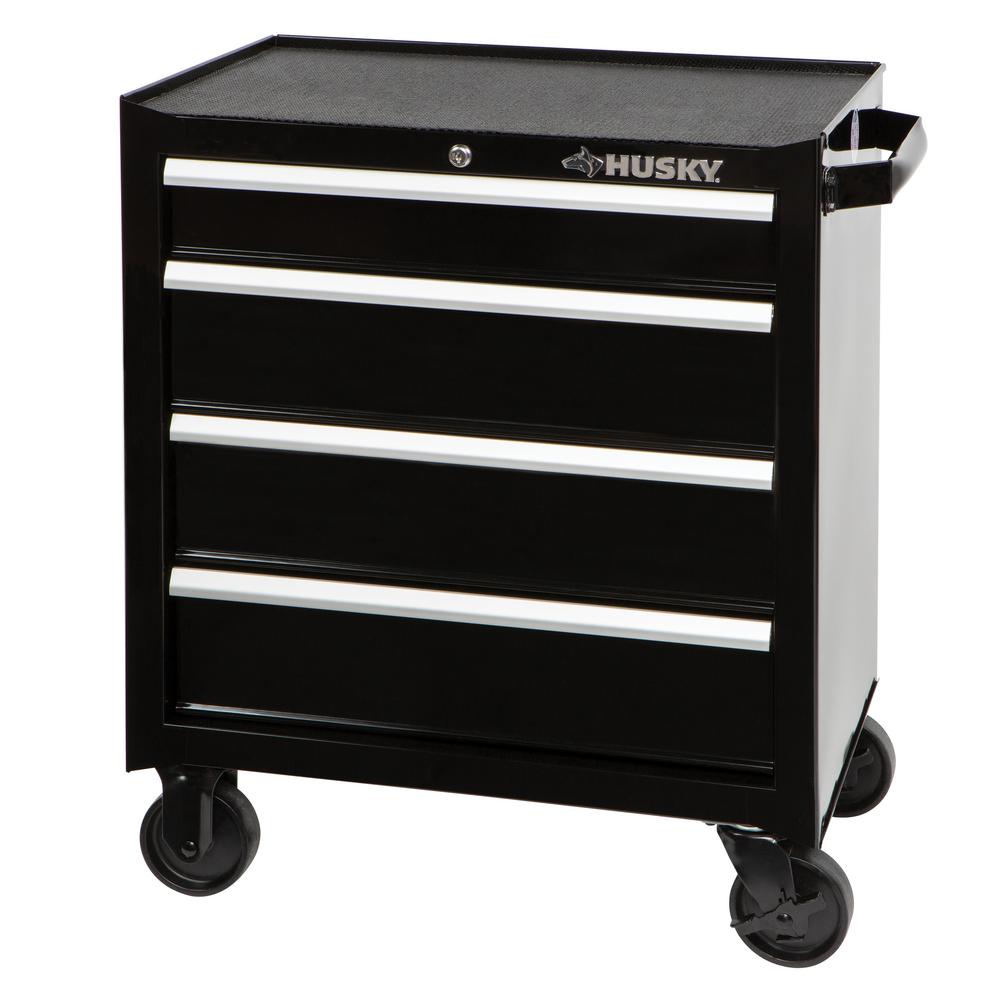
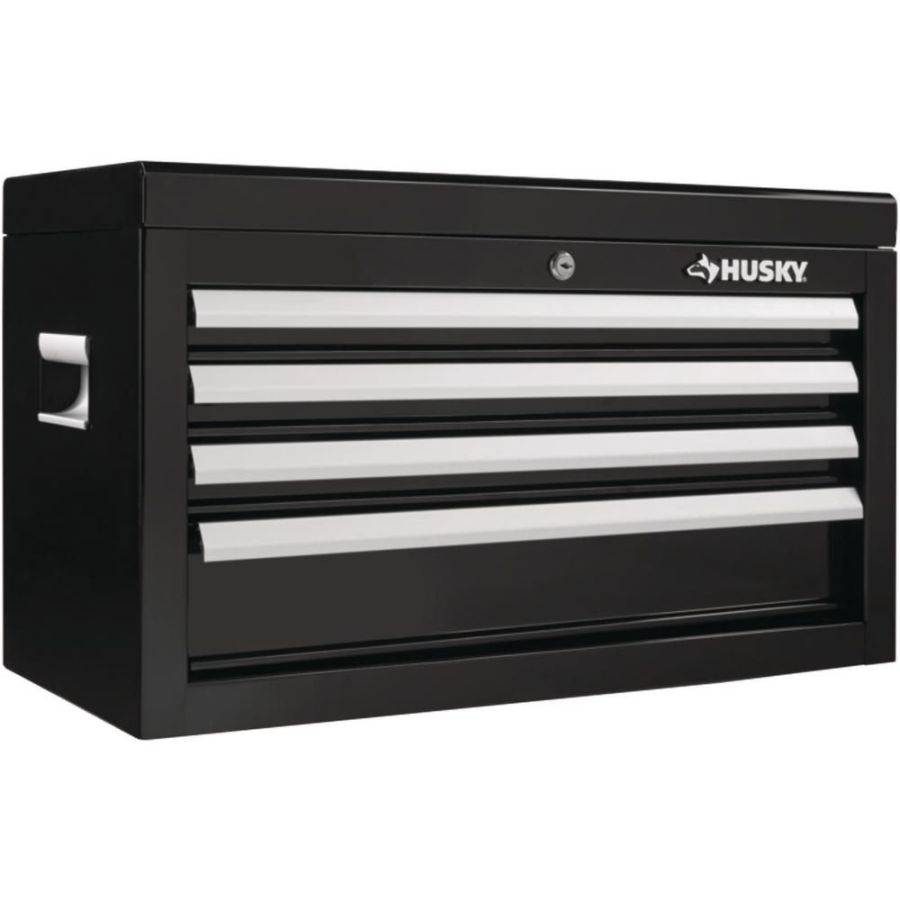
Husky sells different types of tool storage, so the phrase Husky 4 drawer tool box does not point to one single design. Two useful examples are the hkst98065bk top tool chest and the HKST98066BK rolling tool cabinet. They have four drawers, but their shapes and intended placement differ. This guide explains those differences and shows what to check before buying one in the United States.
The details below use published product information for the named models. They are not claims from hands-on testing. Product prices, stock, model details, and store pickup options can change, so confirm the current listing and product label before making a purchase.
A Husky four-drawer tool box is a tool storage unit with four separate pull-out drawers. The drawers let you sort tools by type, size, or task. Instead of placing every item in one large bin, you can keep small tools in shallow spaces and reserve larger drawers for bulkier gear.
Husky is a tool storage brand sold through The Home Depot in the United States. Its range includes portable boxes, top chests, rolling cabinets, and larger storage systems. A four-drawer count alone does not tell you the unit’s width, depth, height, or load rating.
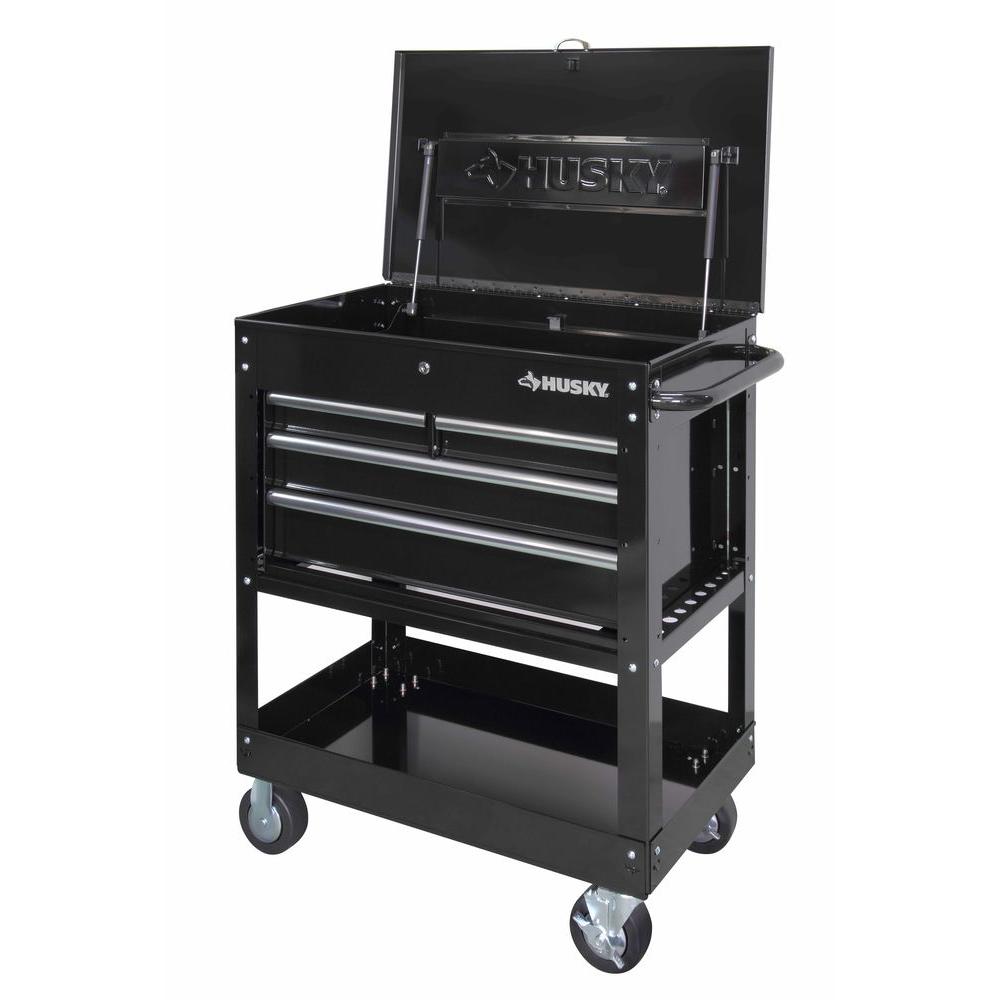
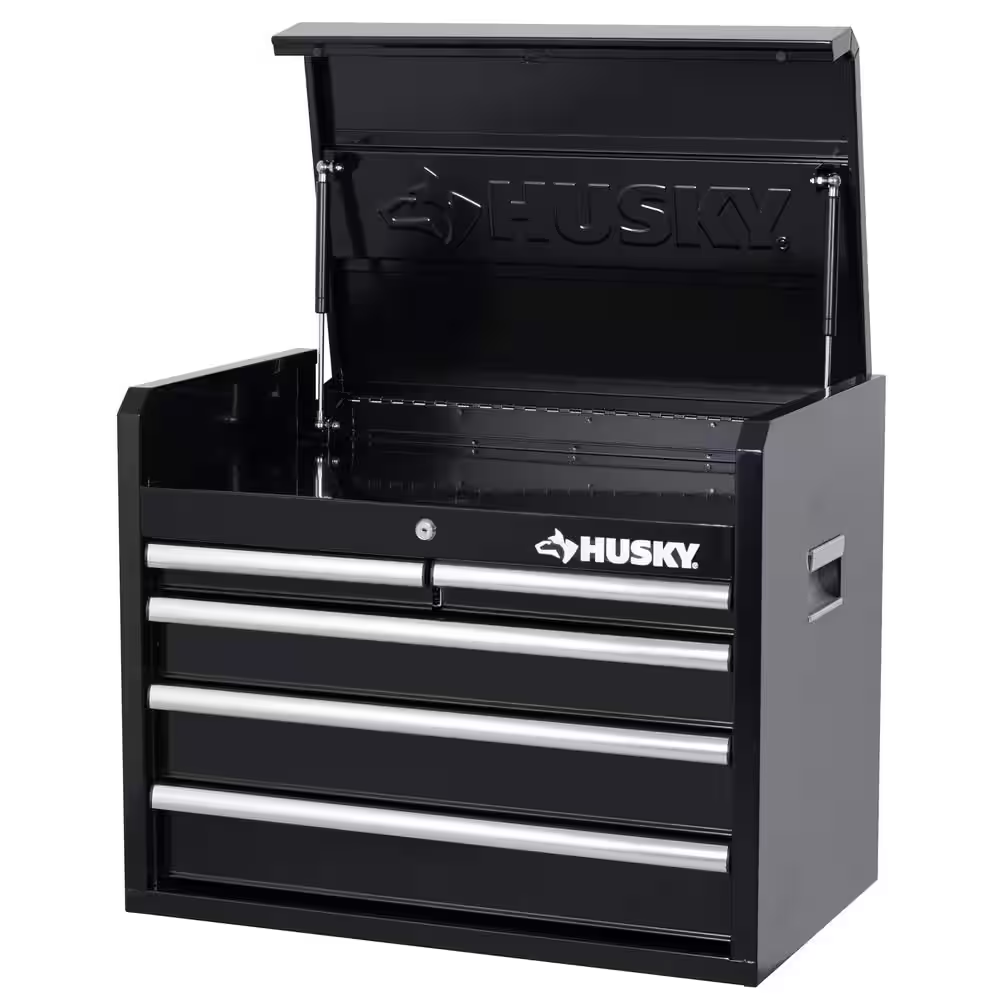
The most useful first step is to identify the exact product. A top chest and a rolling cabinet may look similar in photos, yet one sits on a workbench while the other stands on wheels. The model number helps you find the correct dimensions, manual, warranty terms, and compatible parts.
Source: d2r6otqmgmnngs.cloudfront.net
Top tool chest
A box made to sit on a bench or a suitable lower cabinet. It can suit a fixed work area where tools need to stay within easy reach.
Rolling tool cabinet
A floor-standing unit with wheels. It can be moved around a garage or workshop when the floor, load, and wheel design allow safe movement.
Used or auction tool box
A pre-owned unit that may cost less upfront. Its value depends on its condition, included parts, working drawers, and any repair costs.
Why the Four-Drawer Layout Matters
Four drawers give you a simple way to split a small tool collection into groups. You might place screwdrivers and pliers in one drawer, sockets in another, and measuring tools in a third. The fourth drawer can hold items used less often, provided they fit and stay within the drawer’s load limit.
This layout works best when you choose a clear system and keep using it. Mixing loose screws, heavy sockets, long tools, and fragile items in every drawer can make the box less useful. Drawer count helps with sorting, but drawer depth and width decide what actually fits.
Sort by task
Keep common home repair tools together so you do not need to open every drawer.
Use dividers
Small trays or dividers can keep bits, fasteners, and other loose parts from mixing.
Husky HKST98065BK vs. HKST98066BK
The key choice is between a top chest and a rolling cabinet. The HKST98065BK is the 26-inch-wide top tool chest, while the HKST98066BK is the roughly 26.5-inch-wide rolling cabinet. Both are listed in gloss black and have four drawers, but they serve different storage setups.
Published Home Depot listings give the top chest dimensions as about 26 inches wide and 12 inches deep. The rolling cabinet is listed at 26.5 inches wide, 18 inches deep, and 32.76 inches high. Check the exact listing for the height of the top chest and any changes to a newer product version.
The rolling cabinet needs floor space and room for its wheels and handle. The top chest needs a stable surface that can bear the combined weight of the chest and its contents. A top chest should not be placed on an unsteady table or a bench that is too weak for the load.
Source: images.homedepot-static.com
Choose the top chest if
You already have a strong workbench or a compatible cabinet and want a compact place for small tools.
Choose the rolling cabinet if
You want floor-level storage that can move around a suitable workshop or garage.
Check before pairing them
Do not assume that two boxes with similar widths will fit together. Confirm the footprint, support points, attachment method, and combined load limits.
Dimensions and Load Ratings at a Glance
The following table compares published information for the two model numbers. Measurements can be revised or displayed differently across product pages, so use the current manufacturer’s or retailer’s specifications for the exact item you plan to buy.
HKST98065BK top chest
Published size: 26 inches wide by 12 inches deep. The listing identifies four drawers, 50-pound ball-bearing drawer slides, and a 650-pound overall weight capacity.
HKST98066BK rolling cabinet
Published size: 26.5 inches wide by 18 inches deep by 32.76 inches high. The listing identifies four drawers, 50-pound ball-bearing drawer slides, wheels, and a 650-pound overall weight capacity.
Key Features to Check Before Buying
The number of drawers is only one part of the buying decision. Drawer slide ratings, locking features, liners, handles, and the overall load limit affect how useful the tool box will be. Read the details for the exact model rather than assuming every Husky chest has the same parts.
The two models discussed here are listed with ball-bearing drawer slides rated at 50 pounds. Ball bearings help drawers move with less friction, while the rating states a load limit for the slide assembly under the maker’s specified conditions. It does not mean that each drawer can hold any amount of weight without regard to how the load is placed.
The product listings also describe a locking system and drawer liners. These can help with routine storage, but you should check that the keys, liners, and other listed parts are included when buying a used unit. A lock is a basic access control feature, not a guarantee against theft.
Source: i.pinimg.com
Ball-bearing slides
These support drawer movement. Check for smooth travel, sticking, loose hardware, and any signs that a slide has bent.
Drawer liners
Liners can reduce metal-on-metal contact and help tools stay in place. Replace torn or missing liners with suitable material.
Locking system
Confirm that the lock turns, the drawers secure properly, and the keys are present if the unit is sold as complete.
Handles and trim
Check for loose handles, sharp damage, bent drawer fronts, and parts that prevent a drawer from closing fully.
Understand the 50-Pound Drawer Rating
A 50-pound slide rating is not the same as a 650-pound total cabinet rating. The slide rating concerns the drawer’s slide hardware, while the overall rating concerns the tool box or cabinet under the conditions set by its maker. You must respect both limits.
Heavy sockets, steel bars, and large tools can add up fast. Place heavy items low when possible, spread the load, and avoid dropping tools into a drawer. If the manual gives a lower limit for a particular setup, follow that limit.
Weigh dense tool sets
A small collection of steel tools may weigh more than its size suggests.
Do not overload a drawer
If the load is near or above the rated limit, move some tools to another suitable storage unit.
How Much Can a Husky Four-Drawer Tool Box Hold?
Capacity depends on the model, the usable drawer space, and the weight of your tools. A box may have enough room for a large number of small items but still be unsuitable for a few very heavy tools. Check both physical fit and weight before filling the drawers.
For the HKST98066BK, a published listing gives an overall capacity of 650 pounds and a holding capacity of 8,030 cubic inches. Those figures describe the listed cabinet and should not be used as a promise that every drawer can take a quarter of the total load. The top chest has its own dimensions and usable storage volume.
The stated overall capacity also does not replace the need for a sound floor, proper wheel use, or a suitable bench. A load can be within a listed limit yet still be hard to move safely if it is poorly balanced. Follow the product manual for loading, moving, and placing the box.
Source: auctioneersoftware.s3.amazonaws.com
Small hand tools
Screwdrivers, pliers, hex keys, small wrenches, and measuring tools often fit well in drawer storage.
Socket sets and bits
Trays and cases help keep sets together and stop loose pieces from spreading across the drawer.
Long or bulky tools
Check the clear inside length and height before buying. A tool that fits the outside dimensions may not fit inside a drawer.
Power tools and batteries
Measure each item and consider its weight. Larger drills, chargers, and batteries may take up more room than expected.
Estimate Your Storage Needs Before Shopping
Start by grouping your tools into small, medium, and bulky items. Measure the longest tools and the widest cases. Then compare those measurements with the usable drawer space shown in the manual or measured on the actual unit.
Leave room to lift tools out without scraping your hands against the drawer edges. A tightly packed drawer can hide small parts and make it harder to close the box. If you already own several large tool cases, a larger cabinet may suit you better than a compact four-drawer chest.
Make a tool list
Write down the tools you use most often and the space each group needs.
Measure the largest item
Use the longest or tallest tool to test whether the drawer layout will work.
Plan for future tools
Leave some open space if you expect your tool collection to grow.
How to Set Up and Organize the Tool Box
A good setup starts with a stable place for the tool box and a clear plan for the drawers. For a top chest, check that the bench is level and strong enough for the loaded chest. For a rolling cabinet, choose a flat floor and check the wheels and brakes before adding tools.
Keep the most-used tools where you can reach them without bending or stretching too far. Place heavier items low when the design allows it, and do not exceed the rating for any drawer or the whole unit. Use trays for small parts and keep sharp edges covered where practical.
Before loading a used box, open every drawer and check the slides. Remove loose dirt, rust flakes, and old debris. Do not use a drawer that binds badly or appears to be pulling away from its slide.
Source: i.ebayimg.com
Drawer one
Keep frequently used screwdrivers, pliers, and small hand tools together.
Drawer two
Use fitted trays for sockets, bits, and small fastening parts.
Drawer three
Store measuring tools, small repair supplies, and other items that need a clear space.
Drawer four
Use the remaining drawer for suitable larger items, while respecting its dimensions and weight rating.
A Simple Setup Check
After arranging the tools, close each drawer slowly. Check that no item sticks above the drawer edge or blocks the closing path. Then lock and unlock the box to make sure the drawers respond as expected.
For a rolling cabinet, test the wheels on the intended floor before moving a loaded unit. Use any supplied wheel locks when the cabinet is parked. Do not roll the box down stairs, over large gaps, or across a slope that could cause it to tip.
Success looks like this
Every drawer opens and closes smoothly, tools stay in place, and the box remains stable.
If a drawer sticks
Remove its contents and inspect for a misplaced tool, debris, bent metal, or loose slide hardware before using it again.
What Is the Price of a Husky 4 Drawer Tool Box?
The price depends on the model, the seller, current stock, and whether the tool box is new, used, or damaged. A top chest may have a different price from a rolling cabinet even when both have four drawers. Do not use an old listing or an auction result as proof of today’s retail price.
At the time of the research for this guide, Home Depot search listings showed a price of $159 for the HKST98065BK top chest and $219 for the HKST98066BK rolling cabinet. These are observed listing prices, not a promise that the same prices or stock will remain available. Check the current product page and your local store before buying.
A low used price may not be the best deal if the unit needs new slides, wheels, keys, or other parts. Compare the final cost, including transport and repairs, with the price of a new box. Also check the seller’s return terms and the manufacturer’s warranty conditions.
Source: images.homedepot-static.com
New retail unit
Check the current price, included parts, shipping or pickup fees, and return terms.
Used unit
Inspect the drawers, lock, body, wheels, and handles. Ask whether all keys and liners are included.
Scratch-and-dent unit
Look closely at the damaged area. Cosmetic marks may be minor, but a bent frame or misaligned drawer can affect use.
Auction unit
Read the lot details and buyer fees. Confirm whether the sale includes the contents, keys, and all removable parts.
Is a Used Husky Tool Box Worth Buying?
A used Husky tool box can make sense if the body is sound and all four drawers work as intended. A few paint marks may not matter for a home garage. Bent rails, a warped frame, badly rusted metal, or a lock that cannot be opened may cost more to fix than expected.
Inspect the box in person when possible. Pull each drawer out to its normal stopping point, then slide it back in. Check for grinding, side-to-side movement, gaps, and signs of past impact. If you cannot inspect it, ask the seller for clear photos of the inside, back, sides, drawers, wheels, and model label.
Good signs
Straight drawer fronts, smooth slides, a stable frame, working locks, and no major rust or missing hardware.
Warning signs
Drawers that fall off their tracks, a twisted cabinet, broken wheels, sharp metal edges, or a seller who cannot confirm the model.
Common Problems and Safe Troubleshooting
A four-drawer tool box should open, close, and remain stable during normal use. When a drawer sticks or the cabinet moves in an unsafe way, stop using the affected part until you find the cause. Do not force a jammed drawer or try to move a loaded cabinet with a damaged wheel.
Start with the simplest checks. Remove the drawer’s contents, look for tools blocking the track, and check for loose parts. If the metal frame or slide is bent, a basic clean may not solve the problem. Check the product manual or contact Husky support for model-specific repair guidance.
A loaded rolling cabinet needs extra care. Keep the load balanced, secure the drawers before moving the cabinet, and use wheel locks when parked. Ask for help with a heavy unit rather than risking a strain or a tip-over.
Source: d2r6otqmgmnngs.cloudfront.net
Drawer will not close
Check for a tool or liner blocking the path. Remove the load and inspect the slide and drawer alignment.
Drawer feels rough
Look for dirt, damage, loose screws, or a bent slide. Do not add random oil or grease unless the manual allows it.
Lock will not work
Check the key and lock position without forcing it. For a used unit with missing keys, ask a qualified locksmith or the maker about suitable options.
Cabinet rolls unexpectedly
Park it on a level surface, engage the wheel locks, and check for damaged casters before using it again.
Rust appears
Remove loose items and assess the affected area. Surface rust may be manageable, but deep rust or weakened metal can make the unit unsafe.
Do Not Ignore Frame or Wheel Damage
A drawer problem may be a sign of a larger issue if several drawers bind at once. A bent frame can change the alignment of the entire cabinet. Stop loading the unit if you suspect structural damage, and do not try to straighten a loaded cabinet.
Replace damaged parts only with parts confirmed to fit the exact model. If the model is discontinued, ask the manufacturer or retailer whether an approved replacement is available. Do not assume that parts from another four-drawer Husky cabinet will fit.
Before moving
Close and secure the drawers, check the path, and verify that the wheels are sound.
Before repair
Unload the affected area and follow the product instructions. Seek qualified help for major frame or wheel damage.
How to Choose the Right Model for Your Garage
The best model is the one that fits your tools, your space, and the way you work. A compact top chest can be useful when you already have a strong bench. A rolling cabinet can suit a garage where tools need to move between work areas. Neither design is automatically better for every buyer.
Measure the intended space before ordering. Include the room needed to open drawers, reach the lock, and move around the unit. For a rolling cabinet, account for its wheels and handle as well as its main body.
Think about your next few years of tool use, too. If you expect to add large power tools or many socket sets, a small four-drawer unit may fill up quickly. A larger cabinet or a modular storage setup may cost more at first but provide more room for growth.
Source: i.ebayimg.com
For home repairs
A top chest may suit a compact set of hand tools stored near a stable workbench.
For a shared garage
A rolling cabinet can help keep tools grouped in one place, as long as users park and secure it safely.
For frequent mobile work
Check wheel design, floor conditions, total loaded weight, and whether the unit is suitable for the route you plan to take.
For a growing tool collection
Compare the four-drawer unit with larger cabinets based on usable space, access, cost, and future needs.
A Final Pre-Purchase Checklist
Before paying, confirm the model number and compare it with the product listing. Measure the space and the largest tools. Read the capacity details, check the return policy, and verify the parts that come with the box.
For a used unit, test every drawer and inspect the frame, lock, handles, and wheels. For a new unit, keep the receipt and manual. Store the model and purchase details in a safe place in case you need support later.
Model confirmed
The label matches the listing and the design you want.
Space measured
The box fits with room to open drawers and move safely.
Load checked
The drawer and overall weight limits suit the tools you plan to store.
Condition reviewed
There is no major frame, slide, lock, or wheel damage.
Total cost known
The price includes any delivery, repair, or missing-part costs you expect to pay.
Frequently Asked Questions
Q
Is the Husky 4 drawer tool box good for home use?
It can be a practical choice for home repairs, hobby work, and a small garage tool collection. The top chest suits a stable workbench, while the rolling cabinet provides floor-level storage. Check the dimensions and weight limits to make sure the model fits your needs.
Q
What is the difference between HKST98065BK and HKST98066BK?
The HKST98065BK is a four-drawer top chest listed at about 26 inches wide and 12 inches deep. The HKST98066BK is a four-drawer rolling cabinet listed at 26.5 inches wide, 18 inches deep, and 32.76 inches high. Confirm current specifications before buying, as listings and product versions can change.
Q
Can I stack a Husky top tool chest on a rolling cabinet?
Do not assume that any two tool boxes can be safely stacked. Confirm that the models are designed to work together, that the cabinet can support the combined load, and that the chest can be secured as directed by the manufacturer. A stable fit and safe load matter more than matching widths.
Q
Can I buy a used Husky four-drawer tool box?
Yes, if the seller offers a fair price and the unit is in sound condition. Test all four drawers, inspect the slides and frame, check the lock, and look for rust or wheel damage. Ask whether keys and liners are included, and account for repair costs before agreeing to the price.
Q
How do I find replacement keys or parts for a Husky tool box?
Start with the model number on the product label and check the manufacturer’s support resources or contact the retailer. Give the support team the exact model and describe the missing or damaged part. Parts may differ between models, so do not order a key, slide, or caster based only on the four-drawer design.
Q
Can a Husky four-drawer tool box hold power tools?
It may hold smaller power tools if they fit inside the drawers and remain within the listed load limits. Measure the tools and cases before buying, and check each drawer’s usable dimensions. Larger tools may fit better in a deeper or wider cabinet.
Q
Does the lock make the tool box theft-proof?
No. A lock can help prevent casual access, but it does not guarantee that tools cannot be stolen. Keep valuable tools in a secure area, limit access to keys, and use suitable additional security when the risk warrants it.
✦ Wrapping Up
Conclusion
A Husky 4 drawer tool box can help keep a garage or workshop neat without taking up space meant for larger tools. The most important choice is the design. The HKST98065BK top chest suits a suitable bench, while the HKST98066BK rolling cabinet offers a wheeled floor-storage option.
Check the exact model, usable drawer space, slide rating, overall load limit, and included parts before you buy. For a used box, inspect the frame, slides, lock, and wheels in person when possible. For a new one, confirm the current price, stock, warranty terms, and return policy with the seller.
The right four-drawer box should fit the space you have, hold the tools you own, and let you reach them without a struggle. A little measuring before purchase can save you the cost and hassle of choosing the wrong unit.
💡 Key Takeaway
Measure your available space and your largest tools, then compare the HKST98065BK top chest with the HKST98066BK rolling cabinet using the current product listings. Confirm the weight limits, included parts, and final price before placing an order.