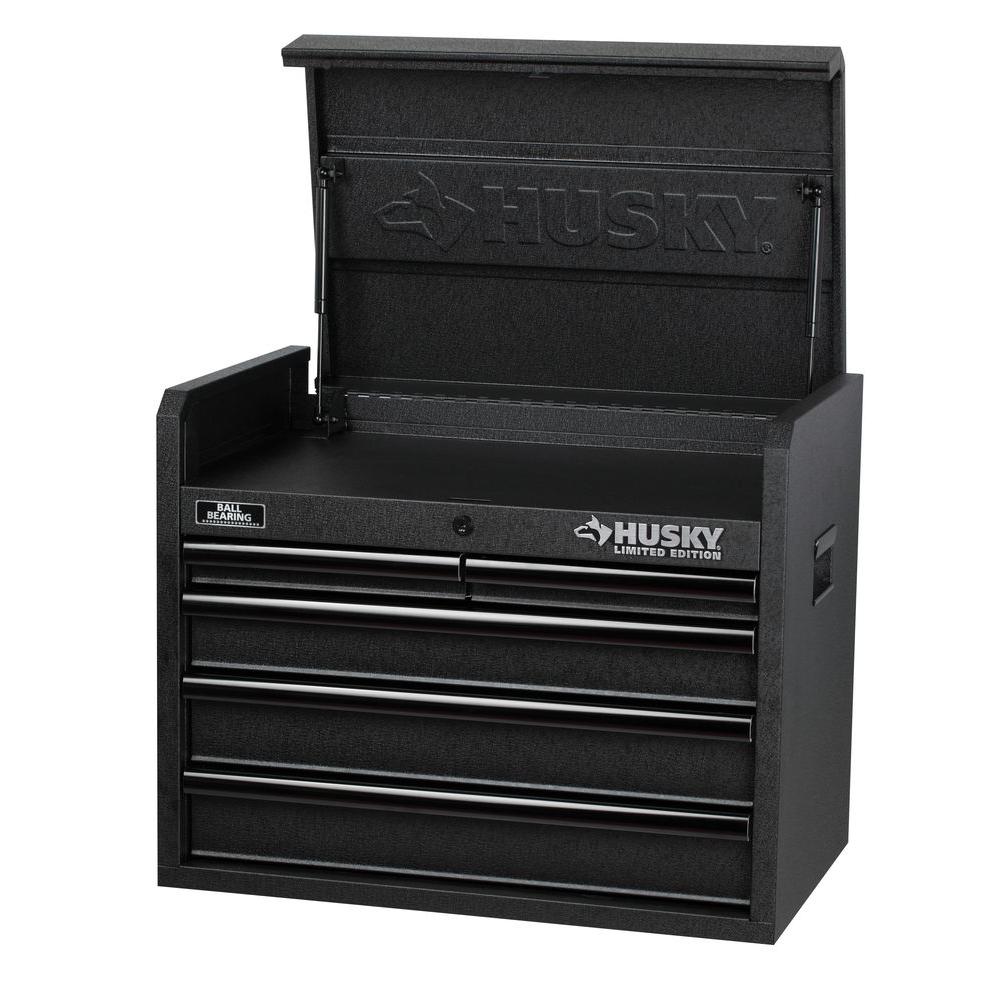
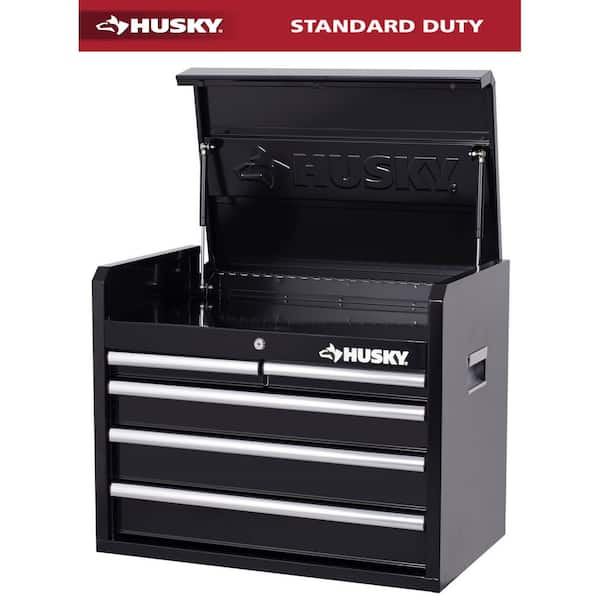
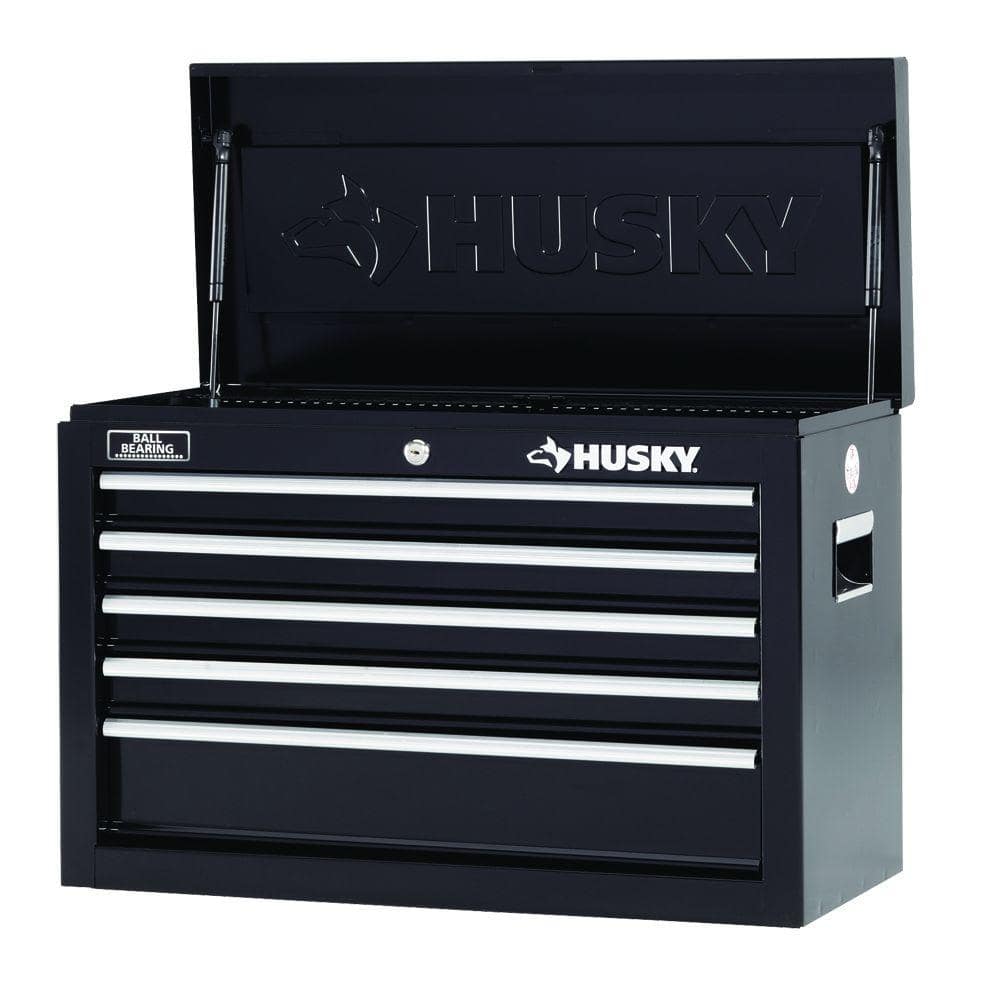
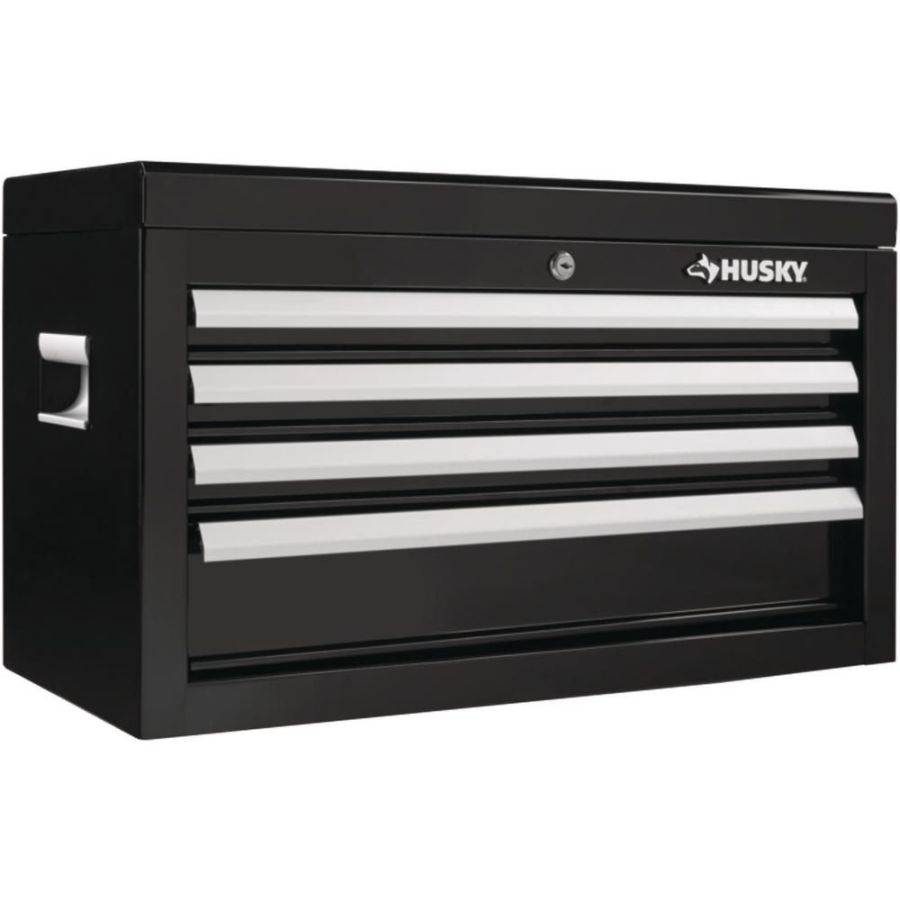
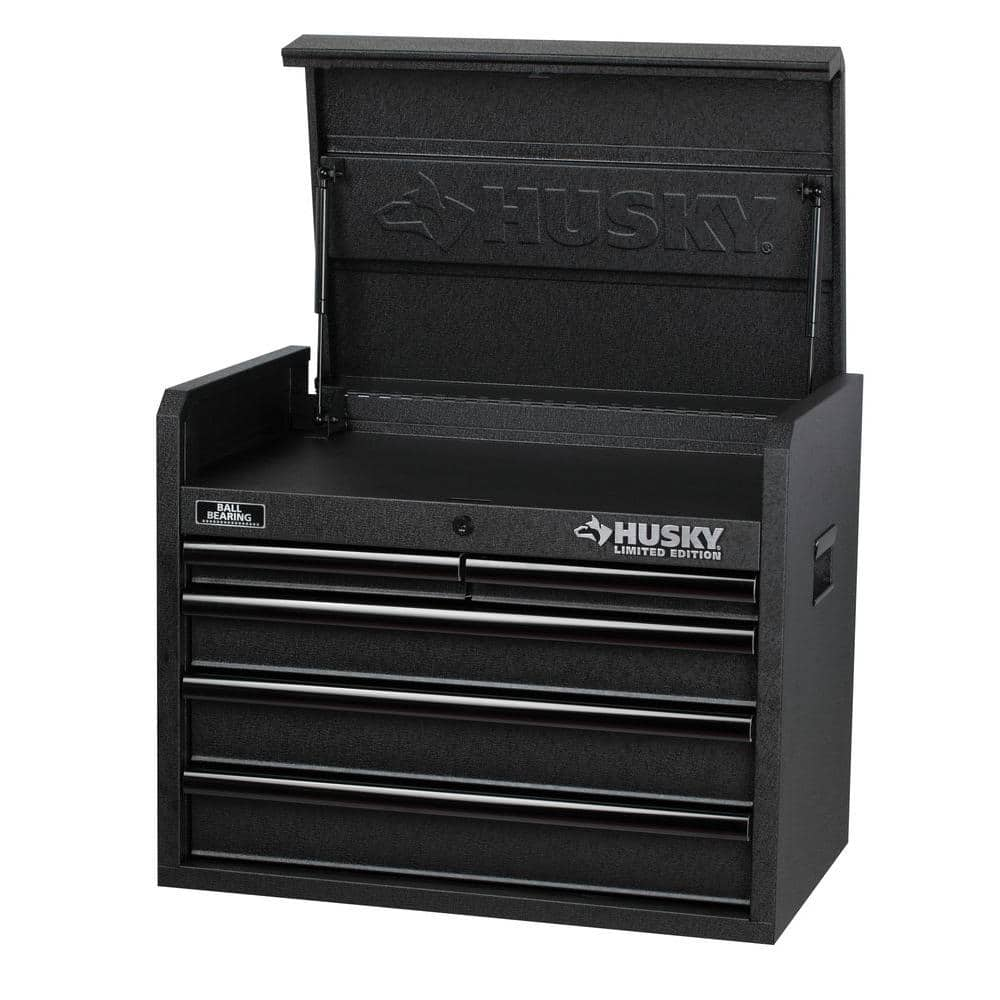
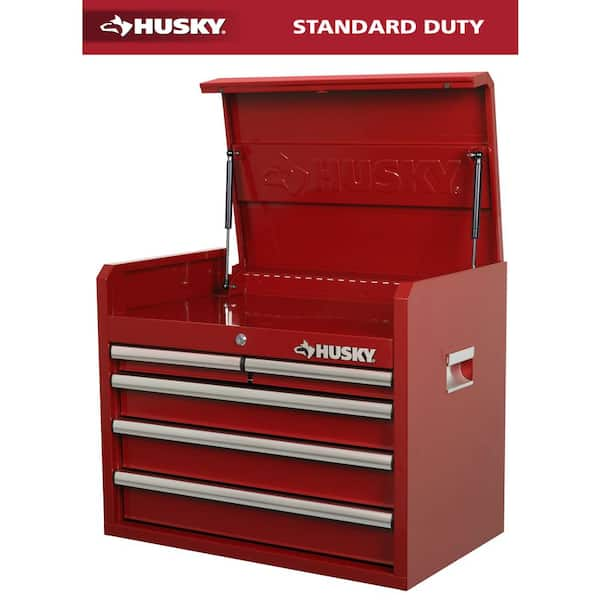
A Husky 26 inch tool chest is a compact storage option for hand tools, small power tool parts, and home repair gear. The right model depends on its drawer layout, depth, height, weight limit, and whether you need a chest alone or a full rolling cabinet.
In American homes, a small tool chest can help keep a garage bench neat and ready for weekend repairs. It can hold socket sets, screwdrivers, pliers, tape measures, and other gear that tends to spread across a workbench. A chest around 26 inches wide may fit where a large tool cabinet would take up too much room. Still, the stated width is only one part of the fit.
Husky has sold several tool chest designs and finishes, so the name alone does not confirm the exact drawer count or dimensions. Some listings describe five-drawer models, while other versions may have a different layout. Check the model number on the product label or listing before you buy. That small step can help prevent a poor fit or a return.
A Husky 26 inch tool chest is a metal storage unit made to sort and protect tools in a garage, home workshop, or repair area. Many top chests use several drawers in a compact box. This layout lets you group tools by task instead of piling them in one large bin.
The term can refer to more than one model. A five-drawer chest and a six-drawer chest may share a similar width but differ in drawer sizes, depth, finish, and storage space. Product photos can help you spot the style, but the model number and specification sheet are better for confirming the details.
Husky is a tool storage brand sold by The Home Depot in the United States. The exact features depend on the product line and model. Do not assume that every 26-inch chest has the same lock, drawer slides, liner, handle, or load rating.
Source: www.homedepot.com
Compact storage
A chest of this size can suit a small bench or a home garage where floor space is limited.
Drawer-based layout
Separate drawers help keep sockets, bits, pliers, and small parts apart.
Model-specific features
Confirm the exact finish, drawer setup, lock, and load limits instead of relying on the brand name.
Tool Chest Versus Tool Box
People often use the terms tool chest and tool box in the same way. In product listings, a chest often means a box with drawers, while a portable tool box may use one open compartment or a lift-out tray. The exact wording varies by seller, so compare the actual shape and features rather than the label alone.
Choose a chest
Use drawers when you want to sort many small tools and reach each group without emptying a large bin.
Choose a portable box
A carry box may suit jobs where you need to bring a small set of tools from room to room or out to a vehicle.
Husky 26 Inch Tool Chest Dimensions and Fit
Do not use the 26-inch name as the only measurement when planning a space. The width may describe the main body, while the lid, side edges, handle, or other parts can change the total size. Depth and height matter just as much when the chest sits under a shelf or near a wall.
Some Husky 26-inch chest listings identify a depth of about 16 inches, but that figure should not be applied to every model. Check the exact product listing or manual for the unit you plan to buy. If the listing gives both assembled dimensions and package dimensions, use the assembled measurements to plan the final space.
A good fit also leaves room to open every drawer. A chest can fit on a bench and still be hard to use if a wall, shelf post, or other box blocks the drawer fronts. Measure the space with the drawers open in mind, not just the closed chest.
Source: ottawaprices.ca
Width
Measure the clear bench space from side to side, including any nearby supports or wall trim.
Depth
Check the distance from the wall to the front edge of the bench and leave room to work.
Height
Include the chest lid, any top handle, and the space needed to open the lid fully.
Drawer clearance
Allow space in front of the chest so drawers can slide out without hitting a car, shelf, or work stool.
How to Measure Before Buying
Use a tape measure and write down the available width, depth, and height. Measure the bench at more than one point if its edges are uneven. Then compare those figures with the assembled size in the listing or manual.
Check the route into your garage too. A chest may fit its final spot but fail to pass through a narrow door or around a tight corner while still in its packaging. If delivery is planned, ask whether the chest arrives assembled or boxed.
Measure twice
Record each dimension in inches and compare like with like.
Check the opening
Confirm that doors, lids, and drawers have enough room to move.
Plan the support
Make sure the bench or cabinet can bear the loaded chest’s total weight.
How Many Drawers Does It Have?
The drawer count depends on the model. A five-drawer version is one type of Husky 26-inch chest, but the search phrase can also bring up other designs. Confirm the number and shape of the drawers in the exact listing before choosing a unit.
Drawer count alone does not tell you how much useful space you get. Five shallow drawers may hold small hand tools well, while a layout with fewer but deeper drawers may suit larger items. Look at the inside dimensions where available, as outside dimensions do not show how much room remains after the drawer walls and slides take up space.
Think about the tools you own now and the ones you may add soon. A chest filled to the top on day one leaves little room for new bits, sockets, or repair gear. Leaving some spare space also makes it easier to return tools to their proper places.
Source: www.homedepot.com
What to Store in Each Drawer
A simple layout makes a small chest easier to use. Put the tools you reach for most often in the easiest drawers to open. Keep heavier items low when the layout allows, and avoid loading one drawer with all the dense metal tools.
Top drawers
Use for small items such as driver bits, pencils, tape, spare fasteners, and measuring tools.
Middle drawers
Sort screwdrivers, pliers, wrenches, and common hand tools by type.
Deeper drawers
Use for larger tools only if the inside size and weight limit allow them to fit safely.
One spare area
Keep a little room for new tools or parts that do not fit the main groups.
Use Drawer Liners With Care
A liner can help reduce rattles and keep tools from sliding each time a drawer opens. Check whether the model includes liners or whether you need to buy them separately. If you cut your own liner, keep it flat and clear of the drawer slides and closing edges.
Fit the liner
Use a liner made for tool drawers or trim a suitable material to fit without bunching.
Keep it clean
Remove grit and metal chips that could scratch tools or affect drawer movement.
Is a Husky 26 Inch Tool Chest Right for Your Workshop?
A 26-inch chest may work well for home repairs, hobby projects, and basic car care. It can help keep common tools close at hand without taking up the floor space of a large rolling cabinet. The best fit depends on the number and size of your tools, how often you use them, and where you plan to store the chest.
For a small garage, the main benefit is clear organization in a compact footprint. For a busy repair shop, a small chest may fill up fast or lack the room for bulky power tools. In that case, a larger cabinet or a chest-and-cabinet set may be a better fit, provided the space and budget allow it.
A top chest is not the same as a rolling tool cabinet. Unless the specific model is designed for mobile use, place it on a firm, level surface that can support the loaded weight. Do not assume it is safe to add casters or mount it to another unit without checking the maker’s instructions.
Source: pinnaxis.com
Good fit for home use
A compact chest can organize everyday hand tools for furniture fixes, basic maintenance, and small projects.
May be too small for a trade
A mechanic or contractor with many large tools may need more drawer depth and total capacity.
Check future needs
If your tool collection keeps growing, plan for another storage unit or a larger system.
Top Chest or Rolling Cabinet?
A top chest is often used on a bench or on a matching cabinet. A rolling cabinet is built around a wheeled base and is meant to move when its design and load limits permit. Some users pair the two, but the combination must be compatible and set up as the manufacturer directs.
If you need to move tools across a garage, a rolling unit may save effort. If you work in one spot and want tools arranged at bench height, a top chest may make more sense. The key trade-off is between mobility, storage volume, and the space you have.
Choose a top chest
Pick this style if you have a stable bench or approved cabinet and want drawer storage close to your work area.
Choose a rolling cabinet
Consider this style if you need a mobile base and the cabinet’s capacity, wheel locks, and dimensions meet your needs.
What Should You Check Before Buying?
Check the model number, dimensions, drawer layout, and load limits before you pay. These details have a greater effect on day-to-day use than the finish alone. A photo may show the general design, but it cannot confirm the exact measurements or rated capacity.
Compare the full cost as well. The chest price may not include a matching cabinet, drawer liners, delivery, or other storage parts. If you plan to place the chest on a cabinet, check whether the two units are meant to work together and whether any required mounting parts are included.
For current price and stock, use the exact model number on The Home Depot’s US site or ask the store to confirm the item. Older product photos and third-party listings can remain online after a model changes or is no longer sold. Do not treat an old listing as proof of present availability.
Source: www.homedepot.com
Model number
Match the model code on the product, label, or manual to the listing you are using.
Drawer capacity
Check the rated load for each drawer and the total unit, if both are provided.
Locking system
Check how the lock works and whether it secures the drawers as you expect. A lock is not a guarantee against theft.
Finish and condition
For a used chest, look for rust, bent corners, damaged slides, missing keys, and signs of water exposure.
Return terms
Read the seller’s current return policy and keep the receipt and model details.
Buying a Used Husky Tool Chest
A used chest can be a practical way to add storage, but check it in person when possible. Open each drawer and slide it in and out without forcing it. Look for gaps, binding, bent rails, sharp edges, and signs that the chest has been overloaded.
Ask whether the keys, liners, and any original mounting parts are included. Check the bottom and rear panels for rust or damage. If the chest will sit on a bench or cabinet, confirm that its base is sound and that the support can carry the weight of the chest and its contents.
Test each drawer
A drawer should move without sticking, dropping, or scraping against the body.
Inspect the lock
Test it if possible, but do not assume a missing key can be replaced without extra cost or effort.
Check the structure
Avoid units with severe rust, cracked seams, unstable bases, or badly bent drawer fronts.
How to Set Up and Organize the Chest
Set up the chest before filling it with tools. Choose a dry, level spot with enough room to open the lid and drawers. If you place it on a workbench or cabinet, check the support and follow any instructions for securing the unit.
Sort your tools into groups before loading the drawers. This keeps you from putting everything in the first open space and having to redo the layout later. Keep sharp tools covered where practical and store small loose parts in trays or boxes that fit inside the drawers.
Place heavy items low when the chest design allows it, and spread the load across the available drawers. Do not exceed the load rating listed by the manufacturer. A drawer that feels stiff or a chest that rocks can be a sign of poor placement, an uneven surface, or an overloaded area.
Source: www.homedepot.com
A Simple Setup Plan
Start with the tools you use every week. Put those where you can reach them without moving other items. Store specialty tools and spare parts in less accessible drawers, and label drawers if several people share the chest.
Step 1: Clear the area
Remove clutter and confirm the surface is level, dry, and strong enough for the loaded unit.
Step 2: Group tools
Sort by task or tool type, such as measuring, fastening, gripping, and vehicle care.
Step 3: Load with balance
Spread heavy tools across suitable drawers and keep within all listed weight limits.
Step 4: Test movement
Open and close each drawer slowly to check that nothing catches or blocks the slides.
Step 5: Review the layout
After a few jobs, move tools that are hard to reach and keep the setup easy to maintain.
Care, Cleaning, and Basic Troubleshooting
A little care can help keep a metal tool chest in usable shape. Wipe off dust, oil, and moisture, and clean up metal chips that may collect in the drawers. Keep the chest in a dry area when possible, since damp air and wet tools can lead to rust over time.
Use a mild cleaner on the finish and dry the surface after cleaning. Avoid harsh chemicals or rough pads unless the manufacturer says they are suitable. Check the manual before applying oil or grease to drawer slides, because the right care method can vary by slide type.
If a drawer sticks, remove its contents before checking it. Look for a tool that has shifted, a liner that has bunched up, or debris near the slides. Do not force a jammed drawer or take apart a loaded chest while it is on an unstable surface.
Source: ca.pinterest.com
Common Problems and Useful Checks
Many small problems have a simple cause, but do not ignore damage to the chest body or drawer rails. Stop using a drawer that drops, twists, or will not stay in place until you can identify the issue. Use the product manual or contact the seller when a repair calls for parts or steps that are not clear.
Drawer will not close
Check for tools sticking above the drawer edge, loose parts, a folded liner, or debris near the slides.
Drawer feels rough
Remove the load and inspect for grit, visible damage, or misalignment before trying to use it again.
Lock will not turn
Check the key and lock for visible damage. Avoid forcing the key, which can make the problem worse.
Rust spots appear
Dry the area, remove loose dirt, and follow the maker’s care advice for the finish and any affected metal.
Chest rocks on its base
Empty it if needed and check the support surface. Do not keep using an unstable setup with a heavy load.
Safe Use and Storage Limits
A tool chest can be heavy even before you add tools. Use care when lifting or moving it, and ask for help with a load that is awkward or too heavy to handle safely. Remove tools and secure loose parts before moving the chest, unless the product instructions give a different procedure.
Never sit, stand, or climb on a tool chest unless the maker clearly rates it for that use. Do not use the lid as a step or work platform. Keep fingers clear of closing drawers, and shut drawers before opening or closing the lid if the design calls for that sequence.
If you store chemicals, fuels, batteries, or other items that can leak or react, check their own storage requirements first. A metal tool chest is not automatically a safe container for hazardous goods. Keep such items in suitable containers and follow the product label and local rules.
Source: storage.googleapis.com
Stay within rated loads
Use the manufacturer’s limits for each drawer and the full chest. Do not guess based on how thick the metal looks.
Use a stable base
Set the chest on a firm, level support that can carry its total loaded weight.
Secure the area
Keep children away from open drawers and store sharp tools where they cannot fall or cause injury.
Move with care
Empty or lighten the chest as needed and follow the manufacturer’s moving instructions.
Frequently Asked Questions
Q
How wide is a Husky 26 inch tool chest?
The name points to a width near 26 inches, but the exact outside measurement depends on the model. Handles, side edges, and other parts may affect the overall width. Check the model’s assembled dimensions before setting aside space.
Q
Is every Husky 26 inch tool chest a five-drawer model?
No. Product listings and older versions may show different drawer layouts. Check the model number, product photos, and written specifications to confirm the drawer count for the exact chest.
Q
Can I put a Husky 26 inch tool chest on a workbench?
You can place a top chest on a workbench only if the surface is stable, level, and rated to hold the loaded unit. Check the chest’s setup instructions and leave room for the lid and drawers to open.
Q
Does a Husky 26 inch tool chest come with drawer liners and keys?
Included parts vary by model and seller. Read the exact listing or manual to see whether liners and keys are included. For a used chest, ask the seller to confirm that the keys are present and the lock works.
Q
Where can I check the current price and availability?
Check The Home Depot’s US website or contact a local store using the exact model number. Price and stock can vary by location and can change over time. An older photo or third-party listing does not confirm that the same model is currently available.
✦ Wrapping Up
Conclusion
A Husky 26 inch tool chest can be a useful way to keep everyday tools in order without taking up a large part of a garage or workshop. Its real value depends on the exact drawer layout, usable space, rated load, and how well it fits your work area. The 26-inch label is a starting point, not a full set of specifications.
Before buying, confirm the model number and assembled dimensions, check the load limits, and make sure the chest has a stable place to sit. If you are buying used, test the drawers and lock and look for rust or structural damage. A little checking now can save time, money, and frustration later.
💡 Key Takeaway
Write down your available width, depth, and height, then compare them with the exact Husky model’s specifications before you buy.