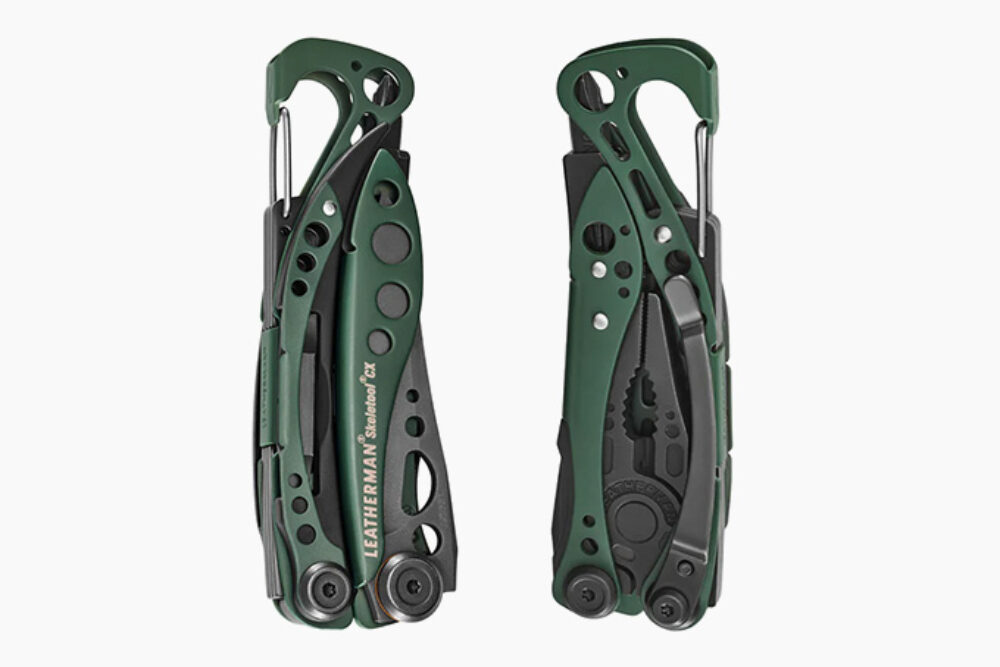
The Leatherman Skeletool and Skeletool CX share a light, simple design, but their blade steel and finish are key differences. Choose the standard Skeletool for basic everyday tasks and the CX if its upgraded blade steel matters to you. Check the exact model before buying, as features can vary by version.
For people in the United States who want a pocket multitool, the Leatherman Skeletool family offers a way to carry pliers, a knife, and a few handy extras without the bulk of a large tool set. It can help with small fixes at home, gear checks on a camping trip, and simple tasks on the go. The main trade-off is clear: a small tool saves space, but it cannot replace a full toolbox.
The standard Skeletool and the Skeletool CX look much alike. Both follow the same slim, open-frame design, and both focus on a short list of useful tools rather than a long list of extras. The CX is known for its higher-grade blade steel, while the standard model may appeal to buyers who want the core design at a lower price. Exact parts, colors, and specs should be checked against the product listing for the model being sold.
This guide compares their practical uses, tool sets, blade care, carry options, and buying trade-offs. It does not claim hands-on testing or a lab result. The goal is to help you decide which model fits your daily tasks, and when a different multitool would make more sense.
Source: tacwrk.com
Leatherman Skeletool vs Skeletool CX: Main Differences
The most useful difference to check first is the blade. The Skeletool CX is known for using 154CM stainless steel, while the standard Skeletool has been sold with a different blade steel, commonly identified as 420HC on standard versions. Confirm this against the exact model and its current product page before purchase.
Both models are built around pliers and a compact set of everyday tools. The CX is not simply a larger multitool with many more functions. Its appeal is the blend of a lean tool set and a higher-grade blade, which may matter to people who use the knife often.
Finishes and colors can differ across editions and retailers. A listing may also describe a special color or regional version. Do not assume that a finish, blade shape, or accessory is included just because another Skeletool model has it.
Source: cdn.hiconsumption.com
Blade steel
The CX is associated with 154CM stainless steel. Standard Skeletool versions are commonly listed with 420HC. Steel affects edge retention, sharpening needs, corrosion behavior, and cost.
Core tool layout
Both models focus on pliers, a knife, wire cutters, and a bit driver. Check the exact model listing for its full tool inventory.
Carry and size
The open-frame design keeps the tool compact compared with many full-size multitools. Check the published closed length, weight, and pocket-clip details for the version you plan to buy.
Price
The CX may cost more because of its blade steel and finish. Compare current prices from authorized sellers instead of relying on an old price or a sale claim.
Quick comparison table
Use this table as a starting point, not a substitute for the specifications of the exact product. Model revisions and special editions can affect the details.
Standard Skeletool
A good fit for buyers who want a compact plier multitool for routine tasks and do not need the CX blade specification.
Skeletool CX
A good fit for buyers who prefer its higher-grade blade steel and are willing to compare the extra cost against their actual use.
What Tools Do the Skeletool and Skeletool CX Have?
The Skeletool design centers on a small set of tools that cover common tasks. Its pliers can grip small parts, the wire cutters can handle suitable wire, and the knife can cut many everyday materials. The bit driver adds a way to tighten or loosen compatible screws when the correct bit is fitted.
The exact inventory matters because multitools in the same product family can differ. Read the current model description and manual rather than assuming every version has the same bits, blade, or accessories. A model name alone is not enough to confirm a specific part.
A compact tool is most useful when the task matches its size. It may be handy for a loose screw on a piece of camping gear or a small repair around the house. It is not the right choice for a stuck fastener that needs a long handle, a large wrench, or a dedicated specialty tool.
Pliers
Use them to grip, hold, or turn small parts within the tool’s intended limits. Do not use the plier jaws as a replacement for a correctly sized wrench.
Wire cutters
Use the cutters only for wire types and sizes permitted by the model’s manual. Never cut live electrical wire, and do not assume the cutters are rated for hardened materials.
Knife
The blade can handle many routine cuts, such as opening packaging or trimming suitable cord. Use a stable surface and keep fingers clear of the cutting path.
Bit driver
Fit the correct bit and keep it seated in the screw head. Stop if the bit slips or the screw starts to strip.
Carabiner and bottle opener
The integrated feature can help with light carry and opening bottles, depending on the exact model. Never treat a small multitool carabiner as climbing or fall-protection gear.
Can either model replace a full toolbox?
No. The Skeletool and Skeletool CX are compact carry tools, not full repair kits. They lack the range of jaw sizes, handle lengths, sockets, and dedicated tools needed for many demanding jobs.
Good fit
Small household fixes, outdoor gear adjustments, light grip work, and basic cutting tasks.
Poor fit
Heavy mechanical work, high-torque fasteners, frequent precision repair, and tasks that require a specialized or insulated tool.
Blade Steel: Is the Skeletool CX Worth It?
The CX can be worth the extra cost if you value its 154CM blade steel and expect to use the knife often. Steel choice can affect how long an edge lasts between sharpening sessions, how easy it is to restore that edge, and how the blade responds to moisture. No steel is best in every condition.
154CM is a stainless blade steel often chosen for a balance of edge retention, toughness, and corrosion resistance. The standard Skeletool’s commonly listed 420HC steel is also stainless and can be easier to sharpen in routine use. Real results depend on heat treatment, blade geometry, the material being cut, and care.
A steel name does not prove that one blade will outperform another in every task. A well-maintained blade that is sharp enough for the job may serve better than a higher-grade blade that is dull or poorly cared for. For occasional package opening and light camp chores, the standard model may be all you need.
Choose the CX if
You value the 154CM blade specification, cut often, and are comfortable paying more for that feature.
Choose the standard Skeletool if
You mainly need pliers and a knife for occasional tasks, and the price difference matters more than the blade upgrade.
Check the listing
Confirm the steel type for the precise model number. Avoid relying on an image, a retailer title, or a description copied from another version.
Does 154CM mean the CX never needs sharpening?
No. Every knife edge wears with use. Cardboard, abrasive materials, hard contact, poor cutting angles, and repeated use can all dull a blade. The CX may hold its edge differently from the standard model, but it still needs regular care.
Clean after use
Remove dirt, sap, food residue, and moisture before storing the tool.
Sharpen with care
Use a suitable sharpening method and follow the maker’s guidance. Keep the blade angle steady and avoid removing more metal than needed.
Which Model Is Better for Everyday Carry?
For everyday carry, the better model is the one you will carry and use, not the one with the most impressive specification. Both Skeletool versions aim to keep a few common tools close at hand without the bulk of a large multitool. The choice often comes down to blade preference, price, and local rules on carrying a knife.
In the United States, knife laws vary by state and locality. Rules may depend on blade type, length, concealed carry, age, location, and the reason for carrying. Check the laws that apply to your home, work, travel route, and destination before carrying either model.
A pocket clip can make a multitool easy to reach, but carry comfort varies with clothing and daily activity. Check how the tool sits in your pocket and whether the clip can catch on fabric. If you work in a setting where exposed blades are not allowed, leave the knife at home or choose a tool that meets the site’s rules.
Office and daily errands
Either model may be useful for small tasks, but consider workplace rules and whether you really need a knife every day.
Home use
The standard Skeletool may be enough for occasional repairs, opening boxes, and small grip jobs.
Camping and road trips
The CX may appeal to people who want its blade steel in a compact tool. Pack separate tools for heavy work and check rules for parks, venues, and transport.
Travel by air
Do not assume a multitool with a knife can go through airport security in carry-on luggage. Check current Transportation Security Administration rules and airline guidance before packing.
Is the Skeletool CX good for camping?
It can be useful for small camp repairs, cutting suitable cord, gripping gear parts, and handling compatible screws. It should not be your only tool for every camp task. A dedicated cutting tool, repair kit, and first-aid supplies may still be needed for your trip.
Before leaving
Inspect the blade, pliers, cutters, bit driver, and any locking parts. Check that the tool is clean and moves as intended.
During use
Work on a stable surface and keep your hands clear of the blade. Do not use the knife to pry or twist.
Comfort, Weight, and Pocket Carry
The Skeletool’s open-frame shape is meant to reduce bulk while keeping core tools available. This makes the family appealing to people who do not want a large, heavy multitool in a pocket. Still, a compact shape does not guarantee comfort for every user or every type of clothing.
The weight and closed length can vary by model and edition, so check the current manufacturer’s specifications before comparing numbers. A small difference in weight may matter if you carry the tool every day, while access to the tools may matter more if you use it only at home or in a vehicle.
Look closely at the clip, handle shape, and how the tool opens. If possible, handle one in person before buying. The best fit should feel secure in the hand and should not force you to place fingers near a cutting edge or moving joint.
Check pocket fit
Confirm the tool’s closed dimensions and how the clip sits on the pocket seam.
Check hand fit
Make sure the handles give you a secure grip during light work. Stop if the tool slips or pinches your fingers.
Check access
See whether you can open the tools safely and reach the parts you use most often.
Does the CX feel different from the standard Skeletool?
The two models share a similar overall design, so their everyday carry feel may be close. Any difference in finish, scale, or edition should be checked on the specific version. Do not assume that a color change means a different tool layout or a change in weight.
Price and Value: What Should You Compare?
Compare the current price of each exact model, not just the names Skeletool and Skeletool CX. Retail prices and stock can change, and a discount on one version may make the usual price gap less meaningful. Include shipping, taxes, and any accessory costs when comparing the final amount.
The CX is easier to justify when the blade steel is a feature you will use. If your main need is occasional plier work and a backup knife, the standard Skeletool may provide better value. Paying more for a feature that rarely affects your tasks is not always a useful upgrade.
Check the warranty terms that apply to the product and purchase location. Keep proof of purchase and read the current warranty exclusions before assuming a damaged part will be replaced. Normal wear, misuse, unauthorized changes, and local warranty rules can affect coverage.
Compare model numbers
Make sure the two listings describe the intended versions and not a different Skeletool variant or special edition.
Compare included items
Check whether bits, a sheath, packaging, or other accessories are included. A photo alone may not show what comes in the box.
Check seller status
Use Leatherman‘s official seller guidance where available. Read the return policy and inspect the item on arrival.
Think about your use
Estimate which tools you will use each month. The more often you use the blade, the more relevant the steel difference may become.
A simple way to make the choice
Imagine two models are available at different prices. If you rarely cut anything beyond tape and packaging, the extra cost of the CX may not change your day. If you use the blade often and want the CX steel, the price gap may be easier to accept. This is a decision example, not a claim about current prices.
Start with the task
List the jobs you expect to do most often.
Check the specification
Confirm the blade steel and tool set for each exact model.
Compare the final cost
Use current seller prices and include any required accessories.
Care, Cleaning, and Basic Troubleshooting
Routine care helps keep either multitool clean and ready for use. Dirt, grit, moisture, and sticky residue can make joints feel rough or cause parts to move poorly. Clean the tool after dirty work and let it dry before storing it.
Follow the current Leatherman manual for cleaning and lubrication. Use a small amount of suitable lubricant on moving joints if the manual permits it, then wipe away excess. Keep oil off surfaces that need a firm grip and away from materials that should not contact it.
If a tool feels loose, fails to lock as intended, has a cracked part, or shows damage near the blade or pliers, stop using it until the issue is checked. Do not force a stiff joint with excessive pressure or try to reshape a damaged part by hand.
Tool feels stiff
Remove dirt and residue, dry the tool, and follow the maker’s care instructions. Stop if movement remains unsafe or uneven.
Blade is dull
Use a suitable sharpening method or seek service. Do not test sharpness by dragging a finger across the edge.
Rust or spots appear
Clean and dry the affected area. Stainless steel can still corrode under the right conditions, especially with trapped moisture or salt.
Bit slips in a screw
Check the bit type and size, then seat it fully. Stop if the screw head or bit is damaged.
Pliers or cutters are damaged
Stop using the affected part and contact the maker or an authorized service provider. Do not rely on damaged jaws for forceful work.
Safe use matters more than the model name
Use the knife only for cutting and the pliers only within their intended limits. Never use the blade as a screwdriver, chisel, or pry bar. Keep fingers out of the path of moving tools and do not cut electrical wire that may be live.
Before each use
Check for damage, loose parts, dirt, and smooth tool movement.
During each task
Use the correct tool, apply controlled force, and stop if a part slips or binds.
Common Buying Mistakes to Avoid
The most common mistake is buying by the product name alone. The Skeletool family has had different versions and finishes, and listings can use similar names. Check the model number, blade steel, tool inventory, dimensions, and included accessories before placing an order.
Another mistake is assuming that a more expensive model is automatically better for every user. The CX blade may be a real advantage for someone who values that steel, but it does not make the tool suitable for jobs that need more leverage or a dedicated specialty tool.
Finally, do not overlook local carry rules or workplace restrictions. A multitool can be practical at home and still be unsuitable in a particular venue. Check the relevant rules before carrying it, especially when traveling.
Do not trust photos alone
Product images may show a different finish or version from the one being sold.
Do not assume every accessory is included
Read the box contents and seller description carefully.
Do not use it beyond its design
Small tools can break or slip when used for high-force jobs.
Do not skip the warranty check
Confirm current terms, exclusions, and service steps for your purchase.
Which One Should You Buy?
Choose the standard Leatherman Skeletool if you want a compact multitool for everyday tasks and the blade steel is not your main concern. It gives you the basic Skeletool approach without making the CX blade specification the deciding factor. It is a sensible option for occasional home fixes, light carry, and general utility.
Choose the Leatherman Skeletool CX if you specifically want the 154CM blade steel and the current price fits your budget. It may be the better match for frequent knife use, provided the blade and overall tool set fit your needs. The upgrade is about a particular feature, not a promise that it will outperform the standard model in every job.
Choose neither if your work often calls for a broad set of tools, long handles, specialized bits, or heavy force. A larger multitool or a dedicated tool kit may be more practical. The best purchase is the one that suits the work you actually do, not the one with the longest feature list.
Best fit for a simple carry tool
Standard Skeletool, when its tool set meets your needs and its price is the stronger factor.
Best fit for the CX blade
Skeletool CX, when the 154CM blade is a meaningful feature for your routine.
Best fit for demanding repair work
A more capable tool set chosen for the specific task, rather than either compact Skeletool by default.
Next-Question Gap Map
The most useful follow-up questions for this comparison concern the exact model, blade care, safe carry, and long-term ownership. These needs follow from the buying decision and do not imply verified search demand. Current model details and warranty rules should be confirmed with Leatherman before purchase or service.
Which exact Skeletool version is this?
Reader stage: before purchase. Basis: inferred next need, because similar model names can cause confusion. Reviewed competitor coverage: not established here. Benefit: reduces the risk of buying the wrong blade steel or tool set. Evidence: exact manufacturer product page and manual. Priority: high.
How do I sharpen the CX blade?
Reader stage: after purchase. Basis: inferred next need from the blade-steel comparison. Reviewed competitor coverage: not established here. Benefit: helps maintain a useful edge without unsafe methods. Evidence: current manufacturer care instructions and suitable sharpening guidance. Priority: high.
Can I carry a Skeletool on a trip?
Reader stage: before travel. Basis: inferred next need from the knife and carry design. Reviewed competitor coverage: not established here. Benefit: prompts a check of state, local, venue, airline, and transport rules. Evidence: applicable official rules for the destination and mode of travel. Priority: high.
What does the warranty cover?
Reader stage: before or after purchase. Basis: inferred next need for a durable tool. Reviewed competitor coverage: not established here. Benefit: helps the buyer understand service limits and keep purchase records. Evidence: current official warranty terms for the region and purchase. Priority: medium.
Is the CX worth the price gap?
Reader stage: purchase decision. Basis: inferred next need from the main comparison. Reviewed competitor coverage: not established here. Benefit: connects blade steel to real use instead of treating price as proof of quality. Evidence: current listings and confirmed model specifications. Priority: high.
Frequently Asked Questions
Q
What is the main difference between the Leatherman Skeletool and Skeletool CX?
The main difference is the blade steel. The Skeletool CX is known for its 154CM stainless blade, while standard Skeletool versions are commonly listed with 420HC. Both follow a similar compact design, but you should confirm the exact model number and tool specifications before buying.
Q
Is the Leatherman Skeletool CX worth the extra money?
It may be worth the extra cost if you want the CX blade steel and use the knife often. If you mostly need pliers for small jobs and cut only now and then, the standard Skeletool may be enough. Compare current prices and exact model details before deciding.
Q
Does the Skeletool CX have more tools than the standard Skeletool?
The CX is not mainly an upgrade in the number of tools. The two models share a similar core layout, with the CX best known for its blade steel. Check the current product page for the full tool inventory, as special editions and model revisions may differ.
Q
Is the Leatherman Skeletool good for camping?
Yes, it can help with light camp repairs, gripping small parts, cutting suitable cord, and working with compatible screws. It is not a full repair kit and should not be used for heavy prying or high-force jobs. Pack any dedicated tools needed for your planned activities.
Q
Can I take a Leatherman Skeletool on a plane?
Do not assume that a Skeletool with a knife can go in carry-on luggage. Check current Transportation Security Administration guidance, airline rules, and the rules for any connecting airports. If the applicable rules permit it, packing the tool in checked baggage may be an option, subject to those rules.
Q
How do I keep my Skeletool or Skeletool CX in good shape?
Clean off dirt and residue, dry the tool fully, and follow the manufacturer’s instructions for lubrication and sharpening. Inspect the blade, pliers, cutters, and moving parts before use. Stop using the tool if a part is cracked, damaged, or no longer works as intended.
Q
Is 154CM better than 420HC for a multitool blade?
Neither steel is best for every user or every task. 154CM is often selected for a balance that includes edge retention and corrosion resistance, while 420HC is commonly valued for practical sharpening and general utility. Blade geometry, heat treatment, use, and care all affect real performance.
✦ Wrapping Up
Conclusion
The Leatherman Skeletool and Skeletool CX share a compact design for everyday tasks, but the CX stands out for its 154CM blade steel. The standard Skeletool may be the more practical buy when you need the core tool set and want to keep the cost down. The CX makes more sense when its blade specification is a feature you will use.
Before buying, confirm the exact model number, blade steel, tool inventory, dimensions, included accessories, current price, and warranty terms. Use either tool within its design limits, keep the blade and joints clean, and check local rules before carrying it. If your work needs more leverage or specialized tools, choose a larger or more suitable kit.
💡 Key Takeaway
Write down your three most common tasks, compare the exact specifications and current prices of both models, and choose the one that meets those needs without paying for a feature you will rarely use.