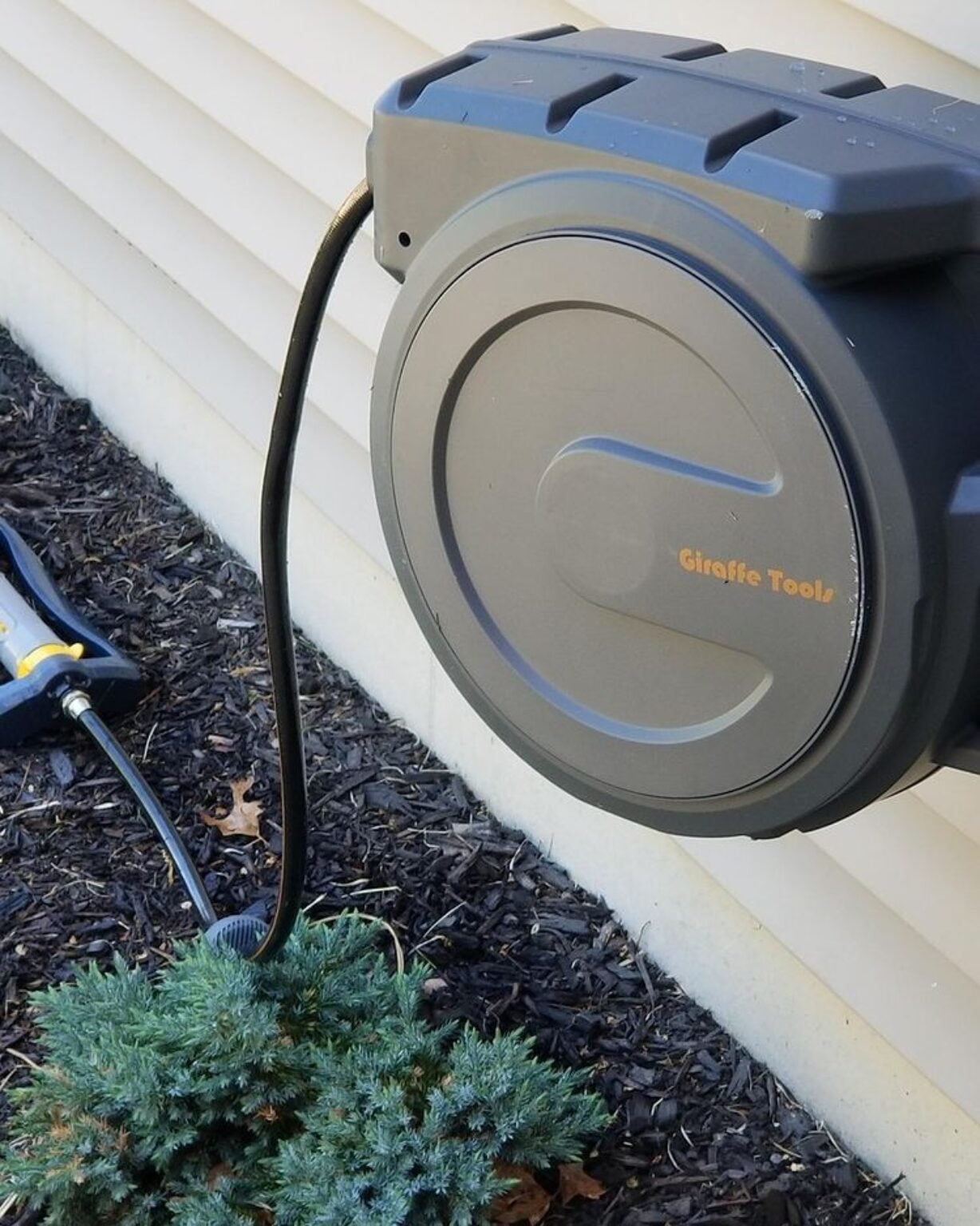
If your Giraffe Tools hose reel is not retracting, turn off the water, release the pressure, and check for hose twists or a jam near the outlet. Pull the hose out a short distance to release the lock, then guide it back slowly. If it still will not retract, stop and contact Giraffe Tools support rather than opening the case.
A retractable garden hose reel can save time when you water a lawn, wash a car, or tend a flower bed. Many homeowners across the United States use wall-mounted hose reels to keep long hoses off the ground. But a reel that stops halfway or refuses to wind back can turn a simple yard task into a hassle.
The first step is to find out whether the hose is caught, the lock has not released, or an internal part may have failed. These problems can look much the same from the outside, so a few safe checks are more useful than pulling harder. The correct steps can also vary by model.
Giraffe Tools warns users not to open the reel housing because the recoil spring can hold strong tension. This guide focuses on checks you can do from the outside, signs that mean you should stop, and ways to seek help if the problem remains.
Source: www.manualslib.com
Why Is Your Giraffe Tools Hose Reel Not Retracting?
A Giraffe Tools hose reel may stop retracting because the lock remains engaged, the hose is twisted, or the hose catches at the guide. Dirt near the outlet can also affect smooth movement. A worn or damaged internal part is another possible cause, especially when simple checks do not help.
The reel uses a spring-based mechanism to draw the hose back into its housing. The lock lets you keep the hose at a chosen length while you water plants or clean outdoor surfaces. A short pull can release that lock, but pulling the hose too hard may make a jam worse.
Start with the visible parts and normal operating steps. Do not assume the spring has failed just because the hose stops moving. At the same time, do not keep testing the reel if it makes a new noise or behaves in an unsafe way.
Source: www.manualslib.com
The hose stops after a short pull
The locking mechanism may still be engaged, or the hose may be caught at the guide. Try the normal release method once the water pressure is off.
The hose comes back only partway
A twist, kink, or trapped section may block its path. A damaged internal part is also possible if the hose stops at the same point each time.
The hose retracts very slowly
The hose may rub against the outlet, or an internal mechanism may not work as intended. Do not add oil or try to increase spring tension.
The hose will not retract at all
Check for a visible obstruction and try the model’s normal release method. If the hose stays stuck, stop rather than forcing it.
Know Which Type of Reel You Have
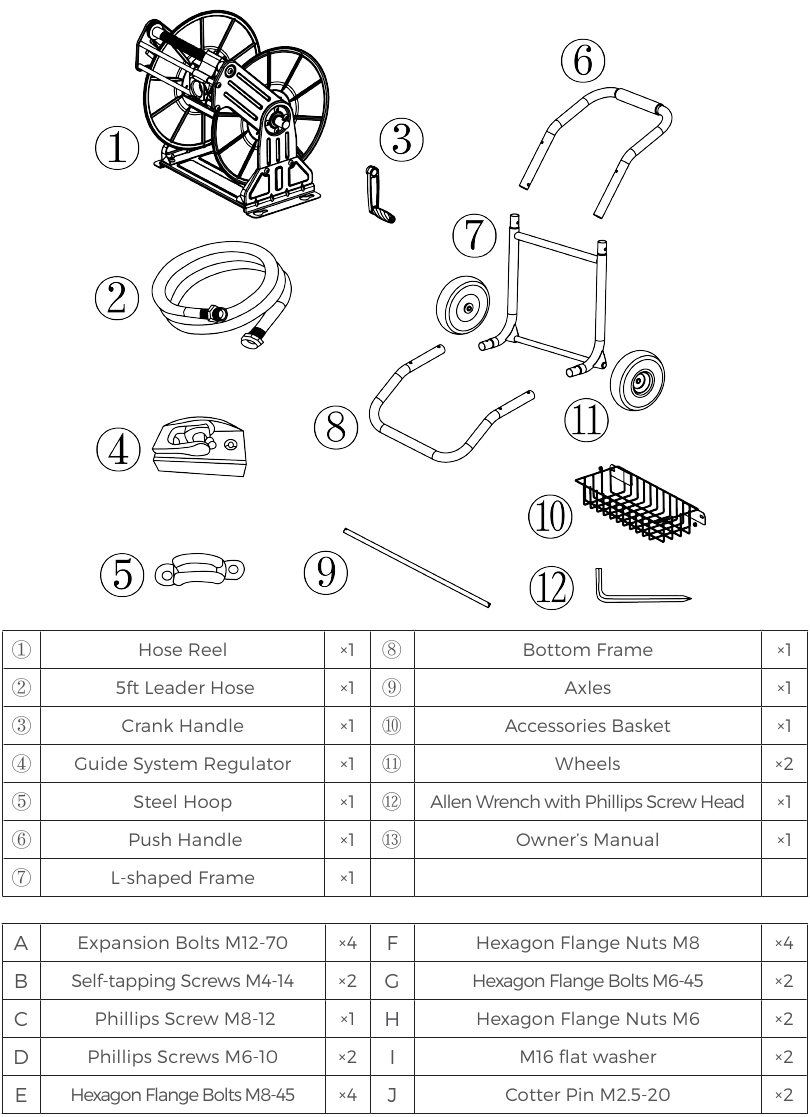
Most troubleshooting advice in this guide applies to Giraffe Tools retractable garden hose reels. A manual crank reel works differently because the user winds the hose with a handle. Pressure washer reels also have different operating needs, so use the manual for the exact model before trying a step meant for a garden hose reel.
Wall-mounted garden reel
Check the hose path, outlet, mounting bracket, and normal locking action without removing the housing.
Ground-mounted or cart reel
Check that the hose is not trapped under the base or frame and that the reel stands in a stable position.
Manual crank reel
Follow the model’s winding and jam instructions. Do not assume it uses the same spring release steps as a retractable reel.
How to Fix a Giraffe Tools Hose Reel That Will Not Retract
The safest first attempt is to release the water pressure, inspect the exposed hose, and use the normal lock-release action. Work in order and test the reel gently. Stop if you find damage or feel strong resistance that does not ease.
Source: www.youtube.com
Step 1: Turn off the water
Close the outdoor faucet. Squeeze the spray nozzle trigger to release remaining pressure, then make sure the hose is no longer under pressure before handling it.
Step 2: Inspect the exposed hose
Look for kinks, flattened spots, tight twists, cracks, bulges, or a section trapped against the wall or frame. Do not use a damaged hose.
Step 3: Check the hose outlet
Look for dirt, leaves, or other visible debris around the opening and guide. Remove loose debris from the outside only. Do not push tools into the housing.
Step 4: Release the lock
Hold the hose securely, then pull it outward a short distance to release the locking mechanism. Avoid a sudden, forceful yank. The exact pull needed can vary by model.
Step 5: Guide the hose back
Walk toward the reel while holding the hose. Let it wind back at a steady pace, keeping your hands away from the opening and moving parts.
Step 6: Check the result
If the hose returns smoothly, test the normal locking action with a short extension and controlled retraction. If it sticks again, makes unusual sounds, or feels much harder to pull, stop using the reel.
What If the First Attempt Does Not Work?
Do not repeat the same pull with greater force. Check whether the hose is caught against the mounting wall, under a cart frame, or at a visible bend. If the hose can move safely, a small outward pull may help release a lock that has not disengaged.
Some Giraffe Tools model manuals describe pulling the hose farther out before trying to retract it again. Follow that instruction only if your model supports it and the hose moves without excessive force. Never pull beyond the marked stop point.
The hose moves a little
Keep it aligned with the outlet and try the normal release method once. Do not twist the hose sharply or jerk it back and forth.
The hose is completely stuck
Stop pulling. Contact support if the hose does not move with gentle, normal handling.
The reel makes a new grinding noise
Stop using the retract function. The guide or an internal part may be damaged.
Check for Kinks, Twists, and Hose Obstructions
A hose that cannot move in a straight path may catch as it enters the reel. This can happen when the hose twists during use, catches on a nearby object, or rubs against a part of the outlet. A kink may also form when the hose bends too sharply near a fitting.
With the water off and pressure released, inspect the full length of hose that is safely visible. Move garden furniture, pots, or other items that block its path. If a section is twisted, straighten it gently without pulling the hose beyond its stop mark.
Do not try to reach a hidden twist by removing the reel cover. If the hose appears caught inside the housing, the safer choice is to ask the manufacturer for guidance.
Source: couponclans.com
Look for a sharp bend
A tight bend near the outlet can restrict movement. Guide the hose so it approaches the reel without a sharp angle.
Check the path to the faucet
Make sure the short inlet hose and nearby fittings are not trapped behind the reel or pressed against a hard edge.
Inspect the outer hose surface
Cracks, bulges, and flat spots can point to damage. Stop using the reel if the hose looks unsafe.
Can You Pull the Entire Hose Out to Clear a Jam?
Some model-specific manuals recommend extending the hose farther to clear a jam before retracting it slowly. This is not a universal instruction for every reel or every fault. Do not try it if the hose is damaged, the reel is unstable, or the hose will not move with normal effort.
Never pull past the yellow stop label or other maximum-extension mark. That mark protects the mechanism from excessive travel. If the hose reaches the limit and remains stuck, contact support instead of forcing it.
Safe to check
The hose moves normally, has no visible damage, and stays within the model’s marked extension limit.
Stop and seek help
The hose is trapped, the stop mark is reached, or the reel makes unusual sounds or shows signs of damage.
Why the Hose Reel Lock May Not Release
The locking mechanism holds the hose at the length you choose. When you want to retract it, a short pull normally releases the lock so the spring can draw the hose back. If the lock remains engaged, the hose may feel as though it has stopped against a wall.
Pulling too fast or yanking the hose can make it harder to tell whether the lock has released. Use a smooth motion and listen for changes in the usual locking sound. The sound alone does not prove that every internal part is working correctly.
If the hose will not lock at any position, retracts without normal control, or keeps sticking after the standard release action, stop using it. These signs can point to a fault that cannot be safely fixed from outside the housing.
Source: www.youtube.com > The Deal Dork Reviews
The hose stays locked
Hold it securely and try the normal short outward pull once. If it remains locked, do not force it.
The hose will not stay at a chosen length
Try the model’s normal locking method at a short extension. If the lock fails repeatedly, contact the manufacturer.
The hose retracts too quickly
Keep a firm hold and stop if you cannot control the return speed. Do not allow the hose to whip back into the housing.
Is a Clicking Sound Normal?
A click can be part of the normal lock action on some Giraffe Tools reels. The sound may change as the hose moves through locking points. However, repeated grinding, harsh snapping, or a new loud noise should not be treated as normal without checking the exact model instructions.
Usual clicking during extension
This may be normal for the model. Follow its manual to release the lock before retracting.
New or harsh sounds
Stop the reel and contact support if the sound comes with a jam, uneven movement, or loss of control.
Could the Retraction Spring Be Broken?
A weak, damaged, or failed internal spring can cause a retractable hose reel to stop winding the hose back. Yet slow retraction alone does not prove that the spring has failed. A twist, trapped hose, damaged guide, or other internal fault may produce a similar symptom.
The spring is inside the reel housing and may remain under high tension even when the hose is not pressurized. Removing the side cover can expose moving parts that may release suddenly. Giraffe Tools advises users not to open the housing or attempt to repair the internal spring mechanism.
Do not try to tighten the spring, rewind it by hand, or replace it with a part from another reel. The spring and other internal components are matched to the design. An improvised repair may cause injury or damage the product.
Source: couponclans.com
The hose has almost no pull-back force
An internal fault is possible, but the symptom is not enough to identify the failed part. Stop if normal checks do not help.
The hose retracts unevenly or jams often
The guide or internal drum may be affected. Do not keep forcing the hose to wind.
The spring or shaft seems broken
Leave the housing closed and contact Giraffe Tools for service or warranty guidance.
Should You Lubricate the Reel?
Do not spray oil, grease, or other lubricant into the hose outlet or internal housing as a quick fix. The product may contain parts that are not designed for that treatment, and the lubricant may attract dirt or affect materials.
For routine care, wipe the outside of the hose and housing with a damp cloth. Follow the cleaning instructions for your exact model. If the mechanism remains stiff after visible dirt has been removed, ask support before applying any product.
Use gentle surface cleaning
Remove loose dirt from the hose and exterior with a soft, damp cloth.
Avoid unapproved products
Do not use solvents, harsh cleaners, or lubricants inside the reel unless the manufacturer explicitly approves them.
When Should You Stop Troubleshooting?
Stop using the reel when you find visible damage, an unstable mount, a serious leak, or a fault that makes the hose hard to control. A stuck hose is frustrating, but forcing a damaged reel can turn a small problem into a larger one. Safety matters more than getting the hose stored in one go.
Do not pressurize the hose again if it has a bulge, split, or crack. Water leaking from inside the housing also needs attention. Turn off the faucet, release any remaining pressure if it is safe to do so, and keep others away from the affected area.
A damaged wall bracket can also make the reel unsafe. If the bracket shifts or pulls away from the wall, support the reel and stop using it. Do not loosen the mounting hardware while the reel is hanging without proper support.
Source: couponclans.com
Visible hose damage
Stop using the hose if it is cracked, split, swollen, or badly flattened.
Water leaking inside the case
Turn off the water and seek manufacturer guidance. Do not open the housing to find the leak.
Broken or noisy internal parts
Do not use the reel if the shaft, guide, spring, or other internal part appears damaged.
Unstable mounting
Stop using a wall-mounted reel if the bracket, anchors, or mounting surface appears loose or damaged.
What to Do While Waiting for Support
Leave the reel out of use and keep the faucet turned off. Do not try to retract a damaged hose just to make the area look tidy. If the hose is stuck in a position that creates a trip hazard, keep people clear rather than pulling hard on it.
Take clear photos of the full reel, the hose outlet, any visible damage, and the product label. A short video of the fault can also help support staff understand what happens when you use the normal controls. Do not repeat a test that could cause injury or more damage.
Record the model
Find the model and serial number on the product label if you can reach it safely.
Save proof of purchase
Keep the order confirmation or sales receipt available for a possible warranty claim.
Do not dismantle the reel
Wait for instructions before removing parts or arranging a repair.
How to Contact Giraffe Tools About a Stuck Hose Reel
If the basic checks do not solve the problem, contact Giraffe Tools through its official support channel. The support team can review the model, symptoms, and warranty status before advising you on the next step. This is safer than buying parts or attempting an internal repair based on a guess.
The manufacturer’s support guidance asks customers to provide proof of purchase, the model, the serial number, and clear images or video of the problem. Include a short description of what happens when you try to retract the hose. Mention any leak, unusual sound, or visible damage.
For US customers, Giraffe Tools lists contact@giraffetools.com as its support email. Its support materials also list the phone number +1 (833) 583-0881 for assistance. Confirm the current contact details and hours on the official support site before calling.
Source: www.youtube.com > pmecinski
Model and serial number
These details help support staff identify the correct product and instructions.
Proof of purchase
Provide an order number or sales receipt so the team can review warranty eligibility.
Photos or video
Show the visible hose path, outlet, product label, and fault without opening the housing.
A clear problem description
State whether the hose will not move, will not retract fully, retracts too fast, or makes unusual sounds.
Does the Warranty Cover a Hose Reel That Will Not Retract?
Coverage depends on the model, purchase date, warranty terms, and cause of the fault. Giraffe Tools manuals describe limited warranty coverage for certain products, but the exact period and exclusions may differ. Do not assume that every jam, worn part, or accidental damage will qualify.
Keep the reel intact while the claim is reviewed. Unauthorized disassembly or modification may affect coverage and can create a safety risk. Ask support whether the product should be returned, inspected, or handled in another way before taking further action.
Keep your receipt
The purchase record helps establish when and where you bought the reel.
Describe the fault honestly
Explain what you checked and whether the problem began suddenly or developed over time.
Wait for the approved next step
Ask about repair, replacement, or other available options before discarding the reel or ordering internal parts.
How to Prevent the Hose Reel From Sticking Again
Simple care can help reduce dirt buildup, hose twists, and damage from poor storage. After watering, turn off the faucet, release pressure, and guide the hose back slowly. Avoid letting the hose snap into the case, even when you are in a hurry.
Keep the hose and outer case clean, and inspect the mounting hardware from time to time. Make sure the hose can travel in a clear path without rubbing against a sharp edge or getting trapped behind a planter. If you move a ground-mounted reel, check the hose path before retracting it.
Cold weather needs extra care in many parts of the United States. Water left inside a hose can freeze and expand, which may damage the hose or other parts. Before freezing temperatures arrive, drain the hose and store the reel as directed in the model manual.
Source: couponclans.com
Retract with control
Hold the hose and walk it back at a steady pace until it is fully stored.
Clean the hose now and then
Wipe off mud, dust, and grit so dirt is less likely to enter the outlet area.
Keep the hose path clear
Move objects that can trap the hose or cause it to bend sharply.
Prepare for winter
Drain the hose and follow the manufacturer’s storage advice before a freeze.
Check for early warning signs
Look for leaks, worn hose sections, loose brackets, and unusual noises before the next use.
Should You Leave the Faucet On?
Turn off the faucet when the hose reel is not in use. Leaving the supply open can keep the hose and connections under pressure for long periods. Releasing pressure after watering also makes it easier to inspect the hose and follow the normal retraction process.
After watering
Close the faucet and squeeze the nozzle trigger to release remaining pressure.
Before storage
Drain water when needed and guide the hose into the reel under control.
Quick Troubleshooting Table
Use this table to match the symptom to the next safe step. These are possible causes, not confirmed diagnoses. The exact model manual takes priority if its instructions differ.
Source: couponclans.com
Hose will not retract at all
Release water pressure, inspect the visible hose, and try the normal lock-release method once. Stop if the hose remains stuck.
Hose retracts only partway
Look for visible twists or a trapped section. If the path is clear but the problem continues, contact support.
Hose will not lock in place
Follow the model’s normal extension and locking method. Stop if the lock repeatedly fails or the hose moves without control.
Hose retracts too fast
Hold the hose firmly and guide it back. Stop if you cannot control the speed.
Grinding or harsh snapping sound
Stop using the reel and ask support to review the fault.
Water leaks from inside the case
Turn off the water and do not open the housing. Contact the manufacturer.
Hose is cracked or bulging
Stop using the reel and keep the hose depressurized. Seek manufacturer guidance.
Which Fix Should You Try First?
Begin with water shutoff, pressure release, and a visual check. These steps are useful because they address common external causes without exposing the internal mechanism. Move to manufacturer support if the hose remains stuck or the reel shows signs of damage.
Best first check
Inspect the visible hose and release the lock using the normal method.
Best next step after failure
Record the model and symptoms, then contact Giraffe Tools support.
Frequently Asked Questions
Q
Why will my Giraffe Tools hose reel not retract all the way?
A twist, kink, trapped hose section, or problem with the locking mechanism may stop full retraction. Turn off the water, release pressure, and inspect the visible hose. If the hose still stops partway, do not force it or open the housing. Contact Giraffe Tools support if the problem continues.
Q
How do I reset a Giraffe Tools retractable hose reel?
There is no single reset method for every model. On many retractable garden hose reels, you can pull the hose outward a short distance to release the lock, then guide it back slowly. Follow your model’s manual, stay within the marked extension limit, and stop if the hose will not move normally.
Q
Can I open the reel to fix the spring?
No. Do not open the housing or try to adjust, rewind, or replace the internal spring yourself. The spring may hold strong tension and can release suddenly. Contact Giraffe Tools for advice about repair or warranty options.
Q
Can I use WD-40 on a Giraffe Tools hose reel?
Do not spray WD-40 or another lubricant into the outlet or housing unless Giraffe Tools approves it for your exact model. Lubricants can attract dirt or affect parts that are not designed for them. Use a damp cloth for routine surface cleaning and ask support about persistent stiffness.
Q
Why does my Giraffe Tools hose reel click but not retract?
The clicking may be part of the lock mechanism, but it does not prove the lock has released. Hold the hose, make the normal short outward pull, and guide it back slowly. If clicking continues without movement, or if the sound is new or harsh, stop and contact support.
Q
Will Giraffe Tools replace a hose reel that will not retract?
A replacement or other remedy may be available, depending on the model, warranty terms, purchase date, and cause of the fault. Send support your order details, model and serial number, and clear photos or a short video. Wait for instructions before returning, discarding, or taking apart the reel.
Q
Should I leave the hose connected to the faucet after use?
Follow the instructions for your model, but turn off the faucet after use and release the remaining water pressure. This avoids leaving the hose under unnecessary pressure. Drain the hose before freezing weather and follow the manufacturer’s storage advice.
✦ Wrapping Up
Conclusion
When your Giraffe Tools hose reel is not retracting, start with the simple checks. Turn off the water, release the pressure, inspect the exposed hose, and use the normal lock-release method. Then guide the hose back slowly without letting it snap into the case.
A visible twist or trapped hose section may be easy to clear, but a failed spring or damaged internal part needs a different approach. Do not open the housing, force the hose, or spray lubricant into the mechanism. If the reel remains stuck or shows signs of damage, contact Giraffe Tools with the model details and photos.
💡 Key Takeaway
Turn off the faucet, release the pressure, inspect the visible hose, and try one controlled lock-release attempt. If the hose still will not retract, stop and contact Giraffe Tools support at contact@giraffetools.com.