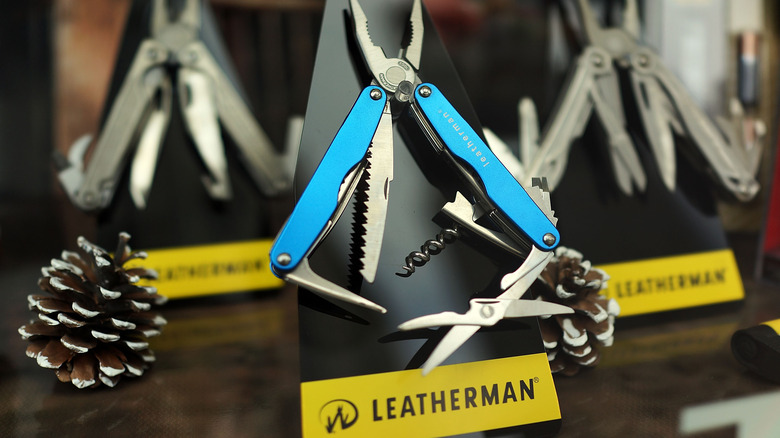
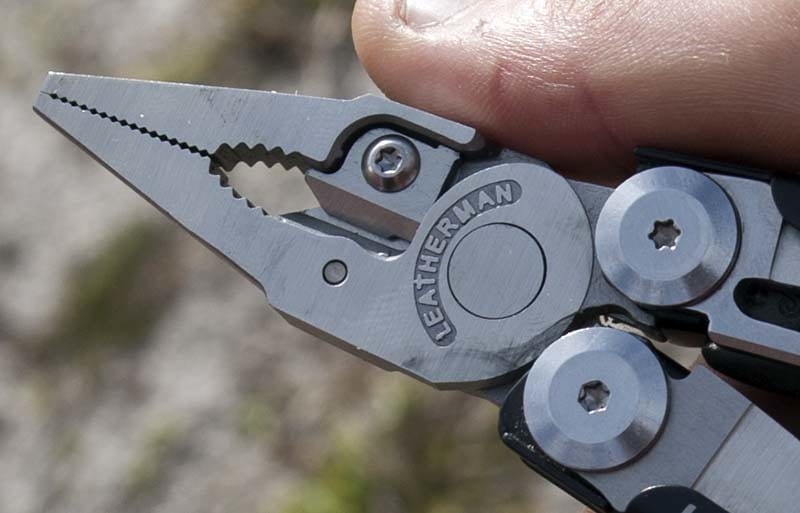
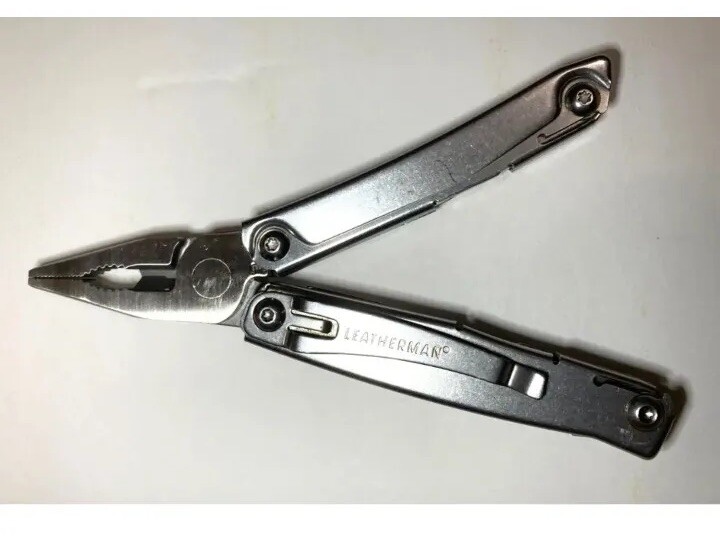
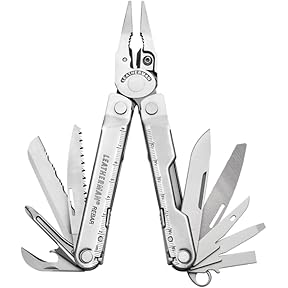
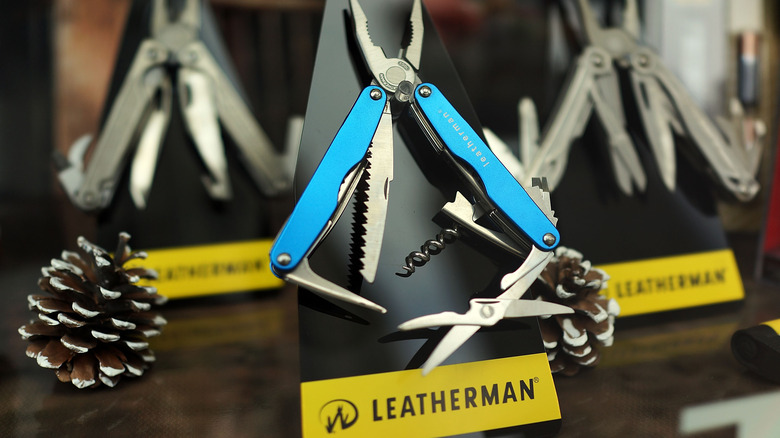
Yes. Leatherman multi-tools are made and assembled in Portland, Oregon, USA, using US and globally sourced parts and materials. That means American manufacturing is central to the brand, but not every component must come from the United States.
When shopping for a multi-tool in the United States, country of origin can matter as much as the tool’s size or features. Buyers may want to support American workers, find a tool built close to home, or know where the steel and other parts come from. Leatherman is a well-known name in this market, and its manufacturing roots are firmly in Oregon.
The company states that its tools are built at its factory in Portland, Oregon. It also describes its products as made in America with US and global parts. This distinction matters because a tool can be manufactured and assembled in the United States without every material or small component being American-made.
This guide explains where Leatherman tools are made, what the company says about its supply chain, how to check a specific model, and what the American-made claim means for buyers. The focus is on documented company information, not unverified claims about individual parts or hands-on product tests.
Leatherman tools are made in Portland, Oregon, in the Pacific Northwest of the United States. The company’s official history says it has been building tools in Portland since its early years. Its current product information also identifies the Portland factory as the source of its multi-tools.
This is more than a US mailing address or a corporate office location. Leatherman describes its Portland operation as a manufacturing facility where its tools are built. The company also says it tests its products in the Pacific Northwest.
The key point is that Leatherman has an active US manufacturing base. However, the Portland location alone does not prove that every screw, spring, steel input, or other material came from an American supplier.
Source: silodrome.com
Country
United States of America.
Manufacturing city
Portland, Oregon.
Manufacturing approach
US-based production and assembly using US and globally sourced parts and materials.
Official company history
Leatherman states that it has built its tools in Portland since the company’s beginnings in 1983.
Does Leatherman Have a Factory in the United States?
Yes. Leatherman identifies its factory in Portland, Oregon, as the place where its tools are built. The company’s official story also describes the manufacturing work that has taken place there over the years.
A US factory can carry out several stages of production, including forming components, finishing parts, assembling tools, and checking finished products. The exact steps used for each current model should not be assumed unless the company documents them.
For a buyer, the useful takeaway is simple. Leatherman is not merely an American brand that outsources all its tool production overseas. Its own published information confirms a real manufacturing operation in Oregon.
Is Portland the Company’s Headquarters Too?
Leatherman Tool Group lists its business address in Portland, Oregon. The company’s official contact page identifies its Portland address, while its manufacturing information points to the same city as the home of its factory.
Still, a headquarters address and a factory address are not automatically the same thing for every company. In Leatherman’s case, the company explicitly connects its manufacturing work to Portland, so the origin claim does not rest on the headquarters address alone.
Are All Leatherman Parts Made in America?
No. Leatherman’s own wording makes a clear distinction between American manufacturing and the origin of every component. The company describes its tools as made in America with US and global parts or materials.
This means that a tool can be built in Oregon while some inputs come from other countries. A finished multi-tool contains many different parts, and the origin of each part is a separate question from where the complete tool is manufactured.
For example, a product may contain a frame, plier jaws, blades, springs, pivots, and small hardware. The location where each item is sourced or processed may differ. Unless Leatherman publishes a detailed parts list with country-of-origin information, it would be misleading to label every part American-made.
Source: cransley.org.uk
US-sourced materials
Some materials and parts may be sourced in the United States. The exact origin depends on the component and the product.
Globally sourced materials
The company acknowledges using parts and materials from outside the United States.
Final manufacturing
Leatherman identifies Portland, Oregon, as its manufacturing location.
Unconfirmed component origins
A specific steel grade, screw, spring, or other part should not be assigned a country of origin without reliable product-specific evidence.
What Does Made in America With Global Parts Mean?
The phrase means the product’s manufacturing takes place in America while some of its inputs come from global supply chains. It does not mean the finished tool was made entirely overseas, nor does it mean every component was produced domestically.
This distinction is useful when comparing tools. One company may manufacture and assemble a product in the United States using imported parts. Another may make most components abroad and carry out only limited work in the United States. Those are different manufacturing arrangements.
Leatherman’s public wording supports the first general description: US manufacturing with globally sourced inputs. It does not provide enough information to calculate the exact US content of every current model.
Can You Find Out Where the Steel Comes From?
The country where a tool is assembled is not always the country where its steel was produced. Steel may pass through several stages, including melting, rolling, cutting, heat treatment, and machining. Those stages can take place in different locations.
Do not assume that a Leatherman blade uses US-made steel solely because the finished tool is built in Oregon. If steel origin is a deciding factor, ask Leatherman customer support about the exact model and steel grade. A clear answer should identify the material and the country or production stage being discussed.
How Did Leatherman Become an American Tool Brand?
Leatherman’s roots trace back to an idea developed by American engineer Tim Leatherman. During a trip through Europe with his wife in the 1970s, he encountered repair problems that called for pliers as well as a pocket knife. That need led him to develop a compact tool that combined several functions.
After returning to the United States, Tim worked on a prototype and sought a patent. The process took years rather than weeks. He later partnered with his college friend Steve Berliner, and the company received its first order for 500 tools from Cabela’s in the spring of 1983.
The original Pocket Survival Tool, often called the PST, helped establish the brand’s approach: several useful hand tools folded into one portable device. The company grew from that idea while keeping manufacturing in Portland, Oregon.
This history helps explain why American manufacturing is part of the brand’s identity. However, a company’s origins and its present supply chain are two separate facts. Its history establishes the American roots, while its current product information explains how manufacturing works today.
Source: trulyamericanmade.com
The original idea
A compact, pliers-based tool designed to handle common repair tasks.
The first product
The Pocket Survival Tool, known as the PST.
The first major order
Leatherman’s official history records an order for 500 tools from Cabela’s in 1983.
The manufacturing link
The company states that its tools have been built in Portland, Oregon, since its early years.
Why the Brand’s History Still Matters
A long manufacturing history can help buyers understand a company’s background and where its production is based. In Leatherman’s case, its official history and current product pages both point to Portland.
History alone does not prove the quality, lifespan, or country of origin of every part in a current product. Those questions need their own evidence. A sensible buying decision considers manufacturing information alongside the model’s features, care needs, and intended use.
Are Popular Leatherman Models Made in the USA?
Leatherman’s current product information identifies its multi-tools as made in Portland, Oregon, using US and global parts. The brand’s official product listings include well-known models such as the Wave Plus, Surge, Signal, Skeletool CX, and Arc.
That company-wide manufacturing statement is useful, but it should not be stretched into a claim that every part in each model is American-made. Product materials, finishes, and designs can differ, and a model name may cover more than one version or special edition.
When checking a particular tool, start with the current official product page. Then confirm the model name, product generation, and any special edition details. If the page does not answer a specific question about component origin, contact the company instead of relying on a seller’s broad label.
Source: form.rivegauchegalleries.com
Wave Plus
A multi-tool in Leatherman’s official product range. Check the current model page for its features and product-specific details.
Surge
A larger multi-tool with a range of built-in functions. Leatherman identifies the Surge as coming from its Portland factory.
Signal
An outdoor-oriented multi-tool. Verify the exact version if a particular material or manufacturing detail matters.
Skeletool CX
A lighter multi-tool design. Use its official product page to check current specifications rather than assuming all models share identical parts.
Arc
A premium multi-tool in the current range. Its US manufacturing location does not by itself establish the origin of every component.
Does a Specific Model Have a Different Country of Origin?
The best evidence is the current product page or a direct answer from Leatherman about that exact model. If you are looking at an older, discontinued, refurbished, or special-edition tool, its documentation may differ from that of a current model.
A marketplace listing may use a broad phrase such as American-made without explaining whether it refers to the brand, the factory, or every part. Ask for the exact model number and a clear statement of origin before paying more for a country-of-origin claim.
What Does Made in the USA Mean for Tool Buyers?
The phrase Made in the USA can have a specific legal meaning in the United States. Under the Federal Trade Commission’s general standard for an unqualified claim, a product must be all or virtually all made in the United States. That assessment considers the product’s final assembly, significant processing, and the proportion of its components and materials that come from abroad.
A product can be manufactured in the United States without qualifying for an unrestricted Made in USA claim. Companies may instead use qualified wording that makes the role of imported materials clear. Leatherman’s wording, Made in America with US and global parts, communicates that distinction.
This article does not make a legal determination about any individual product label. The FTC’s standard depends on the facts and the exact claim being made. For a buyer, the practical lesson is to read the full wording instead of treating every use of American-made language as proof that all components are domestic.
Source: www.youtube.com
Unqualified claim
A broad Made in USA claim is generally subject to the FTC’s all-or-virtually-all standard.
Qualified claim
Wording that mentions global or imported parts gives buyers a more limited description of domestic manufacturing.
Brand origin
An American company name or US headquarters does not, by itself, prove where a product was manufactured.
Product origin
The exact product and the claim printed or published for it are what matter.
Is Made in America the Same as Made in the USA?
In everyday conversation, the two phrases are often used in similar ways. For careful product research, however, the full label and the applicable rules matter more than the wording alone.
A company may use a qualified statement to explain that US manufacturing relies on parts from other countries. That statement should not be read as a promise that every part was made domestically. Leatherman’s published wording expressly acknowledges global inputs.
Why Should Buyers Care About the Difference?
Some buyers want to support US manufacturing jobs. Others care about supply-chain transparency, local production, repair options, or the origin of particular materials. Knowing what a label actually says helps match a purchase to those priorities.
If your requirement is that the finished tool be manufactured in America, Leatherman’s Portland manufacturing statement is relevant. If your requirement is that every part and all steel originate in the United States, the public company-wide statement does not establish that stricter condition.
How to Check Whether Your Leatherman Tool Is American-Made
The most reliable way to check a Leatherman tool’s origin is to identify the exact product and compare it with official company information. This is especially useful when buying an older tool, a secondhand item, or a product from a marketplace seller.
A stamp, logo, or country-of-origin statement can offer useful clues, but a logo alone does not establish where every part was made. Product packaging and seller descriptions can also vary by production date and market.
Use the following steps before buying if US manufacturing is a key reason for your choice.
Source: www.slashgear.com
Step 1: Identify the model
Look for the model name on the tool, its packaging, the receipt, or the official product listing.
Step 2: Open the official product page
Check Leatherman’s own website for the current manufacturing statement and product specifications.
Step 3: Read the full origin wording
Look for language about US manufacturing, assembly, and global parts. Do not treat these terms as interchangeable.
Step 4: Ask about missing details
Contact Leatherman if you need the origin of a particular component, a past production version, or a special edition confirmed.
Step 5: Keep the purchase record
Save the receipt, product page, and any written answer about origin if those details are important to you.
What If You Are Buying a Used Leatherman?
A used tool may have been made years ago, so current product information may not answer every question about its exact production version. Ask the seller for clear photos of the tool, its markings, and any original packaging that remains.
Check the model name and look for signs of modification or replacement parts. A used tool can still be a genuine Leatherman even if its packaging is missing, but authenticity and exact component origin may be harder to verify.
If the seller makes a strong claim about US-made steel or fully domestic parts, request evidence for that specific claim. Do not pay a premium based only on a vague description.
How Can You Avoid Counterfeit or Misrepresented Tools?
Buy from Leatherman or an authorized seller when possible. Compare the product name, design, packaging, and stated features with the company’s official information. Be cautious if a listing uses a model name that does not match the photos or makes claims that cannot be verified.
An unusually low price is not proof of a counterfeit, and a high price is not proof of authenticity. Use several checks together, and contact the company if the tool’s identity remains unclear.
Does American Manufacturing Mean Better Quality?
A US manufacturing location tells you where a product is made, not how well it will perform in every situation. Tool quality also depends on design, material choice, heat treatment, tolerances, assembly, quality control, maintenance, and the way the tool is used.
Leatherman says it builds its tools in Portland and tests them in the Pacific Northwest. Those statements describe the company’s manufacturing and testing approach, but they do not prove that every model outperforms every competing multi-tool.
For everyday repairs, camping, home projects, or work tasks, compare the features that matter to you. A strong plier design may be more useful for one person, while blade access, weight, bit compatibility, or a particular cutting tool may matter more to another.
Source: www.outdoorlife.com
Check the intended use
Choose features that match your common tasks rather than buying on country of origin alone.
Review the materials
Check the published steel grade, tool construction, and finish for the exact model when those details matter.
Consider upkeep
Clean and dry the tool after use, remove dirt from the joints, and follow the maker’s care instructions.
Read the warranty
Understand what the company covers and what it excludes before treating warranty length as a sign of likely service life.
What Should You Compare Before Buying?
Start with the tools you will actually use. Pliers, wire cutters, scissors, drivers, blades, and saws serve different needs, and not every multi-tool has the same set. A larger tool may offer more functions but take up more space in a pocket or pack.
Next, review weight, size, locking features, blade access, replacement-part rules, and the care instructions. If you work with electrical systems, use tools specifically rated for the task rather than assuming that a general multi-tool is insulated or safe for live work.
Finally, consider price and warranty terms. Country of origin is a useful part of the decision, but it cannot replace a close look at the product’s fit for your needs.
Leatherman Warranty, Repairs, and Long-Term Care
Leatherman’s standard limited warranty is commonly stated as 25 years for covered tools, subject to the company’s terms and exclusions. A long warranty can be useful, but it does not mean every kind of damage is covered or that every product accessory has the same coverage.
The company says its warranty applies to the original or primary owner and excludes issues such as abuse, alteration, loss, theft, and corrosion. It also states that qualifying tools may be repaired or replaced at its discretion. Buyers should check the current policy before relying on a particular outcome.
A warranty is separate from the question of where a tool is made. The Portland manufacturing statement tells you about the company’s production location. The warranty terms tell you what help may be available if a covered problem occurs.
Source: Pro Tool Reviews
Read the current policy
Review the official warranty page for the current period, coverage, exclusions, and claim steps.
Keep proof of purchase
A receipt or order record can help establish where and when the tool was bought.
Do not assume all damage is covered
Wear, misuse, corrosion, and unauthorized changes may be treated differently under the policy.
Ask before taking the tool apart
Leatherman warns that unauthorized disassembly can affect tool function and warranty protection.
How Should You Maintain a Leatherman Tool?
Wipe the tool clean after use, especially if it has been exposed to mud, food, salt water, or sweat. Dry it well before storage and pay attention to the joints, where grit and moisture can collect.
Use suitable lubricant as directed by the manufacturer, and keep cutting edges sharp with an appropriate method. Avoid forcing a small driver, blade, or plier beyond its intended task. A multi-tool is versatile, but it is not a replacement for every full-size hand tool.
If a joint becomes stiff or a part develops damage, consult the care guide or customer support before attempting a repair. Do not use a damaged blade or plier when failure could cause injury.
Frequently Asked Questions
Q
Are Leatherman tools made in the USA?
Yes. Leatherman states that its multi-tools are made in Portland, Oregon, USA. The company also says it uses US and globally sourced parts and materials, so its American manufacturing claim does not mean every component is domestic.
Q
Are all Leatherman tools made in Portland, Oregon?
Leatherman identifies its Portland factory as the place where its tools are built. For an older, discontinued, or special-edition product, check the exact model’s documentation or ask the company to confirm the details.
Q
Are Leatherman tools made with Chinese parts?
Leatherman acknowledges using globally sourced parts and materials, but that statement alone does not establish that a particular component comes from China. For a reliable answer, ask the company about the exact model and component instead of assuming a country of origin.
Q
Does Made in the USA mean every part is American?
Not in every case. The FTC generally requires an unqualified Made in USA claim to meet its all-or-virtually-all standard. Leatherman’s wording about US and global parts makes clear that some inputs may come from outside the country.
Q
Are Leatherman tools covered by a lifetime warranty?
Leatherman’s standard limited warranty is generally 25 years for covered tools, rather than an unconditional lifetime guarantee. The policy has exclusions and conditions, so check the current official warranty terms for the exact product and claim.
Q
How can I verify the origin of an older Leatherman tool?
Identify the model, inspect its markings and packaging, and compare the details with official product information. If the tool is discontinued or used, contact Leatherman with the model details and clear photos. A logo by itself does not confirm the origin of every part.
Q
Does buying Leatherman support American manufacturing?
Leatherman’s Portland manufacturing operation supports production in the United States. The company also uses global parts and materials, so buyers who want to support US manufacturing while accepting some imported inputs may find its published sourcing description useful.
✦ Wrapping Up
Conclusion
Yes, Leatherman tools are made in the USA. The company builds its multi-tools in Portland, Oregon, and has maintained its manufacturing roots there since its early years. Its official wording also states that US and global parts and materials are used.
That last detail matters. American manufacturing does not mean that every spring, screw, blade material, or other component comes from the United States. The public company-wide statement does not establish the exact origin of every part in every model.
If you are buying a Leatherman because you want a tool made in America, start with the official product page and confirm the model you plan to buy. If your requirement is stricter and includes US-made steel or fully domestic components, ask for product-specific evidence before making your choice.
💡 Key Takeaway
Check the exact model on Leatherman’s official website, read its full US-and-global-parts statement, and contact customer support if you need proof of a specific component’s origin.