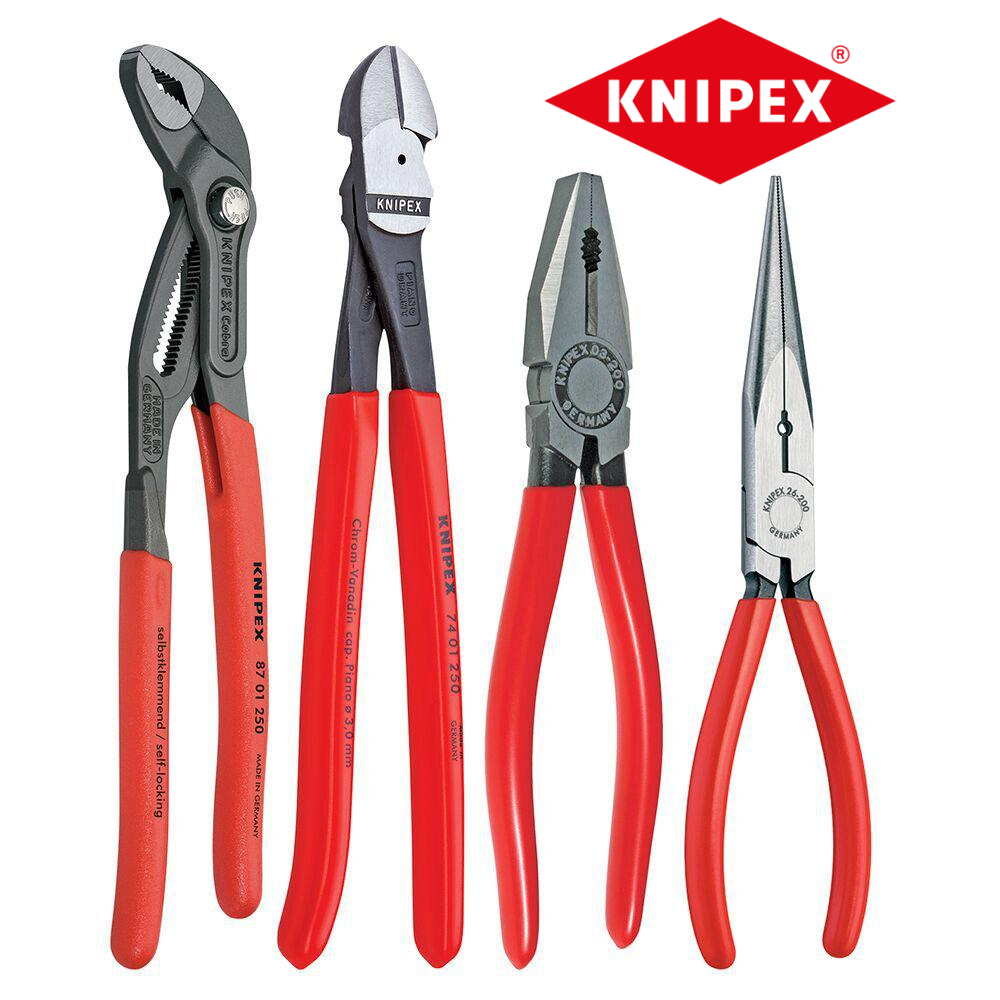
KNIPEX tools are made in Germany, at the company’s manufacturing site in Wuppertal-Cronenberg. The company says its production takes place exclusively in Germany, from tool development to manufacturing and preparation for shipment.
If you work on cars, fix things around your house, or earn a living as a tradesperson in the United States, you may have seen KNIPEX pliers in a tool shop. Their red handles and steel jaws are easy to spot. But where do these tools come from, and are they really made in Germany?
KNIPEX is a German hand tool maker with roots that go back to 1882. Its main factory is in Wuppertal-Cronenberg, a district of Wuppertal in western Germany. The company states that it makes its tools in Germany and handles nearly all stages of production within its own manufacturing operation.
This guide explains where KNIPEX tools are made, how the factory turns steel into finished pliers, and what the German origin claim means for buyers in the United States. It also covers how to check a tool’s origin, how the brand differs from its American sales operation, and what to consider before paying more for a hand tool.
KNIPEX tools are made in Wuppertal-Cronenberg, Germany. This is the company’s founding location and its main manufacturing site. KNIPEX identifies Germany as its production country and says its tools are made there rather than at a network of overseas tool factories.
Wuppertal is in the German state of North Rhine-Westphalia, in the western part of the country. The city’s industrial history includes metalworking and tool production. KNIPEX has been part of that local trade for well over a century.
The company’s registered name is KNIPEX-Werk C. Gustav Putsch KG. Its official address is Oberkamper Straße 13, 42349 Wuppertal, Germany. The manufacturing site is in the Cronenberg district, while the company also has a logistics center in Wuppertal-Ronsdorf.
This distinction matters because a company’s registered office, factory, warehouse, and sales office do not always sit in the same place. For KNIPEX, the company identifies Wuppertal-Cronenberg as its production location. Wuppertal-Ronsdorf is associated with logistics and shipping.
For an American buyer, the direct answer is simple: KNIPEX is a German-made hand tool brand. Its pliers and related tools are manufactured in Germany, then supplied to customers in the United States and other markets.
Source: blog.knipex.com
Country of manufacture
Germany, according to KNIPEX’s official company information.
Manufacturing city
Wuppertal, in North Rhine-Westphalia, western Germany.
Factory district
Wuppertal-Cronenberg, the company’s founding and production location.
North American operation
KNIPEX Tools North America supports the brand’s business, sales, and distribution in the region.
Does KNIPEX Manufacture All Its Tools in Germany?
KNIPEX says it manufactures exclusively in Germany. The company also describes its manufacturing depth as almost 100 percent. In practical terms, this means it carries out nearly all of its production steps within its own manufacturing operation.
The phrase almost 100 percent should not be read as a claim that every raw material, component, or input comes from Germany. Manufacturing a tool in one country and sourcing every input from that same country are different things. The public manufacturing statement does not establish the origin of every individual material or component.
The useful distinction is that KNIPEX identifies Germany as its production base. If you need to verify the origin of a particular item for a business, import, or purchasing requirement, check that exact model and its current product documentation.
What is documented
KNIPEX states that its manufacturing takes place exclusively in Germany.
What should not be assumed
The manufacturing statement alone does not prove that every raw material or component originated in Germany.
Who Owns KNIPEX and How Long Has It Made Tools?
KNIPEX is an independently owned German family business. The company traces its roots to 1882, when Carl Gustav Putsch began making pliers in a small workshop in Wuppertal. That workshop grew into the manufacturing business known today as KNIPEX.
The brand’s long history is tied to pliers and related hand tools. Rather than being known mainly for a broad range of power tools, KNIPEX focuses on tools used to grip, cut, hold, bend, strip, and connect materials. Its products serve trades such as electrical work, plumbing, automotive repair, and general maintenance.
The company has expanded over the years, but its stated manufacturing base remains in Wuppertal. Its family ownership and long production history help explain why the brand is closely linked with German toolmaking. Those facts describe the company’s background; they do not mean every product is automatically the best fit for every user.
KNIPEX is also part of a wider group of companies. One related brand is RENNSTEIG, which makes professional hand tools for tasks such as cable processing. A group relationship does not mean that every product sold under a related brand is made at the same factory. Check the individual brand and product when the manufacturing location matters.
Source: impora.rs
Founded
1882, in Wuppertal, Germany.
Ownership
An independently owned family business.
Main product focus
Pliers and related professional hand tools.
Related businesses
The KNIPEX Group includes other tool companies, including RENNSTEIG.
Is KNIPEX an American Tool Brand?
No. KNIPEX is a German tool manufacturer, although it has a North American business operation. This setup lets the company serve American customers without moving its main manufacturing base to the United States.
A tool may be sold by an American retailer, stored in a US warehouse, or supplied through a North American distributor and still be made in Germany. The seller’s location does not change the manufacturing country.
This is also why you may see American contact details, US product listings, and local warranty information alongside German manufacturing information. Each detail describes a different part of the business.
Brand origin
Germany.
US sales and distribution
Handled through the company’s North American operation and retail partners.
Manufacturing origin
Wuppertal-Cronenberg, Germany, according to KNIPEX.
How Are KNIPEX Tools Made?
KNIPEX tools are made through a series of metalworking and finishing steps at its German manufacturing operation. The process depends on the type of tool, but pliers generally require shaped steel parts, accurate jaw surfaces, a joint that moves as intended, and handles suited to the task.
The company’s published manufacturing information describes work that includes forging, machining, grinding, hardening, handle fitting, marking, and final preparation. A finished pair of pliers may pass through many production stages before it is ready for sale.
These steps help explain why manufacturing location is only one part of a tool’s story. The steel must be shaped correctly, the jaws must meet as intended, and the joint must move without unwanted play. The final design must also match the job for which the tool was built.
The details differ across product types. A cable cutter, water pump pliers, wire stripper, and plier wrench do not all have the same jaw design or working purpose. It would be inaccurate to assume that every KNIPEX model follows an identical production path.
Source: storage.googleapis.com
Forging
Steel is shaped into parts suited to the tool’s design. The exact process depends on the product.
Machining and grinding
Metal surfaces and working areas are shaped and finished to meet the design requirements.
Hardening
Suitable metal parts undergo heat treatment to achieve the properties specified for the tool.
Assembly and handle fitting
The parts are joined, and the selected handles or grips are fitted.
Marking and preparation
Product details and brand markings are applied, and the finished tool is prepared for shipment.
Why Does Precision Matter in Pliers?
Pliers rely on the relationship between their jaws, joint, and handles. If the jaws do not meet as intended, a tool may struggle to grip a small part or cut cleanly. Excess movement at the joint can also affect control.
The jaw shape must suit the job. Smooth jaws can help protect finished surfaces, while toothed jaws can provide a stronger grip on suitable workpieces. Cutting edges need a design that matches the material and size they are meant to cut.
These details are useful when comparing tools, but they should not be treated as proof that one brand always performs better than another. A fair comparison looks at the exact models, their intended uses, their specifications, and the work they are designed to handle.
Jaw fit
Look for the jaw shape and contact pattern suited to the task.
Joint movement
The joint should move as designed, without obvious damage or unwanted looseness.
Cutting capacity
Follow the manufacturer’s limits for the type and size of material.
Handle design
Choose a grip suited to the work and the conditions in which the tool will be used.
Does Made in Germany Mean Every Tool Is Handmade?
No. Made in Germany identifies the stated manufacturing country, not a claim that each tool is shaped entirely by hand. Modern tool production can combine skilled workers, automated equipment, controlled heating, precision machining, and inspection.
KNIPEX uses industrial manufacturing methods. The work of trained staff and the use of machinery are not competing ideas. Machines can perform repeatable tasks, while workers and production controls help manage the process and check that parts meet the required standards.
A factory-made tool can still involve careful design and precise production. The key questions are how the product is made, whether it meets its specifications, and whether those specifications suit your work.
Country of origin
Identifies where the tool is manufactured.
Production method
May combine machinery, automation, skilled labor, and quality checks.
What Types of KNIPEX Tools Are Made in Germany?
KNIPEX makes a wide range of pliers and related hand tools for professional and general use. Its product range includes gripping pliers, cutting pliers, water pump pliers, wire strippers, crimping tools, and tools for working with electrical cables.
The exact model matters more than the broad product category. Two pairs of pliers can look similar but have different jaw shapes, cutting capacities, handle designs, or uses. Before buying, read the model description and the maker’s stated limits.
KNIPEX is especially well known for its Cobra water pump pliers, plier wrenches, and various cutting and electrical tools. These product families illustrate the range of work its tools support. Their availability, sizes, and features can differ by market and model.
Source: digikey.com.mx
Water pump pliers
Designed to grip and turn suitable nuts, pipes, fittings, and other workpieces. Jaw capacity and surface protection vary by model.
Pliers wrenches
Use parallel jaws to grip and turn suitable fasteners. Smooth jaw faces can help reduce marking on finished surfaces.
Cutting pliers
Designed for specified wire and other materials. The approved cutting capacity depends on the exact model and material.
Wire strippers
Remove insulation from suitable wire sizes and types. Follow the tool’s listed range and instructions.
Crimping tools
Join suitable terminals to wires using the specified crimping method and compatible components.
Specialty pliers
Support tasks such as holding, bending, extracting, or working with small parts in a defined application.
Are KNIPEX Cobra Pliers Made in Germany?
KNIPEX Cobra water pump pliers are part of the company’s core pliers range. KNIPEX describes its manufacturing as taking place in Germany, at its Wuppertal-Cronenberg site. The brand also publishes a manufacturing guide that shows how pliers are produced and finished.
The Cobra name identifies a product family rather than a single size. Different models can have different lengths, jaw capacities, and handle styles. Check the specific model number before buying to make sure its working range suits your needs.
A country-of-origin statement does not replace the tool’s instructions. Do not use pliers beyond their stated capacity or treat ordinary gripping pliers as a substitute for an approved wrench, cutter, or insulated electrical tool.
Best first check
Confirm the exact Cobra model and its jaw capacity.
For plumbing and repair
Check whether the jaw design suits the fitting and whether surface damage is a concern.
For electrical work
Use only tools with the required ratings and follow the relevant safety procedures.
Are KNIPEX Electrical Tools Made in Germany?
KNIPEX makes tools for electrical work, including wire strippers, cutters, and crimping tools. The company states that its manufacturing takes place exclusively in Germany, so its stated manufacturing base applies to its tool range.
Electrical tools need extra care during selection. A red or multicolor handle does not, by itself, prove that a tool is safe for live electrical work. For work near energized parts, verify the exact tool’s insulation rating, condition, instructions, and suitability for the job.
Where a tool is marked for insulated electrical work, follow the maker’s use limits and required inspection practices. Never assume that a standard pair of pliers offers electrical protection because it looks similar to an insulated model.
Check the rating
Confirm the specific tool is designed and rated for the electrical task.
Check the condition
Do not use an insulated tool with damaged grips, exposed metal, or other defects.
Follow safe work rules
Use proper isolation procedures and qualified help when the task requires it.
Are KNIPEX Tools Sold in the United States Made in Germany?
KNIPEX tools sold in the United States are supplied through the company’s North American operation and retail partners. The company says its manufacturing remains in Wuppertal, Germany. This means an American buyer can purchase German-made KNIPEX tools through a local store or an online retailer.
The path from factory to buyer may include shipping, warehousing, distribution, and retail packaging. Those steps do not mean the tool was manufactured in the country where it was sold. A product can be made in Germany and later stored in a US distribution center before reaching a customer.
KNIPEX’s official manufacturing guide also describes finishing and preparation for shipment to the United States. The guide explains that some retail packaging may be added after the tools arrive in the US. Packaging location and manufacturing location are separate details.
If you are comparing a KNIPEX tool with a similar product sold by another brand, focus on the exact product specifications. Country of origin may matter to you, but it does not tell you everything about cutting capacity, fit, comfort, service options, or price.
Source: arrowindustrialsupply.com
Made in Germany
Refers to the stated manufacturing origin.
Packed or distributed in the United States
Describes later handling or supply steps and does not, by itself, establish where the tool was made.
Sold by an American retailer
Identifies the seller, not necessarily the factory or country of manufacture.
How Can You Check the Country of Origin?
The simplest way to check a KNIPEX tool’s origin is to look at the product markings and the current documentation for its exact model. KNIPEX tools may carry markings such as the brand name, article number, and Made in Germany statement. The precise markings can vary by tool and production details.
If the packaging does not show the information you need, check the official product page or ask KNIPEX customer support. Give them the model or article number rather than asking only about the brand in general. This helps avoid confusion between similar tools or different versions.
A retailer’s listing can help, but use the manufacturer’s information when origin is important for a work contract or purchasing rule. If the label, listing, and product documentation appear to conflict, pause and ask the manufacturer or seller to clarify before relying on the claim.
Step 1
Find the model or article number on the tool or its packaging.
Step 2
Check the official KNIPEX product information for that exact item.
Step 3
Read the country-of-origin marking where available.
Step 4
Contact KNIPEX or the seller if the origin is unclear or conflicting.
Are KNIPEX Tools Worth Buying?
KNIPEX tools may be worth buying if their design, capacity, and build suit the work you do. Their German manufacturing origin and long history can be useful parts of a buying decision, but neither fact proves that a particular model is the right choice for every user.
A homeowner who uses pliers a few times a year may have different needs from an electrician who uses the same type of tool every workday. A tradesperson may place more value on a specific jaw design, precise adjustment, a comfortable grip, or a tool that suits repeated use. A casual user may care more about the purchase price and how often the tool will be needed.
The most useful comparison is between tools designed for the same job. Check the material capacity, jaw size, cutting range, handle style, dimensions, weight, and maintenance needs. Do not compare two products on country of origin alone when their working designs are different.
Price also matters. A more costly tool is not automatically cheaper over its full life, and a lower-cost tool is not automatically poor. To assess value, consider the task, expected frequency of use, the cost of replacement, and whether the tool’s features make a real difference to your work.
Source: impora.rs
Match the tool to the task
Choose the right type of pliers, cutter, stripper, or wrench for the job.
Check the working limits
Use the maker’s stated capacities for the material and size you intend to handle.
Consider how often you will use it
Frequent use may make a specialized design more useful than a basic multipurpose tool.
Compare total value
Consider the purchase price, fit for purpose, expected service life, and available support.
What Should You Check Before Buying KNIPEX Tools?
Start with the job, not the brand name. Decide whether you need to grip a pipe, turn a fastener, cut a certain wire, strip insulation, or crimp a terminal. Then select a tool designed for that task.
Check the model number and compare the listed specifications with the work you plan to do. If you need the tool for a specific wire size, fastener, or fitting, confirm the allowed range before placing an order. Similar-looking tools may have different limits.
Buy from a seller that clearly identifies the model and provides a sensible way to handle returns or warranty questions. Keep the receipt and any product documentation, especially if the tool will be used for paid work.
Model number
Confirm the exact model rather than relying on a broad product name.
Intended use
Make sure the tool is designed for your material, fitting, or task.
Condition
For used tools, check for damaged handles, rust, worn cutting edges, or a loose joint.
Warranty
Read the current terms for your country and purchase channel. Do not assume every tool has the same coverage.
Does German Manufacturing Guarantee Better Quality?
No country-of-origin label can guarantee that every product is free from defects or that every buyer will get the same result. Manufacturing location tells you where a tool is made, while product quality depends on its design, materials, production controls, and condition.
KNIPEX’s official information describes its manufacturing processes and its focus on pliers. Those details help explain the company’s approach, but they should not be mistaken for an independent comparison of every KNIPEX model against every competing product.
A sensible choice combines the origin information with the tool’s specifications and your own needs. If possible, compare the grip, jaw movement, size, and working range in person. For online purchases, use the manufacturer’s technical details instead of relying only on product photos or broad claims.
Origin
Useful for understanding where the tool was manufactured.
Specifications
Useful for checking whether the tool can handle the task.
Independent comparison
Useful when you need evidence about how competing models perform under similar conditions.
Common Misunderstandings About KNIPEX Manufacturing
Several details can cause confusion when people research where KNIPEX tools are made. The most common problem is treating the brand’s country, the seller’s location, the packaging location, and the source of every component as if they all mean the same thing.
The company’s official statement is clear about its manufacturing base: Germany. Other claims need to be considered separately. A US warehouse does not prove US manufacture, and a German factory does not prove that every input was sourced in Germany.
It is also easy to assume that every tool in a related product family has the same features. In fact, models can vary in length, jaw shape, cutting capacity, handle material, and intended use. Read the product details rather than relying on the appearance of a tool or a familiar brand name.
Source: blog.knipex.com
Misunderstanding: KNIPEX tools are made in the United States
Correction: KNIPEX identifies Germany as its manufacturing country. Its North American operation supports the regional business.
Misunderstanding: A US shipping label means US manufacturing
Correction: Shipping and distribution locations do not establish where the tool was manufactured.
Misunderstanding: Every component must be German
Correction: The company’s manufacturing statement does not establish the origin of every raw material or component.
Misunderstanding: Made in Germany means every model is suitable for any job
Correction: Each tool has a defined purpose and working limit. Check the exact specifications.
Misunderstanding: Every KNIPEX tool has the same warranty
Correction: Coverage can depend on the product, the current terms, the country, and the purchase channel.
What If a Product Listing Gives Conflicting Origin Information?
If an online listing says a KNIPEX tool was made in one country but the product marking says another, do not guess which statement is correct. Save the listing, note the model number, and ask the seller or manufacturer to confirm the origin of the exact item being sold.
Check whether the listing refers to the tool itself, a replacement part, a set, or only its packaging. A product bundle can contain items with different origins, so a statement about the set may not apply to every component.
For purchases tied to formal origin rules, workplace procurement policies, or government contracts, use the documentation required by the relevant buyer or authority. A general brand statement may not be enough to meet a specific purchasing rule.
Keep the evidence
Save the product listing, model number, packaging details, and seller response.
Verify the exact item
Ask about the specific tool or part, not only the brand as a whole.
Use the required documents
Follow the origin documentation rules that apply to your purchase or contract.
Frequently Asked Questions
Q
Where are KNIPEX tools manufactured?
KNIPEX tools are manufactured in Wuppertal-Cronenberg, Germany. The company identifies this location as its founding site and says its manufacturing takes place exclusively in Germany.
Q
Are KNIPEX tools made in Germany or China?
KNIPEX states that it manufactures its tools exclusively in Germany. Its official company information identifies Wuppertal-Cronenberg as its production location. The statement does not establish the country of origin of every raw material or component.
Q
Is KNIPEX a German company?
Yes. KNIPEX is an independently owned German family business founded in Wuppertal in 1882. Its main manufacturing operation remains in Wuppertal-Cronenberg.
Q
Does KNIPEX have a factory in the United States?
KNIPEX identifies Germany as its manufacturing base and says its production takes place exclusively there. The company has a North American operation that supports sales and distribution, but that is not the same as a US manufacturing factory.
Q
Are KNIPEX pliers made in Germany?
Yes. KNIPEX is known for its pliers, and the company states that its tools are manufactured in Germany. Its published production information describes steps such as forging, machining, grinding, hardening, and final preparation.
Q
Who owns KNIPEX?
KNIPEX is an independent family-owned company. Its manufacturing business operates under the name KNIPEX-Werk C. Gustav Putsch KG and traces its origins to Carl Gustav Putsch’s pliers workshop in 1882.
Q
Are KNIPEX tools worth the price?
That depends on the model, your work, and how often you will use it. Compare the tool’s working capacity, design, handle, purchase price, and warranty terms with similar tools made for the same task. German manufacturing origin alone cannot determine value.
Q
How can I tell if my KNIPEX tool is genuine and made in Germany?
Check the model or article number, the product markings, and the official product documentation. Buy from a trusted seller and contact KNIPEX if the origin or authenticity is unclear. A country-of-origin marking can help verify origin, but it is not the only check needed to establish authenticity.
✦ Wrapping Up
Conclusion
KNIPEX tools are made in Wuppertal-Cronenberg, Germany. The company began making pliers in 1882 and continues to identify Germany as its manufacturing base. Its production covers a range of metalworking, assembly, finishing, and preparation steps before tools are sent to customers.
For buyers in the United States, the presence of a North American sales and distribution operation does not change the stated country of manufacture. A tool can be shipped or packed for the US market while still being made in Germany.
The German origin is useful information, but it should be only one part of a buying decision. Check the exact model, its working limits, its intended use, and the current warranty terms. These details help you choose a tool that fits the job rather than relying on the brand name alone.
💡 Key Takeaway
Before buying, find the exact KNIPEX model number, confirm its specifications on the official KNIPEX website, and check the product’s country-of-origin marking or documentation if German manufacture is a requirement.