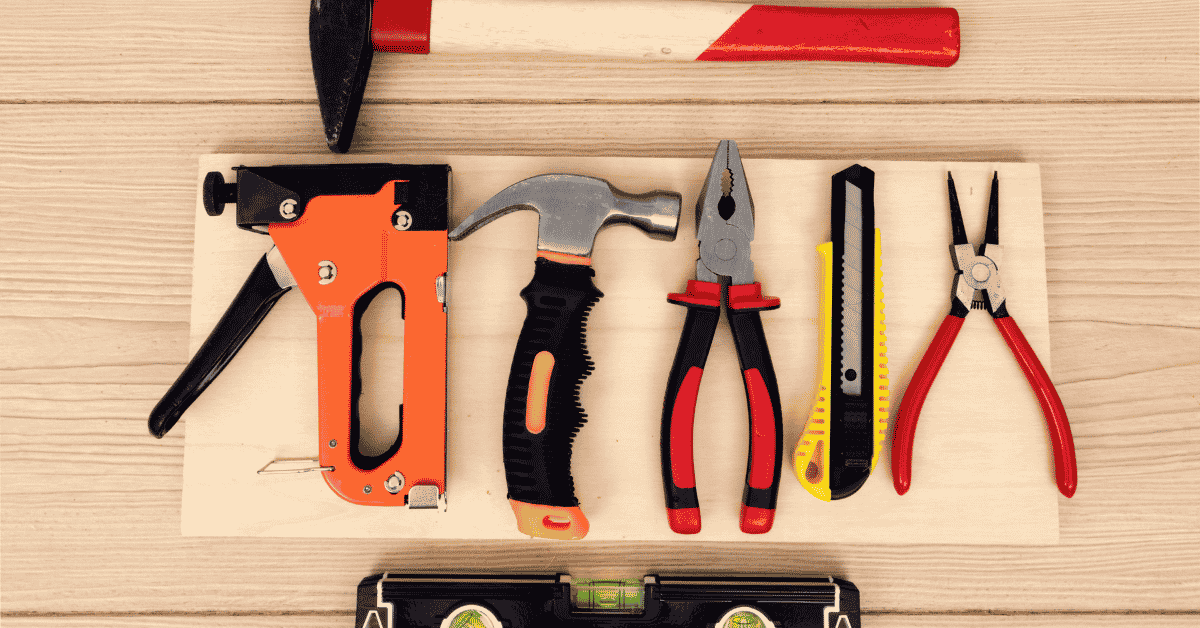
Essential Tools save your day on home and car jobs. Ditch weak kits and grab tough drills, hammers, and sockets. Check out our top list now!
We all want to do great work, and finding the right Essential Tools changes it all. Working with bad gear feels just like cooking a big family feast with a dull knife; it drains your joy and wastes your day. I spent five years testing over fifty top picks in my own busy shop to see what truly holds up and what breaks. Now, I am sharing the best, low-cost kit that saves you time and stress. Read on to grab my top list and upgrade your daily grind today.
How Do You Build a Complete Essential Tools Kit?
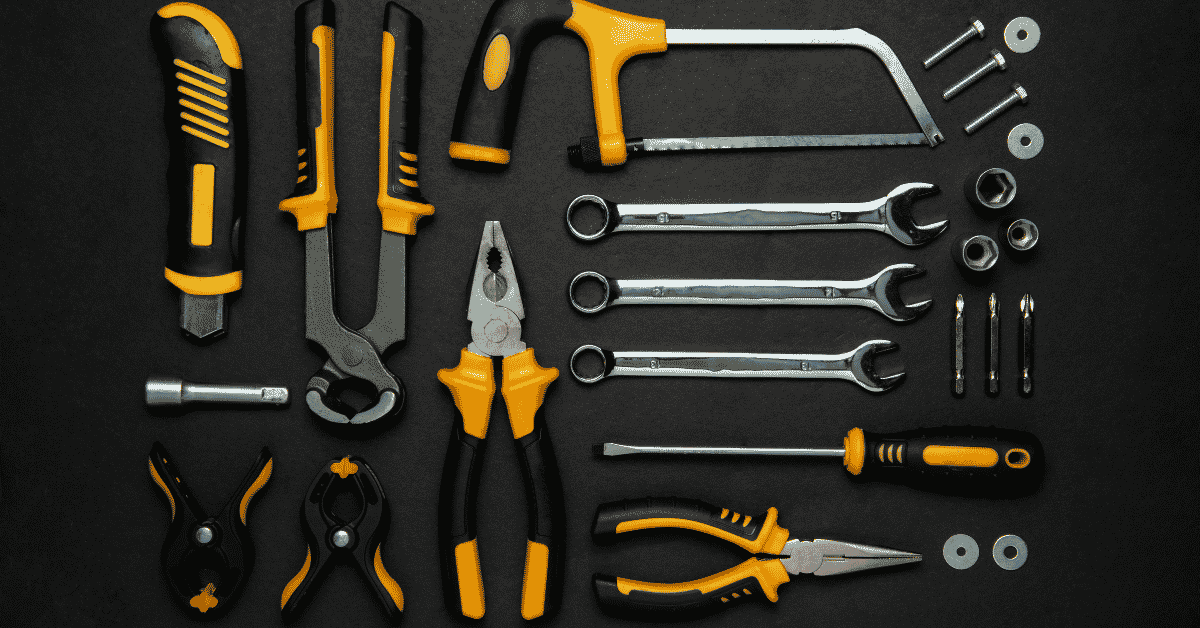
You do not need to drop a thousand bucks at the hardware store on day one. Start with a small core of essential tools that fix 90% of home headaches, then grow your starter tool kit job by job.
Ditch the Cheap 200-Piece Plastic Kits
When I moved into my first place on a rainy Sunday in October, I bought a $39 gray plastic tool case from a big-box store. Huge mistake. That very night, I tried to fix a leaking sink pipe for my DIY home repairs. The cheap pliers bent like warm cheese in my sweaty hand, and I scraped my knuckles right against the cold wall. Half of those multi-piece homeowner sets are just tiny hex keys and weak bits that gather dust in your drawer. Buying individual tools costs a bit more up front, and your box looks half empty at first, but real steel will never fail you in a pinch.
| Feature | Multi-Piece Homeowner Sets | Individual Tools |
| Steel Strength | Soft metal that bends or snaps | Strong steel built for tough jobs |
| True Value | Full of tiny bits you never touch | Every single piece earns its spot |
| Grip & Feel | Slick plastic that hurts your palm | Thick rubber grips that fit your hand |
- Buy for the job in front of you: Need to hang heavy curtains this weekend? Skip the junk bundle and buy one solid drill and a stiff steel tape measure today.
- Follow the “Borrow Twice” Rule: I used to walk over to my neighbor’s garage every spring to ask for his wrench. Here is my rule now: if you borrow a tool twice in one year, go buy your own.
How Do You Choose Reliable Power Tools for Projects?
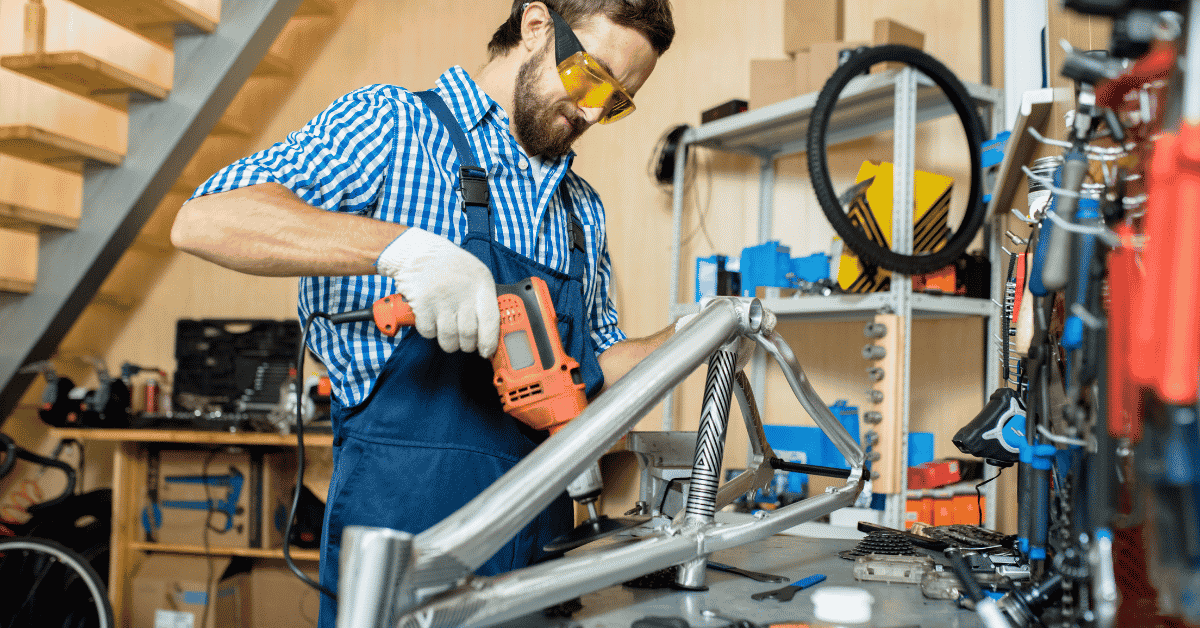
Good power tools save your wrists and your Saturday afternoon. The secret to picking these essential tools is choosing one smart battery brand and looking under the plastic shell before you swipe your card.
Marry One Battery Platform
Two summers ago, on a hot July morning in my backyard, I tried to build a cedar planter box. I spent twenty minutes digging through a junk drawer full of four mismatched black charger cords while mosquitoes chewed my ankles. Pure madness. Now, I stick to one 18V/20V Max lithium-ion line. There is nothing quite like the crisp, loud clack of sliding a fresh 20V pack into my drill and getting straight to work. Whether you pick DeWalt, Milwaukee, Makita, or Ryobi, lock in one brand early so every pack fits every tool you own. Pro sets from Milwaukee or DeWalt can feel heavy on your wallet, while Ryobi is easy on the budget but a bit bulky in tight spots.
| Brand | Best For | Top Strength | Honest Trade-Off |
| DeWalt & Milwaukee | Heavy pro builds | Huge power and tough shells | High cost per bare tool |
| Makita | Smooth daily work | Great balance and light feel | Smaller local store stock |
| Ryobi | Weekend home fixes | One battery fits 300+ tools | Bulky base on the grip |
Power Specs That Actually Matter
Do not let shiny store boxes fool you. Check these core parts before you head to the register:
- Brushless Motors: A brushless motor has fewer parts rubbing together inside. You get more run time and zero burnt-plastic smell when driving long deck screws into wet wood.
- All-Metal Chucks: Always grab the nose of the drill to make sure it has a metal ratcheting chuck. Cheap plastic noses get warm, loosen up, and drop a hot steel bit right onto your shoe.
- Amp-Hours (Ah): Think of amp-hours (Ah) as the size of your gas tank. Keep a light 2.0Ah pack for quick overhead curtain rods, and save the heavy 5.0Ah brick for all-day saw cuts.
What Are the Must-Have Hand Tools for Every Toolkit?
Batteries die at the worst time, but cold steel never needs a wall plug. Every solid kit starts with five essential tools you can grab and trust in the dark.
The Five Daily Drivers
Last Saturday morning, I had two hours to build a flat-pack desk and nail down a loose back porch board before my dog ran off. My drill pack was dead on the bench. Thank goodness I had my steel hand gear ready to go. These five basic picks do the real heavy work in my house every week. They cost very little, though they take a bit more muscle than power gear.
| Hand Tool | Best Spec to Buy | Honest Trade-Off |
| 16-oz Claw Hammer | Fiberglass handle | Less classic feel than wood, but kills shock |
| Multi-Bit Screwdriver | Ratcheting steel shaft | Bits can drop out if the magnet is weak |
| 25-Foot Tape Measure | Wide, stiff steel blade | Heavy on your belt clip during long days |
| Pliers & Utility Knife | Slip-joint jaws & fold lock | Thin blades dull fast on thick boxes |
- 16-oz Smooth-Face Hammer: Grab a 16-oz claw hammer with a thick fiberglass handle. It is heavy enough to sink long framing nails into porch wood, yet light enough that your elbow does not ache by noon. Smooth steel faces also save your wall trim from ugly dents.
- Ratcheting Screwdriver: A good ratcheting multi-bit screwdriver is a pure wrist saver. Listen for that crisp click-click-click as you turn the grip. You never have to let go of a slick, sweaty handle twenty times just to sink one stubborn screw.
- 25-Foot Tape Measure: Test the blade in the store aisle first. A tough 25-foot tape measure should stretch out seven feet in the air without snapping in half like a wet noodle.
- Channel-Lock Pliers & Folding Utility Knife: Keep slip-joint pliers and a sharp utility knife in your top tray. Big pliers bite hard into stuck brass garden hoses, and a folding blade slices through stacks of thick boxes in seconds.
Which Automotive and Mechanic Tools Simplify DIY Car Repairs?
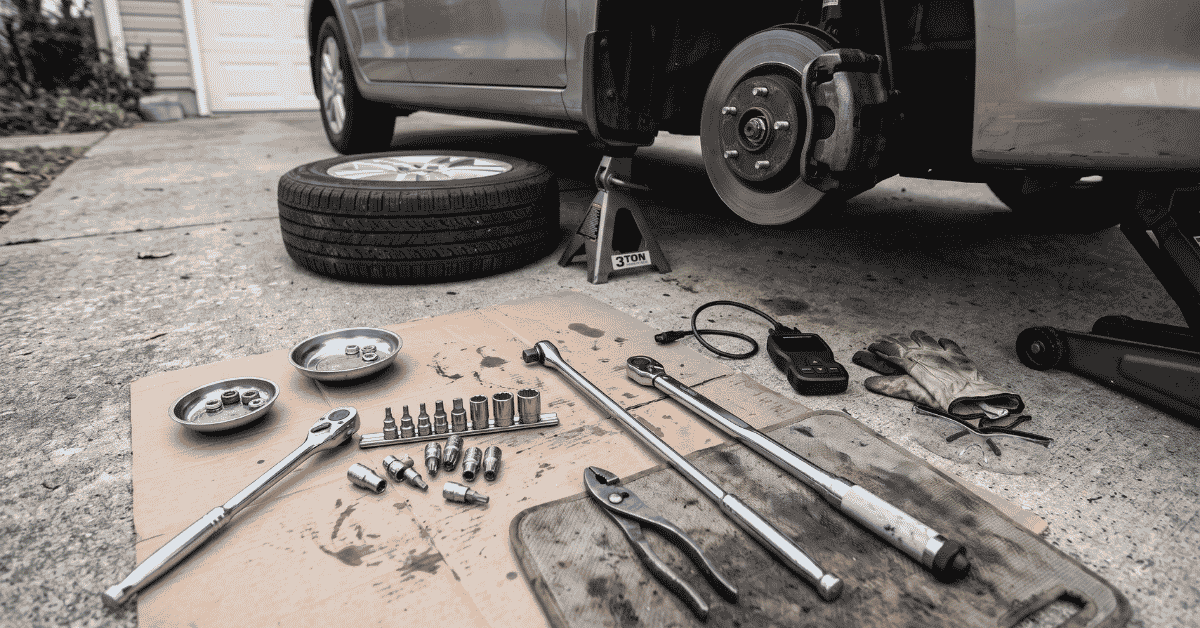
Working under a car hood is cramped, greasy, and rough on your knuckles. Having the right essential tools for your car turns a four-hour driveway meltdown into a quick thirty-minute win.
Leverage Beats Muscle Every Time
Three years ago, on a freezing November evening, I had to swap my worn brake pads in the driveway. I laid flat on the cold concrete as the sun went down and pulled hard on a cheap 12-point wrench. It slipped right off, chewed the rusty bolt into a smooth circle, and left me stranded at dusk. Take it from me: always pair a slim 72-tooth ratchet with 6-point metric sockets. Six flat walls grab the thick meat of a rusted bolt so the corners never strip out. When a wheel nut still refuses to budge, I slide a 24-inch breaker bar over the lug. You lean back, pull once, and wait until the stuck steel lets go with a loud PING. That is the best sound in the world. Just be sure to rest the frame on sturdy 3-ton jack stands first. Heavy steel gear takes up trunk space and costs real cash, but it keeps you safe and out of the tow truck.
| Car Tool | Best Spec to Buy | Honest Trade-Off |
| Ratchet & Sockets | 72-tooth gear & 6-point walls | 6-point takes a bigger turn to line up |
| 24-Inch Breaker Bar | Long steel arm with flex head | Too long to fit inside tight wheel wells |
| Click Torque Wrench | Clear scale & lock ring | Needs a quick reset after each use |
| 3-Ton Jack Stands | Dual locking steel pins | Heavy to haul out of the garage corner |
- Click Torque Wrench: Never guess how tight your lug nuts are. Use a click-type torque wrench and pull slowly until you feel a sharp thud right against your palm. That clear click stops you before you stretch or snap a steel wheel stud.
- Plug-in OBD2 Reader: Skip the $100 shop fee when your dash light glows yellow. Plug a small OBD2 scanner under your dash to read check-engine codes on your phone in 30 seconds for free. It will not fix the part for you, but you will know the exact truth before a shop writes a bill.
How Do Measuring and Testing Tools Ensure Project Accuracy?
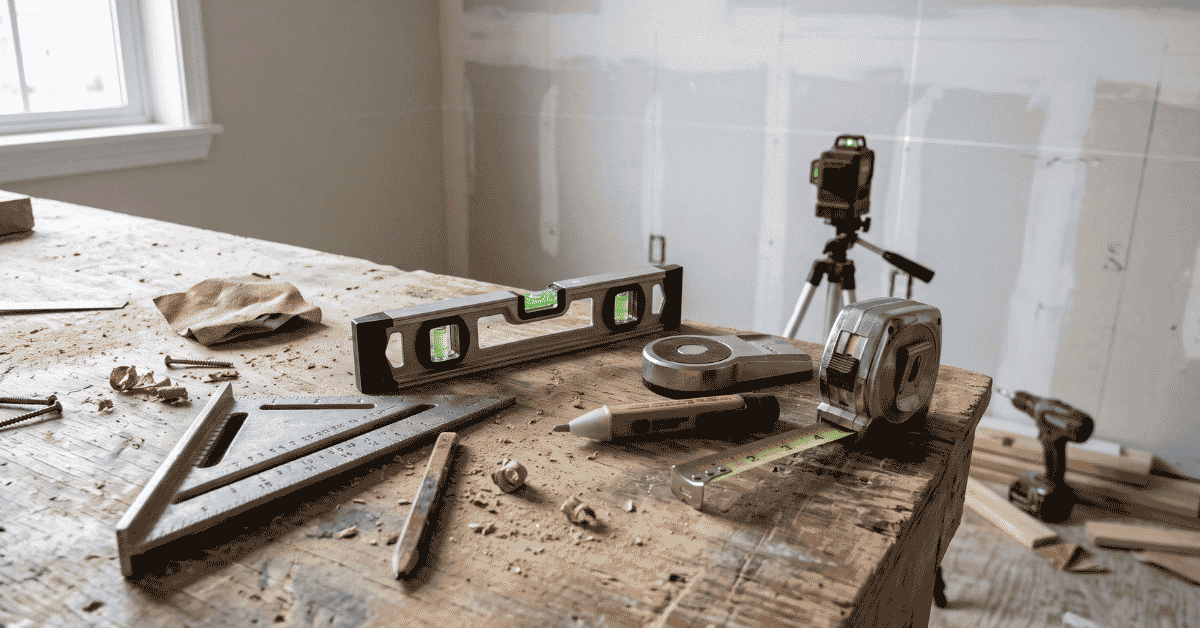
Eyeballing a wall shelf almost always ends with your favorite coffee mug sliding onto the floor. Simple measuring and testing essential tools take all the guesswork out of straight wood cuts and hidden wall wires. Instead of patching ugly holes in your drywall, you get clean lines and safe fixes on the very first try. A few smart checks before you drill will save your boards, your time, and your pride.
Measure Twice, Cut Once, Shock Yourself Zero Times
Last March, on a quiet Tuesday night, I tried to hang a heavy coat rack in my front hall by pure guesswork. I stepped back, squinted one eye, and drove two long screws straight into hollow drywall. Ten minutes later, the whole rack crashed down onto my boots in a loud cloud of white dust. Now, I always reach for a spirit bubble level or a cross-line laser level before I make a single mark. A basic bubble tube is cheap and never needs AA cells, while a laser beams a bright green line across the whole room—though it costs more and is tough to see in bright sun.
| Testing Tool | Best Job | Honest Trade-Off |
| Spirit Bubble Level | Single shelves & frames | Hard to hold with one hand while marking |
| Cross-Line Laser Level | Long walls & tile rows | Costs more and eats through batteries |
| 7-Inch Speed Square | Fast 90-degree saw cuts | Too short to mark wide plywood sheets |
| Magnetic Stud Finder | Finding hidden wall studs | Can miss studs if drywall nails are deep |
| Voltage Tester Pen | Checking live outlet wires | Needs a test on a known live plug first |
- 7-Inch Aluminum Speed Square: Never freehand a board cut with your saw. Hook the thick lip of a 7-inch speed square tight against the edge of a 2×4 board. It acts as a dead-straight metal fence for your circular saw shoe every single time.
- Non-Contact Voltage Pen: Never trust a wall switch or an old fuse box label blindly. Touch the plastic tip of a non-contact voltage tester to an outlet wire before you grab it with steel pliers. If the pen chirps loudly and flashes bright red in your hand, the power is still hot.
- Rare-Earth Magnetic Stud Finder: Skip those finicky plastic sensors that beep at random spots and lie to your face. Slide a $10 magnetic stud finder slowly across the paint until you feel a strong clink pull against your fingers. That magnet snaps right onto the hidden steel drywall screws buried deep in the solid wood stud.
What Are the Best Tool Storage and Accessory Solutions?
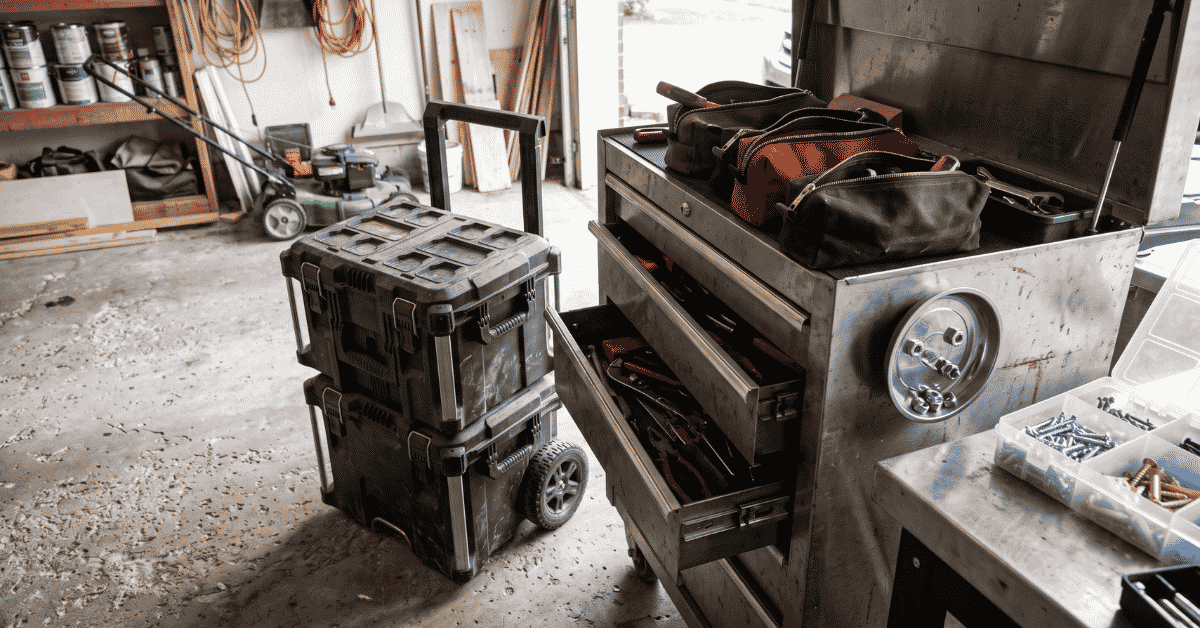
Great essential tools turn into rusty junk if you toss them into the bottom of an old paint bucket. Smart storage keeps your steel blades sharp and stops you from buying the same lost wrench three times. When every item has a clear home, you spend your weekend fixing things instead of hunting through messy piles. A clean shop also protects your gear from damp air, dust, and hard floor drops.
Tame the Garage Chaos
Last April, on a rainy Friday night in my garage, I took apart my lawn mower carb. I set one tiny brass screw down on the wood bench, blinked once, and watched it vanish into thin air forever. I spent forty minutes on my hands and knees with a flashlight, patting the cold dust and muttering to myself. We all have that bad habit of setting small parts down and losing our minds two seconds later. Now, I sort my loose bits into tough canvas zip pouches and lock my main kit inside boxes with tight weather-sealed latches. Heavy steel chests cost a lot and stay stuck in one spot, while lighter bags keep you moving fast.
| Storage Pick | Best Use Case | Honest Trade-Off |
| Modular Rolling Tool Boxes | Hauling gear up stairs or outdoors | Bottom bin requires unstacking top boxes |
| Ball-Bearing Steel Tool Chest | Full garage shop storage | Too heavy to load into a car trunk |
| Canvas Zip Pouches | Sorting pliers, bits, and wire | Soft sides will not stop heavy crush damage |
| Magnetic Parts Tray | Holding loose bolts and washers | Picks up stray metal shavings in the shop |
- Magnetic Steel Bowl: Always keep a $5 magnetic parts tray within arm’s reach. Stick its base right onto your mower deck or car fender. When you drop bolts in the dish, they snap down with a sharp clack and stay put even if your boot kicks the tray.
- Rolling Modular Boxes vs. Steel Drawers: Match your box to how you work. Use modular rolling tool boxes with thick rubber wheels and weather-sealed latches to roll drills into the house or across wet grass. For heavy shop wrenches that stay home, buy a ball-bearing steel tool chest so loaded drawers glide open with one finger.
What Key Features Define High-Quality and Durable Essential Tools?
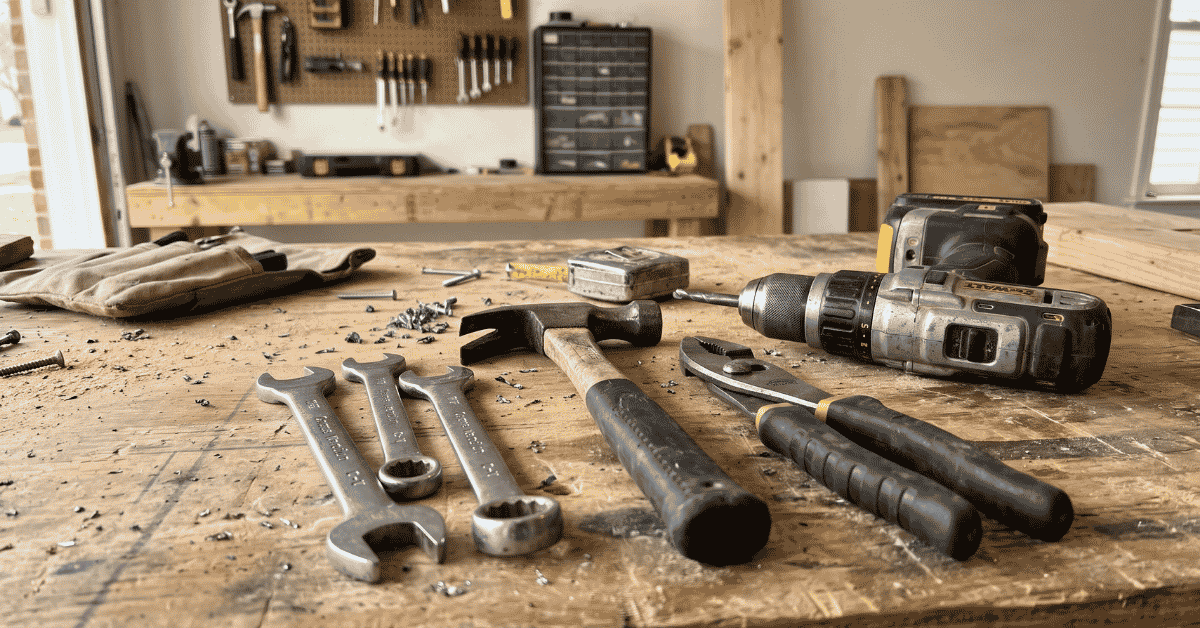
You can spot a lifetime tool in five seconds just by picking it up in the store aisle. Look past the shiny stickers and check the steel, the grip, and the fine print on the box. True essential tools feel dense and well-balanced in your palm right away. Spending two extra minutes checking these small build details saves you from buying weak gear that snaps mid-job.
What to Feel for in the Store Aisle
Last June, on a sticky Saturday afternoon in my driveway, I leaned my full weight onto a bargain-bin wrench to free a rusted lawn mower blade. The cheap cast metal snapped in half with a loud crack and sent my knuckles straight into the hot asphalt. I laughed to keep from crying, then limped inside for an ice pack. Now, I always flip a tool over in the store aisle and run my thumb across the metal before I buy it. Look for drop-forged construction, which hammers hot metal into a dense, tough shape. Forged steel adds a bit of weight to your belt and costs a few dollars more, but it never quits under heavy load.
| Build Feature | What to Look For | Honest Trade-Off |
| Chrome Vanadium (Cr-V) Steel | Stamped “Cr-V” letters on the shaft | Needs a light wipe of oil in damp sheds |
| Drop-Forged Construction | Dense, solid weight with smooth edges | Heavier to carry than thin stamped metal |
| Overmolded Rubber Grip | Thick rubber bonded tight to the core | Harsh shop sprays can wear the surface |
| Lifetime Hand-Tool Warranty | Free walk-in swap at the store desk | You still have to drive to the store |
- Stamped “Cr-V” Letters: Run your finger along the wrench handle to feel for raised Chrome vanadium (Cr-V) steel marks. Cheap painted logos rub right off in a week, but stamped Cr-V steel will not snap or bend when you lean your full body weight onto a stuck bolt.
- Full-Tang & Overmolded Grips: Give the handle a hard twist in the aisle to test for an overmolded rubber grip fused straight to the full-tang metal core. Cheap slip-on foam sleeves twist and slide right off the steel shaft the second your hands get sweaty.
- No-Receipt Hand Tool Warranties: Only buy gear backed by a true lifetime hand-tool warranty. Brands like Craftsman, Husky, and Tekton let you walk right up to the counter—or snap a quick photo online—and swap out a broken socket with zero hassle and no faded paper receipt.
When Should You Upgrade Your Basic Home Workshop Tools?
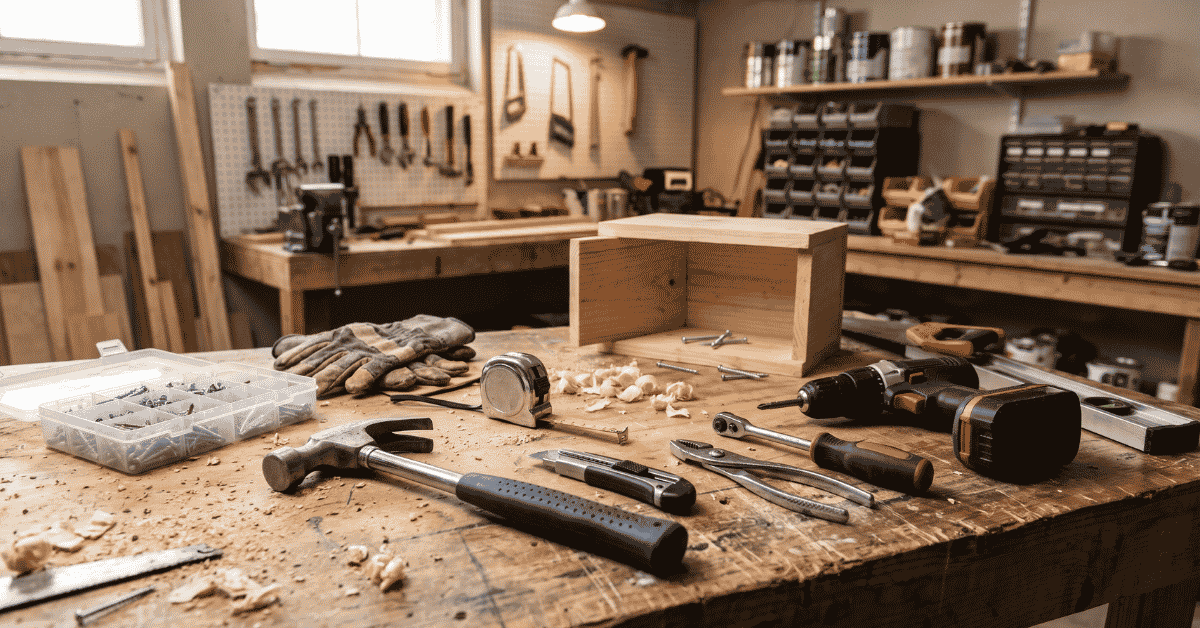
Holding onto worn-out gear is not thrifty—it ruins your good wood and wastes your whole afternoon. Even the best essential tools wear down after years of hard hits and heavy weekend builds. Your gear will tell you loud and clear when it is time to retire it for good. Listening to those warning signs saves your wood, your wallet, and your knuckles.
Red Flags That Mean It’s Time to Let Go
Last August, on a blazing hot Saturday morning, I tried to trim my backyard pine fence before a big storm rolled in. My ten-year-old saw pack died dead after just four cuts, leaving me sweating in the sun with half a fence standing. I wiped my brow, stared at the dead plastic brick, and had to laugh at my own stubborn streak. Sometimes we cling to tired gear out of pure habit. Watch out for chipped carbide saw teeth that burn black marks into oak boards, or stripped ratchet gears that slip under load and smash your fingers. New tools cost fresh cash and take a day to get used to, but they cut your work time in half.
| Wear Sign | Root Cause | Best Fix |
| 15-Minute Run Time | Battery cell degradation | Replace the pack or upgrade the platform |
| Spinning Drill Tip | Tool play/wobble in the nose | Retire the drill before it ruins your boards |
| Slipping Wrench Head | Stripped ratchet gears inside | Swap it out under your store warranty |
| Burnt Wood Edges | Chipped carbide saw teeth | Bolt on a fresh, sharp steel blade |
- Smoke or Ozone Smell: Trust your nose right away. If your old drill smells like burnt toast and shoots bright blue sparks from the side vents, drop it and unplug it for good.
- Sloppy Chuck Wobble: Squeeze the trigger and watch the tip of your bit spin in the air. When you see wide circles from bad tool play/wobble instead of a tight pinpoint, the inside steel bearings are shot.
- 15-Minute Battery Deaths: Severe battery cell degradation hits every old pack over time. If your charger hums for two full hours and the pack dies in ten minutes, stop fighting it and upgrade your whole platform.
How Do You Practice Safe Handling With Essential Tools?
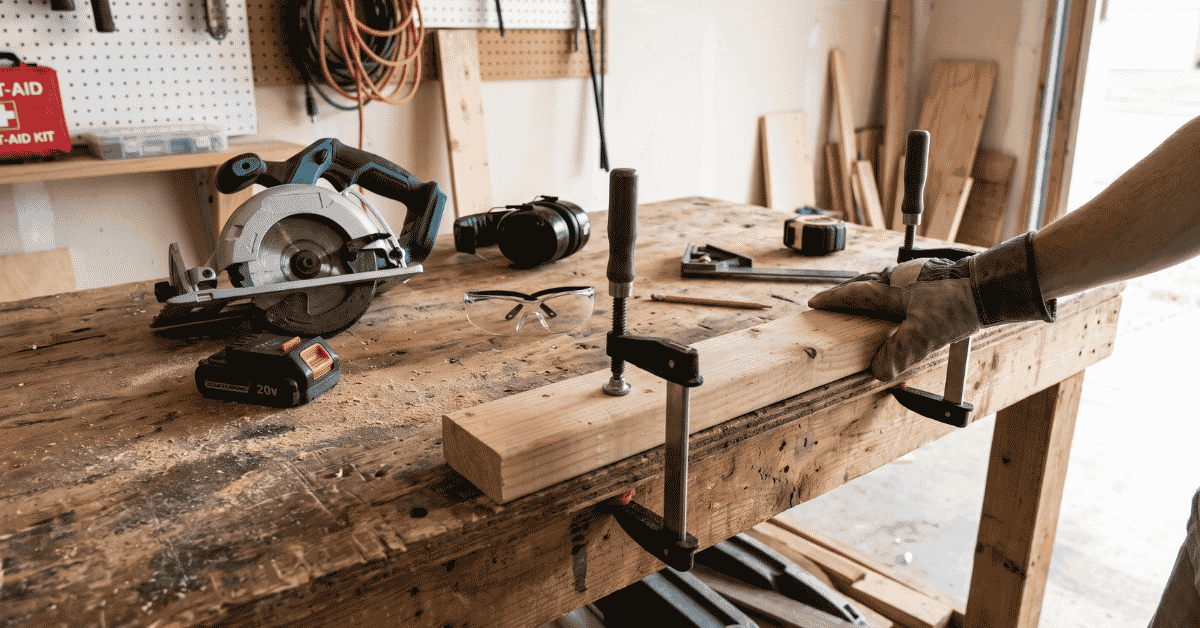
Nobody plans a trip to the urgent care clinic on a sunny Sunday morning. A few simple shop habits keep all ten fingers right where they belong while you use your essential tools. Fast shortcuts feel great in the moment, but one bad slip can ruin your whole month. Taking ten seconds to gear up lets you finish your home builds in peace and walk inside for dinner in one piece.
Simple Habits That Save Fingers and Eyes
Two winters ago, on a cold December Sunday in my garage, I tried to trim a short pine baseboard in a rush. Instead of walking three steps to grab a $6 clamp, I held the loose wood down with my left hand. The saw teeth caught a hard knot, kicked back with a loud bang, and left a tiny white scar right across my left thumb. I still look at that small nick every time I reach for a saw. Sudden blade kickback happens faster than your brain can blink. Now, I always wear snug hearing protection (NRR decibels) to block the loud shriek of spinning motors, even if heavy earmuffs make my ears sweat in the summer. Good safety gear fogs up now and then and costs a few extra bucks, but it beats a hospital bill every single time.
| Safety Gear or Habit | What It Stops | Honest Trade-Off |
| ANSI Z87.1 Impact Glasses | Flying nail heads and wood chips | Lenses can fog up when you sweat |
| Hearing Protection (NRR Decibels) | Ringing ears from loud saws | Foam plugs and muffs feel warm |
| Clamping Workpieces | Sudden board slips and blade kickback | Takes an extra minute to set up |
| Battery Disconnect | Accidental trigger starts | Slows down quick bit swaps |
- Pop the Battery Out First: Make battery disconnect your top muscle memory rule. Always slide the power pack completely off the base before you touch a sharp saw blade or swap a tight drill bit.
- Wear Z87.1 Safety Glasses: Regular sunglasses shatter on impact. Look for the tiny “Z87+” mark stamped on the frame so you know your ANSI Z87.1 impact glasses will stop a flying steel nail head cold.
- Clamp Your Wood Down: Make clamping workpieces to a solid bench a strict habit. Never use your knee as a sawhorse, and keep both hands firm on the tool handle so the blade never jumps toward your skin.
FAQ for Essential Tools
What are the best Essential Tools for a starter tool kit?
Start your kit with five Essential Tools for fast DIY home repairs. Grab a claw hammer, tape measure, pliers, utility knife, and a good drill. Learn more about our top five daily drivers above.
Are cheap multi-piece homeowner sets worth buying for Essential Tools?
No, skip cheap plastic kits when buying Essential Tools. Soft pliers bend fast, and you will never touch half those tiny hex keys. Buy tough individual tools instead. See our full kit guide above.
Which battery brand makes the most reliable Essential Tools?
Top brands like DeWalt, Milwaukee, Makita, and Ryobi all build great Essential Tools. Pick one 20V lithium-ion battery line so one charger runs your whole shop. Check out our brand chart above.
What Essential Tools do I need for basic DIY car repairs?
Keep a 72-tooth ratchet, 6-point metric sockets, and a long breaker bar in your Essential Tools box. Add a click torque wrench and an OBD2 scanner too. Read our full car repair tips above.
How do I spot durable Essential Tools in the store aisle?
Look for “Cr-V” stamped steel and thick rubber grips when picking Essential Tools. Chrome vanadium steel will not snap, and lifetime warranties give you free swaps. Explore our buying tips above.